- Chemistry
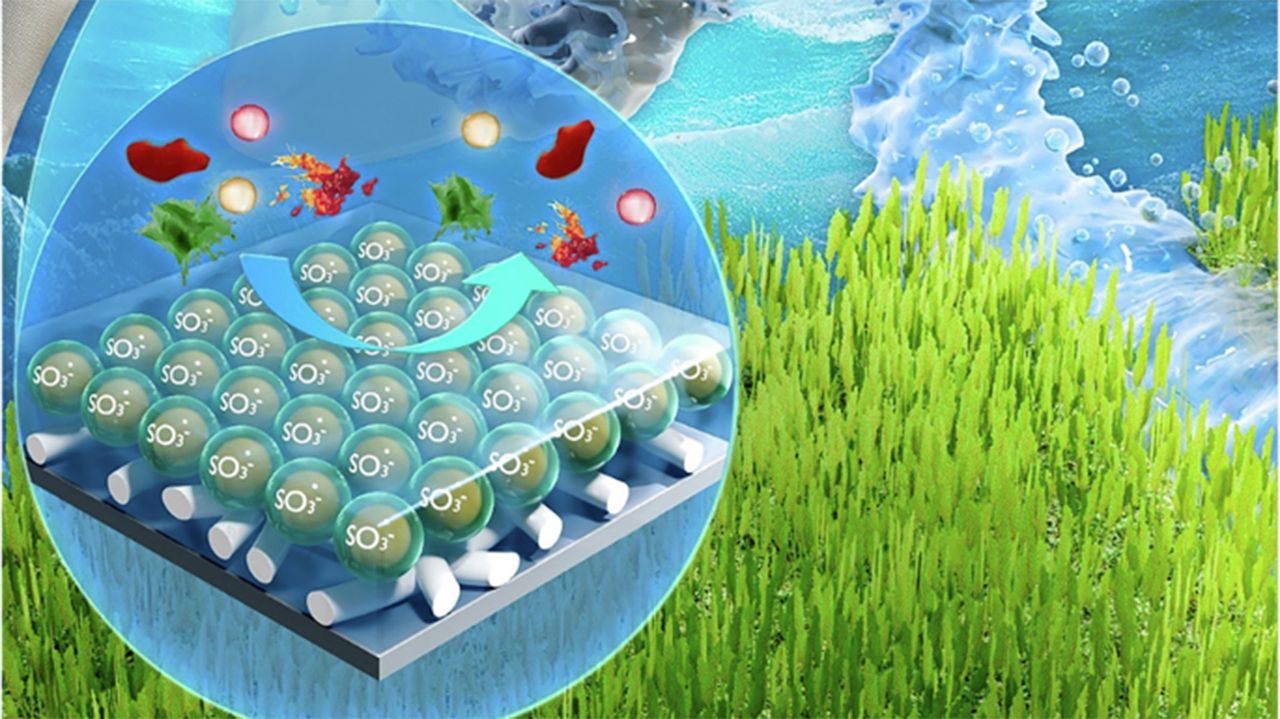
Material scientists in China have created a new kind of coating that keeps clothes clean without the need for wasteful detergents. It could reduce the water and electricity costs of doing laundry by 80%.
 By
Victoria Atkinson
published
28 May 2026
in News
By
Victoria Atkinson
published
28 May 2026
in News
When you purchase through links on our site, we may earn an affiliate commission. Here’s how it works.
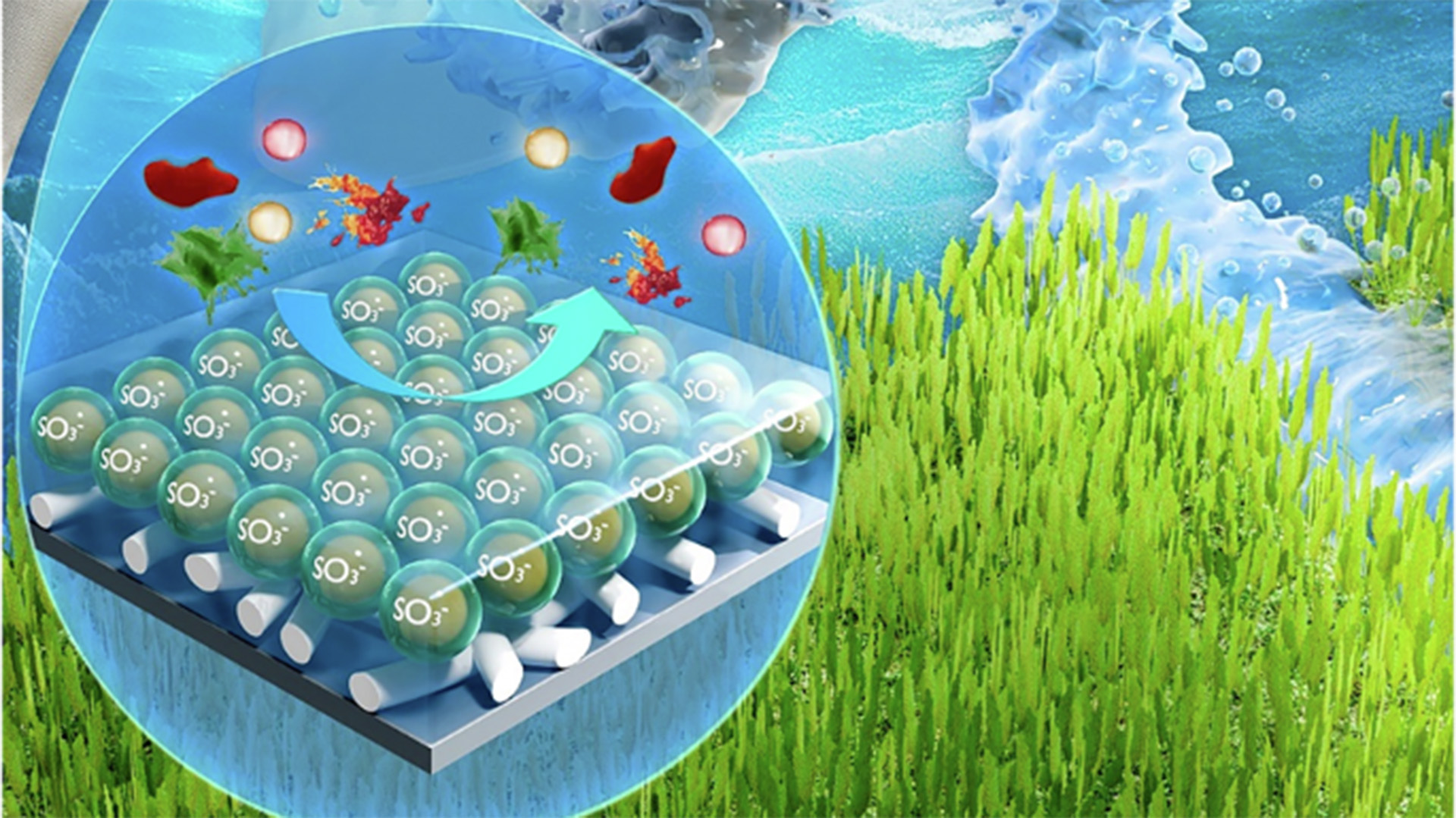 A new protective coating created by Chinese scientists coaxes water molecules into an armor-like configuration that largely prevents stains from forming on fabric.
(Image credit: Communications Chemistry / Wang et al.)
A new protective coating created by Chinese scientists coaxes water molecules into an armor-like configuration that largely prevents stains from forming on fabric.
(Image credit: Communications Chemistry / Wang et al.)
- Copy link
- X
Scientists have invented a self-cleaning coating that prevents stains from food, oil or dirt from sticking to a fabric's surface, making the spots easy to remove without detergent or large amounts of water. The coating, which creates a protective ultrathin layer of water its developers call "molecular water armor," could reduce the water and electricity demand of household laundry by over 80%, new research suggests.
Washing clothes is a basic necessity of everyday life, but laundry has a huge environmental footprint because it produces vast amounts of wastewater. A single cycle in a household washing machine uses 10.5 to 16 gallons (40 to 60 liters) of clean water, while the detergents required to remove stains promote the release of microplastics from synthetic fibers and leave chemical residues in the discharged water.
You may like-
 Chemists discover groundbreaking reaction that turns breadcrumbs into hydrogen
-
 New water battery could last until the 24th century — and it can be safely discarded in the environment
-
 Clean hydrogen created from plastic waste using battery acid from old cars and solar power
"Molecular water armor"
Sign up for the Live Science daily newsletter nowContact me with news and offers from other Future brandsReceive email from us on behalf of our trusted partners or sponsorsBy submitting your information you agree to the Terms & Conditions and Privacy Policy and are aged 16 or over.
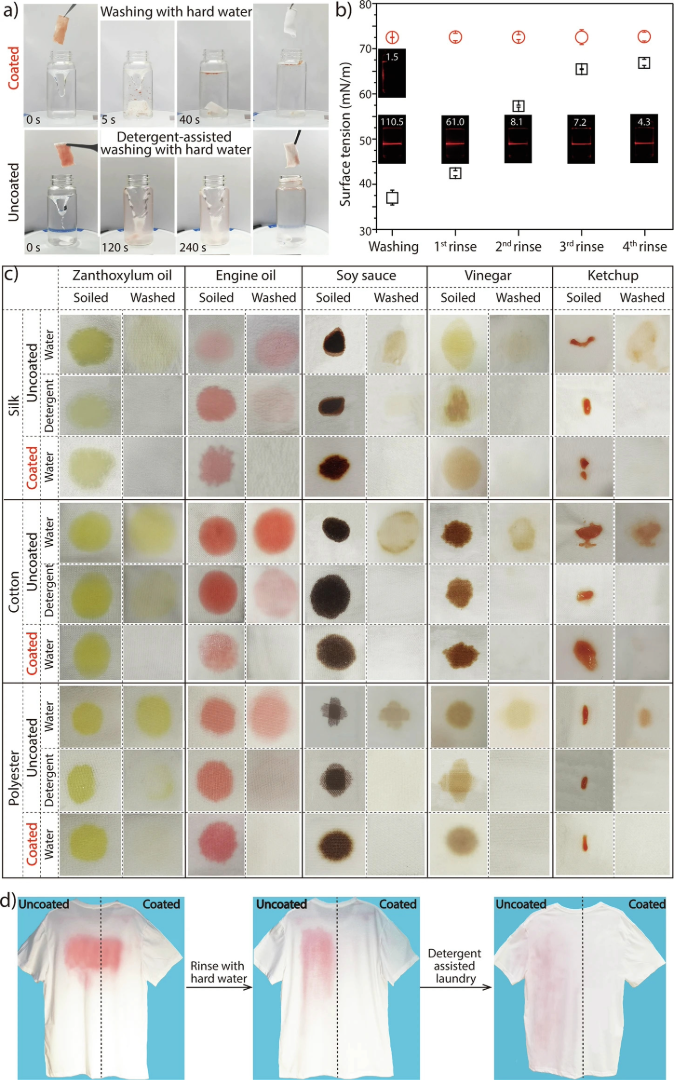
Various comparisons of stains on coated versus un-coated fabrics when washed with water or detergent. Even without detergent, the new coating helped remove stains with great efficiency.
(Image credit: Communications Chemistry / Wang et al.) What to read next-
 Chemistry student develops clear polish that turns your fingernail into a touch-screen stylus
-
 Antiseptic-tolerant germs spread through the air in hospitals, early study hints
-
 'They are literally everywhere': The shocking story of how forever chemicals polluted the world
- Washing Machines May Sometimes Harbor Drug-Resistant Bacteria, Report Says
- Why are vinegar and baking soda so good for cleaning?
- Why does cotton shrink?
Wang, R., Wang, H., Chen, Y., Cheng, C., & Wang, D. (2026). A versatile self-cleaning fabric coating as a detergent-free laundry product. Communications Chemistry, 9(1). https://doi.org/10.1038/s42004-026-01942-7
TOPICS water Victoria AtkinsonSocial Links NavigationLive Science Contributor
Victoria Atkinson is a freelance science journalist, specializing in chemistry and its interface with the natural and human-made worlds. Currently based in York (UK), she formerly worked as a science content developer at the University of Oxford, and later as a member of the Chemistry World editorial team. Since becoming a freelancer, Victoria has expanded her focus to explore topics from across the sciences and has also worked with Chemistry Review, Neon Squid Publishing and the Open University, amongst others. She has a DPhil in organic chemistry from the University of Oxford.
View MoreYou must confirm your public display name before commenting
Please logout and then login again, you will then be prompted to enter your display name.
Logout Read more
Chemistry
Chemists discover groundbreaking reaction that turns breadcrumbs into hydrogen
Engineering
New water battery could last until the 24th century — and it can be safely discarded in the environment
SPONSORED_LABEL
SPONSORED_HEADLINE
SPONSORED_DISCLAIMER
SPONSORED_STRAPLINE
Chemistry
Clean hydrogen created from plastic waste using battery acid from old cars and solar power
Chemistry
Chemistry student develops clear polish that turns your fingernail into a touch-screen stylus
SPONSORED_LABEL
SPONSORED_HEADLINE
SPONSORED_DISCLAIMER
SPONSORED_STRAPLINE
Latest in Chemistry
 Chemistry
'Extreme' crystal that formed in 1945 nuclear bomb test is unlike anything scientists have seen
Chemistry
Clean hydrogen created from plastic waste using battery acid from old cars and solar power
SPONSORED_LABEL
SPONSORED_HEADLINE
SPONSORED_DISCLAIMER
SPONSORED_STRAPLINE
Chemistry
'They are literally everywhere': The shocking story of how forever chemicals polluted the world
Chemistry
Chemists discover groundbreaking reaction that turns breadcrumbs into hydrogen
SPONSORED_LABEL
SPONSORED_HEADLINE
SPONSORED_DISCLAIMER
SPONSORED_STRAPLINE
Chemistry
'Extreme' crystal that formed in 1945 nuclear bomb test is unlike anything scientists have seen
Chemistry
Clean hydrogen created from plastic waste using battery acid from old cars and solar power
SPONSORED_LABEL
SPONSORED_HEADLINE
SPONSORED_DISCLAIMER
SPONSORED_STRAPLINE
Chemistry
'They are literally everywhere': The shocking story of how forever chemicals polluted the world
Chemistry
Chemists discover groundbreaking reaction that turns breadcrumbs into hydrogen
SPONSORED_LABEL
SPONSORED_HEADLINE
SPONSORED_DISCLAIMER
SPONSORED_STRAPLINE