- Archaeology
In honor of the 700th-anniversary founding of the Royal Monastery of Santa Maria Pedralbes in Barcelona, scientists opened eight 14th-century graves and studied the 25 people found inside, including a queen.
 By
Kristina Killgrove
published
29 May 2026
in News
By
Kristina Killgrove
published
29 May 2026
in News
When you purchase through links on our site, we may earn an affiliate commission. Here’s how it works.
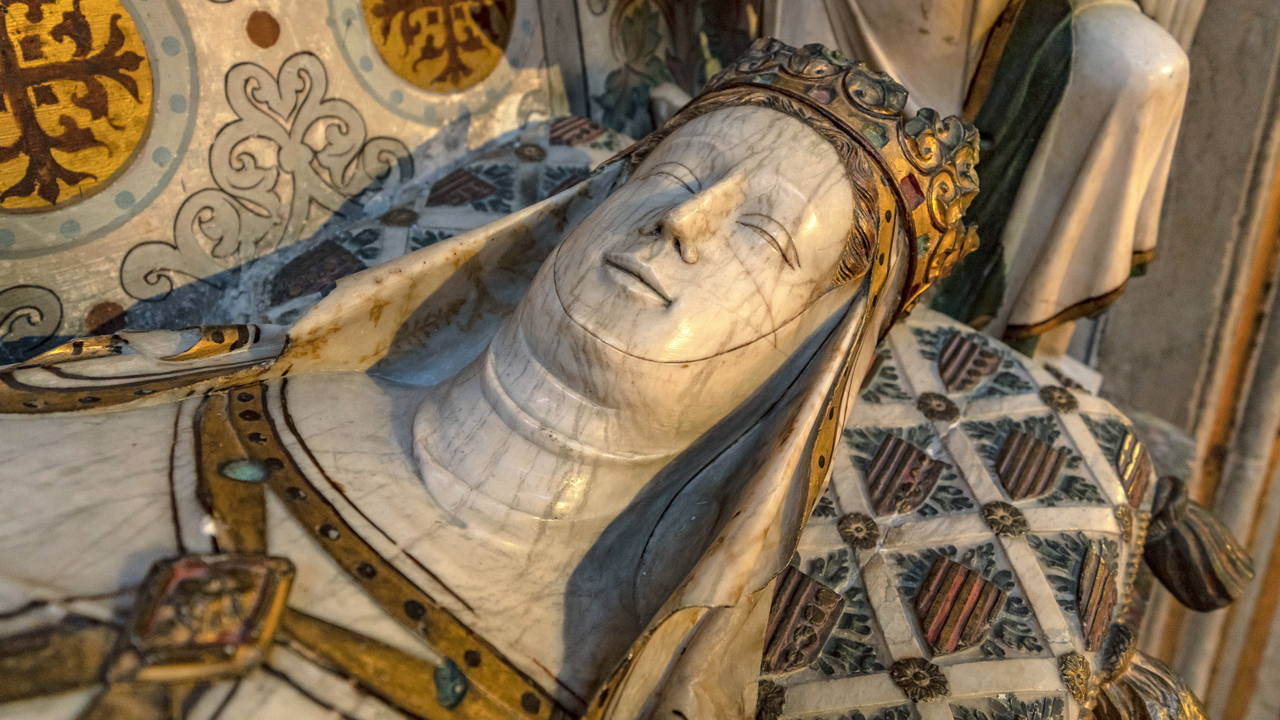
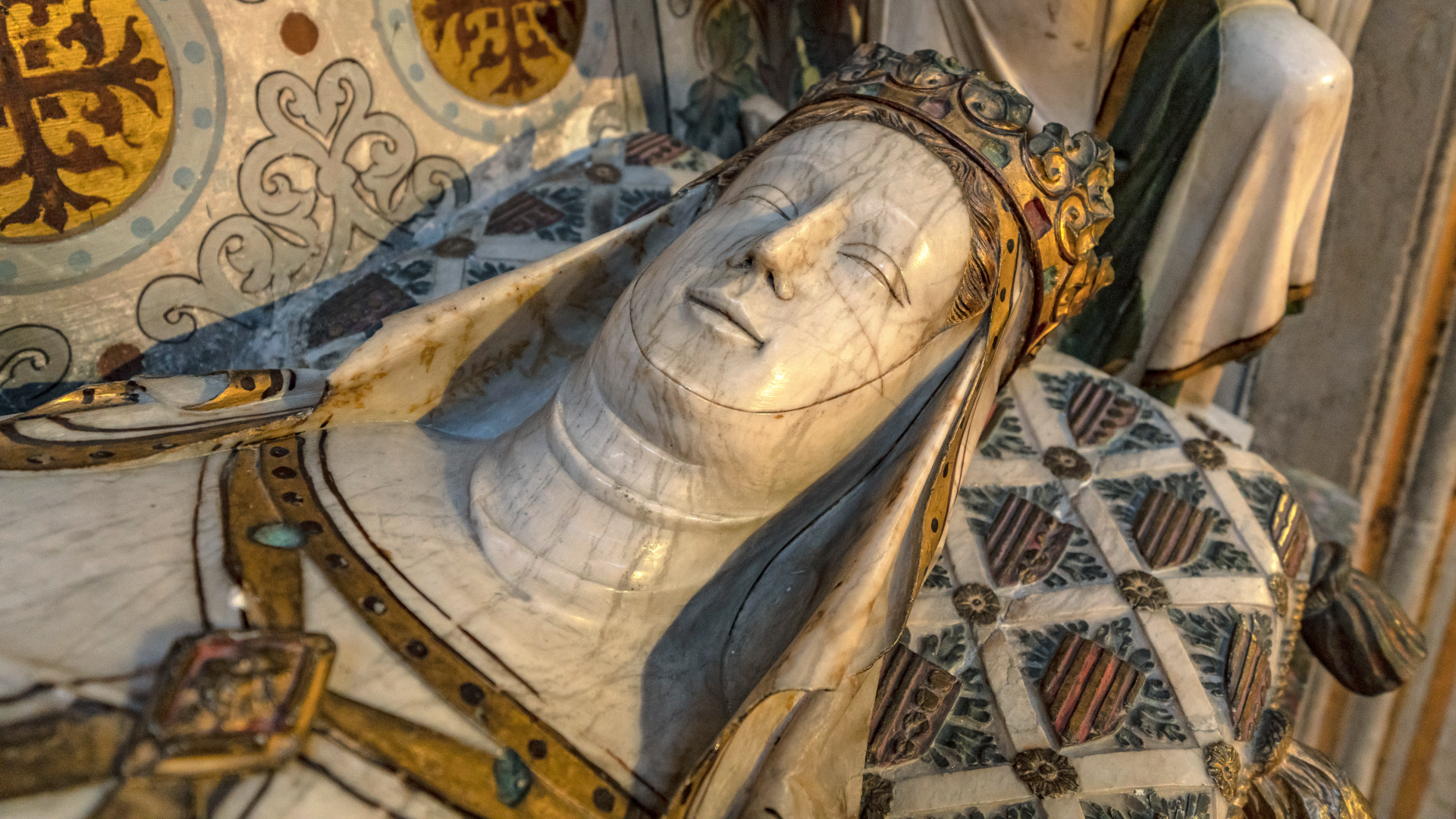 The sarcophagus of Queen Elisenda in the Royal Monastery of Santa Maria Pedralbes.
(Image credit: Culture Institute of Barcelona)
The sarcophagus of Queen Elisenda in the Royal Monastery of Santa Maria Pedralbes.
(Image credit: Culture Institute of Barcelona)
- Copy link
- X
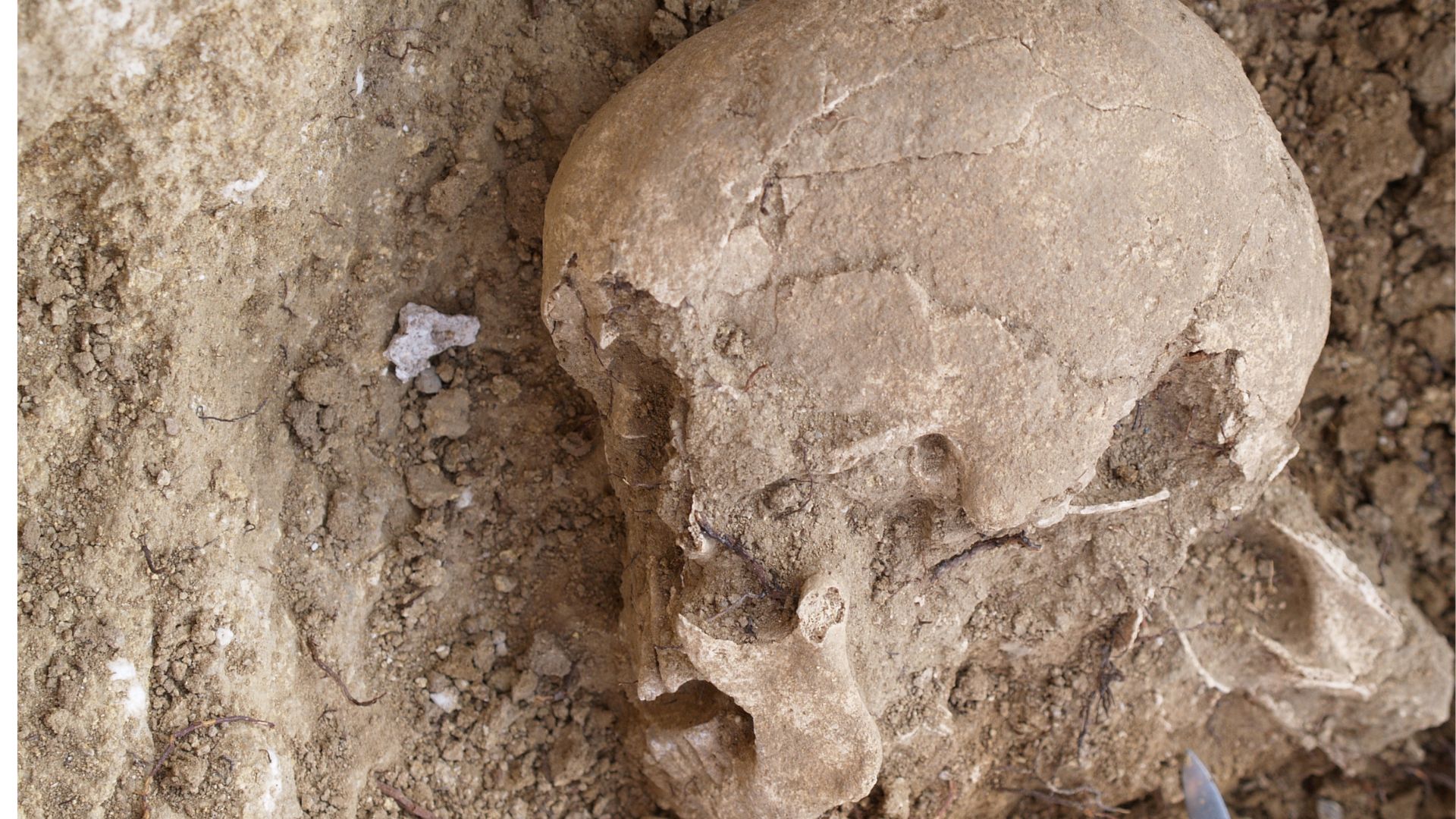
Archaeologists working in a 14th-century monastery in Barcelona were surprised to find 25 skeletons when they opened eight graves — including the remains of a medieval queen.
Seven centuries after Queen Elisenda of Montcada, the wife of James II of Aragon and Valencia, founded the Royal Monastery of Santa Maria Pedralbes in Barcelona, a team of experts opened her tomb to learn more about her life and about the living conditions of the 14th-century female monastic community, according to a May 28 translated statement from the Culture Institute of Barcelona.
You may like-
 Massive Iron Age hoards discovered in England may be from funeral of powerful Celtic queen
-
 800-year-old 'hugging skeletons' are genetically confirmed as Poland's only medieval same-sex double burial
-
 DNA reveals ancestry of man buried in Stone Age monument in Spain, but his religion remains a mystery
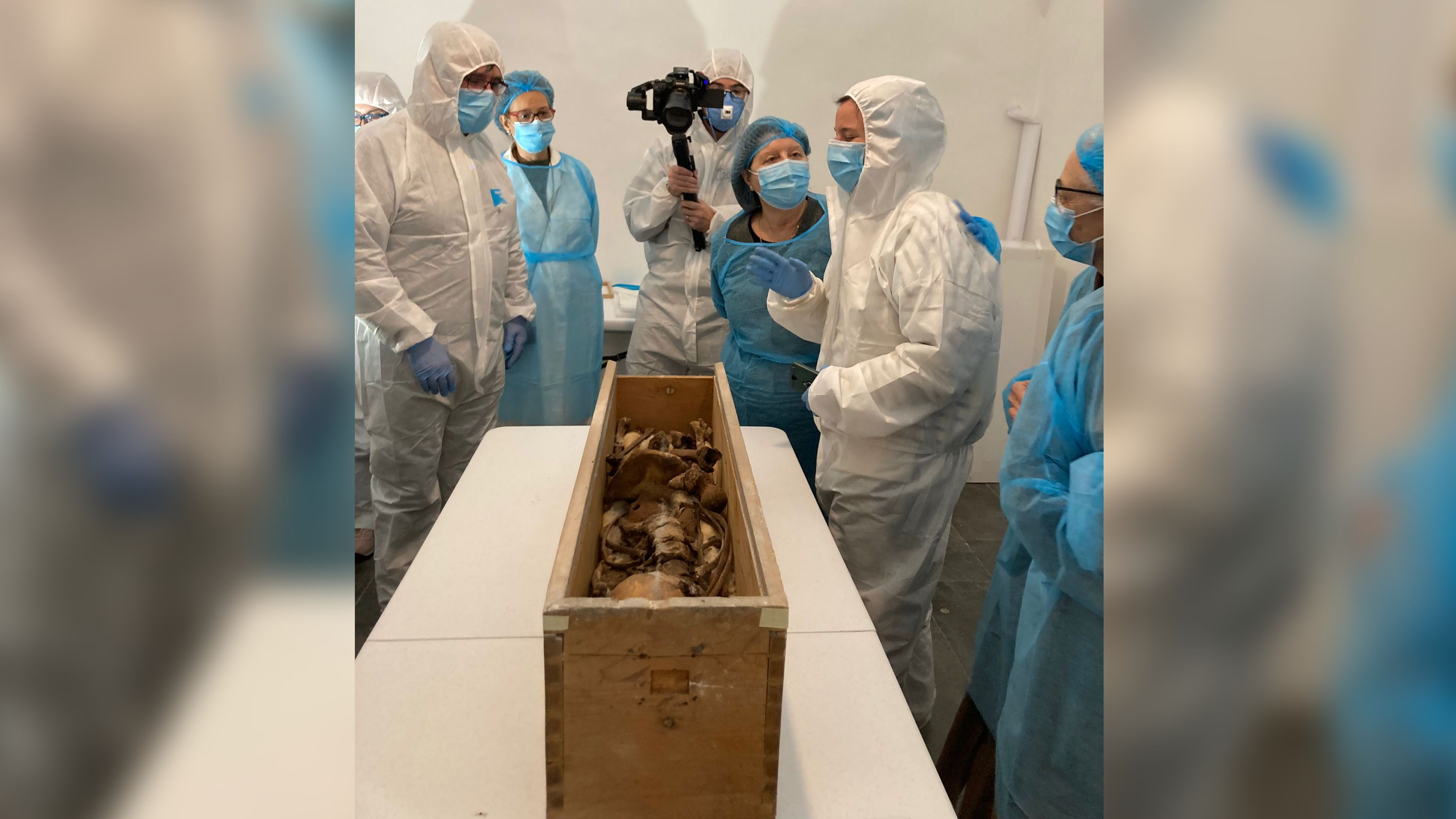
Experts found a wooden box containing Queen Elisenda's remains.
(Image credit: Culture Institute of Barcelona)
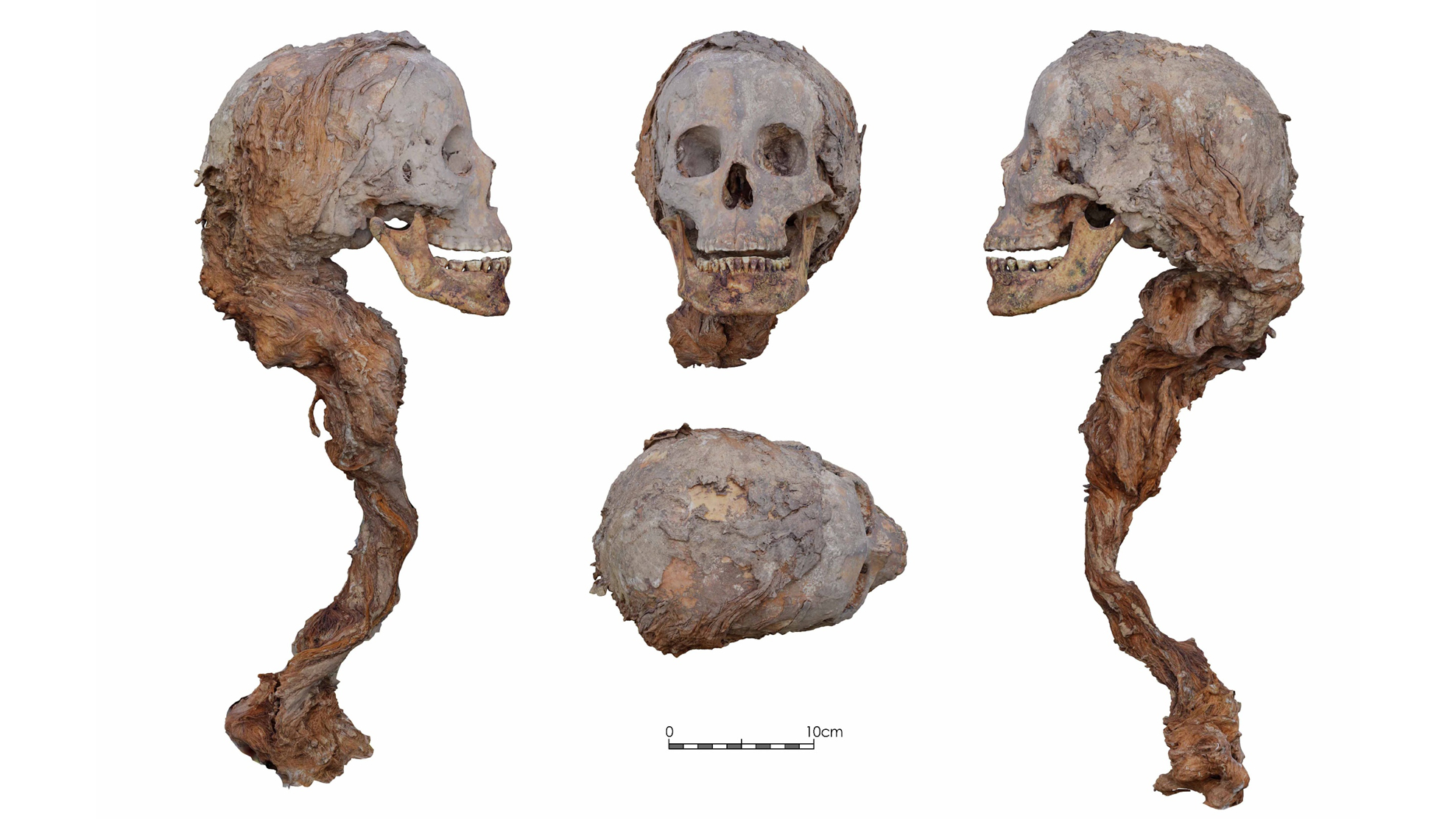
A partially mummified head of a 14th-century woman who was buried in a tomb in the Pedralbes monastery that was thought to belong to the knight Artau de Foces.
(Image credit: Culture Institute of Barcelona)Sign up for the Live Science daily newsletter nowContact me with news and offers from other Future brandsReceive email from us on behalf of our trusted partners or sponsorsBy submitting your information you agree to the Terms & Conditions and Privacy Policy and are aged 16 or over.
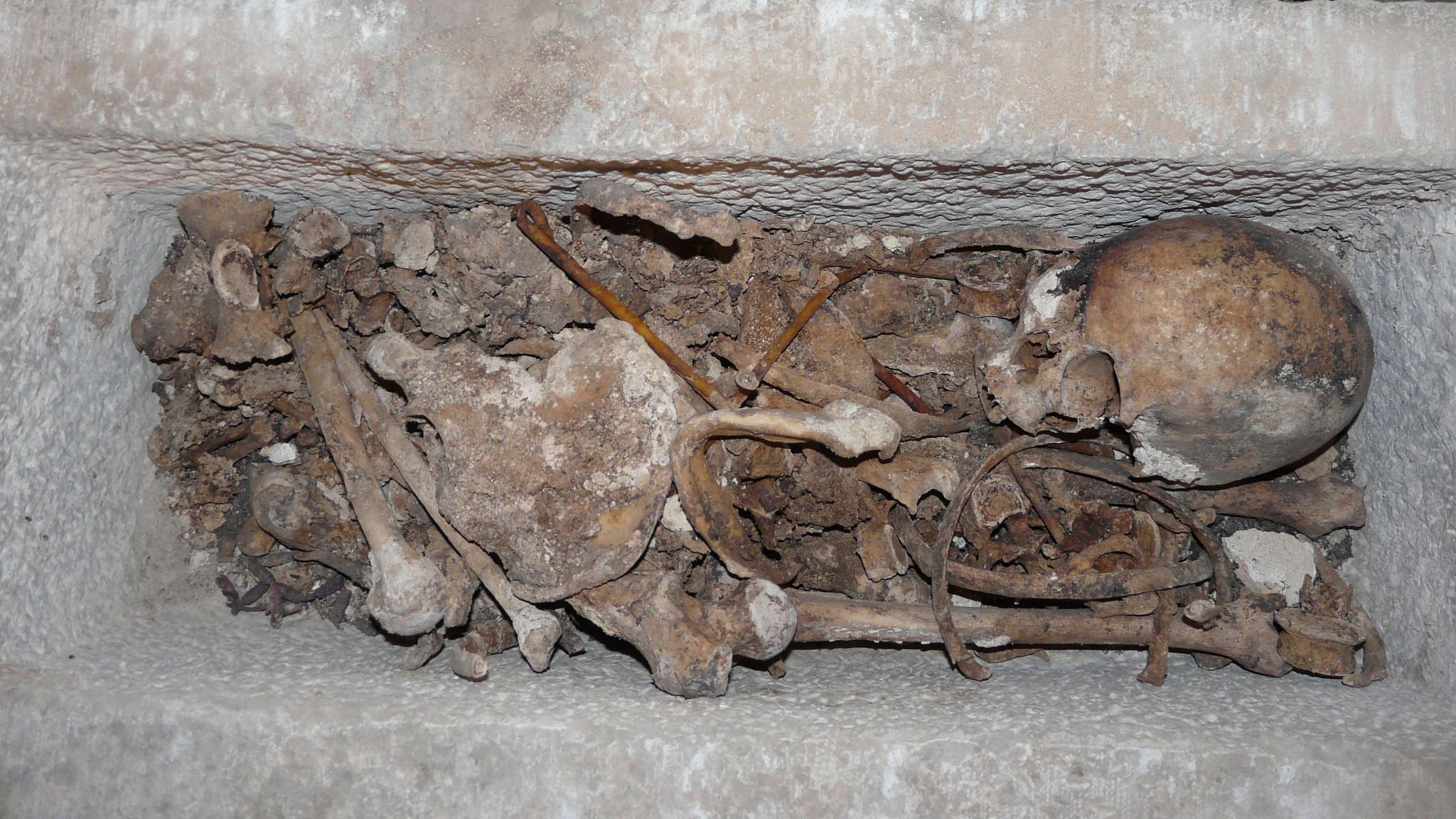
Skeletal remains of Sobirana Olzet, the first abbess of the monastery of Pedralbes. Experts identified an injury to her face sustained around the time of death.
(Image credit: Culture Institute of Barcelona) What to read next-
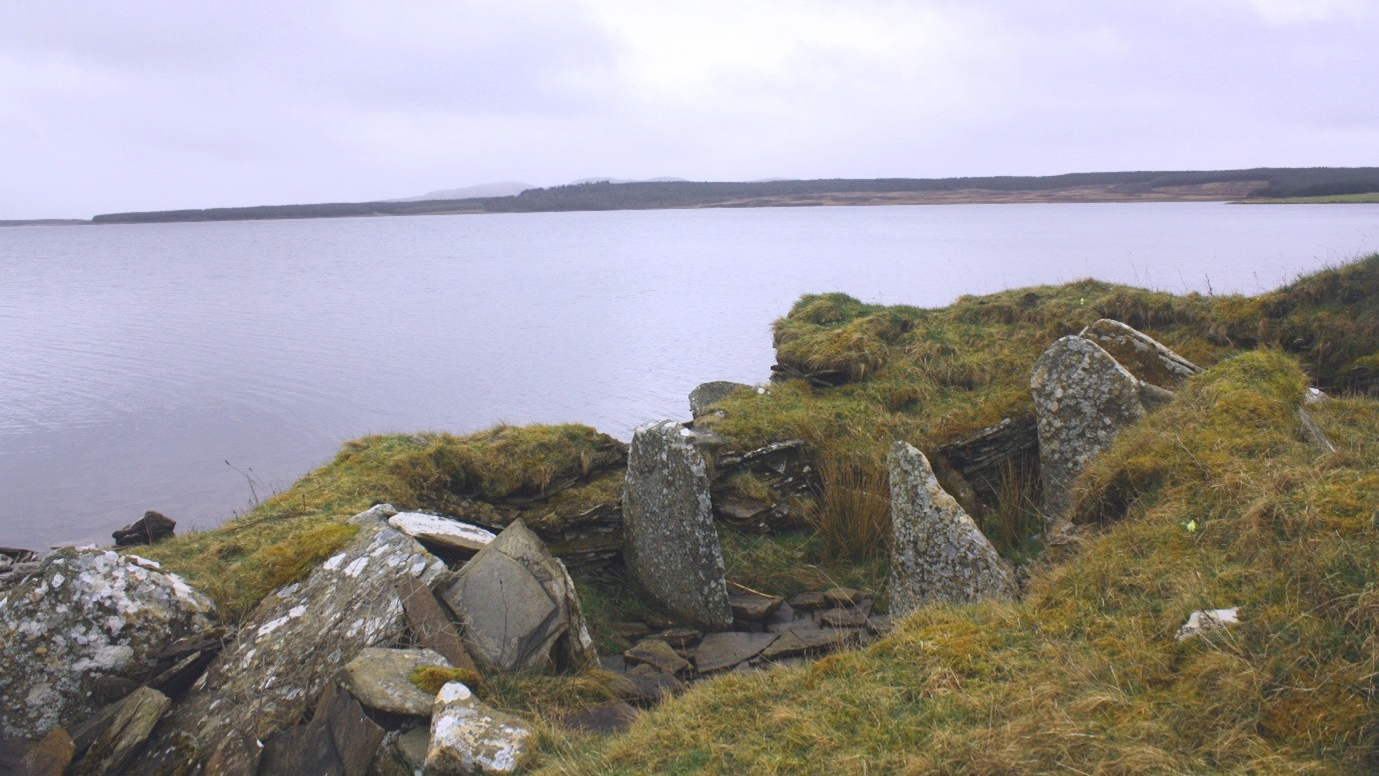 Stone Age tombs in Scotland reveal 'webs of descent' among male relatives
-
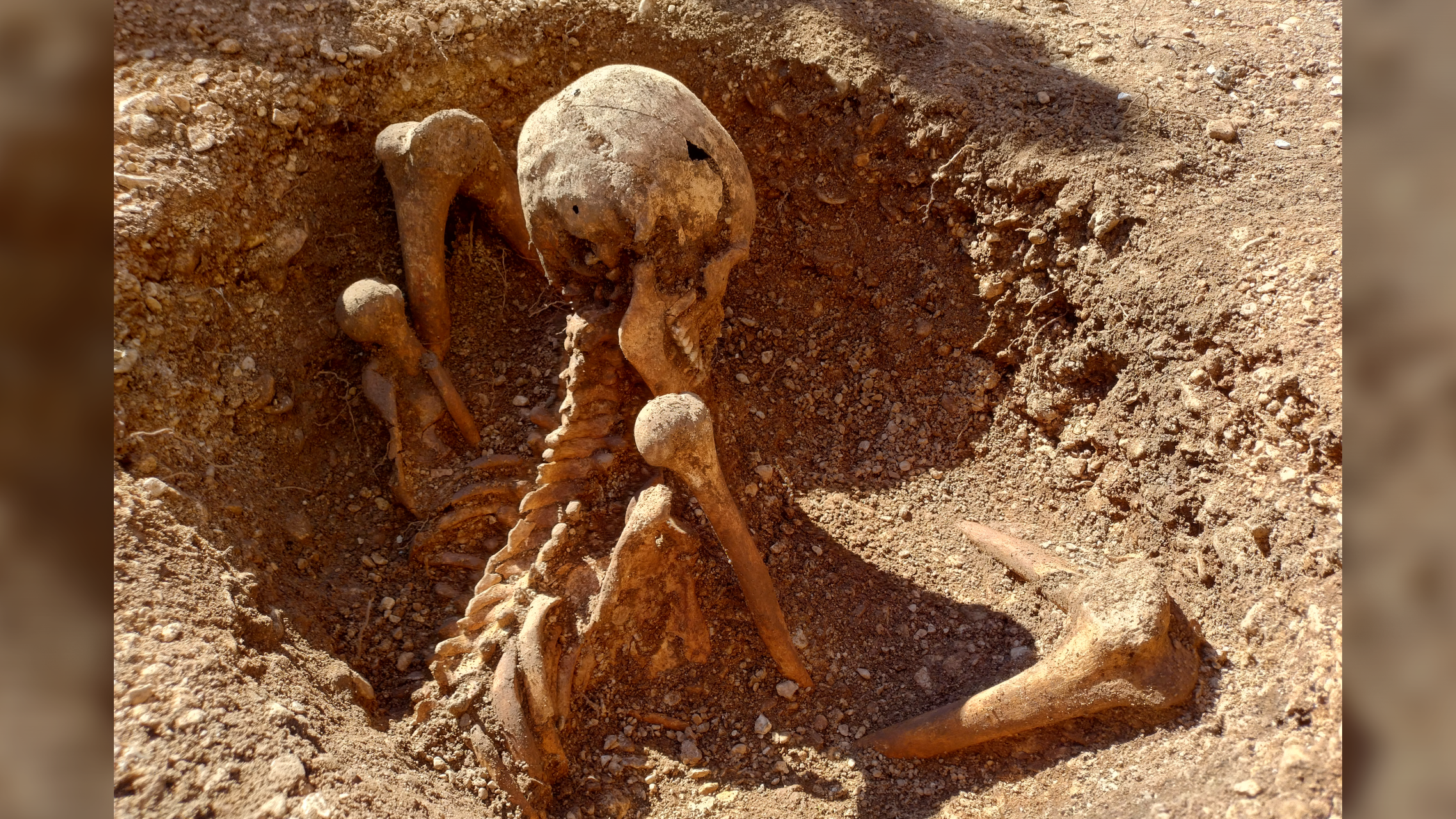 Unusual burials of Celtic 'warriors' discovered in France point to violent deaths
-
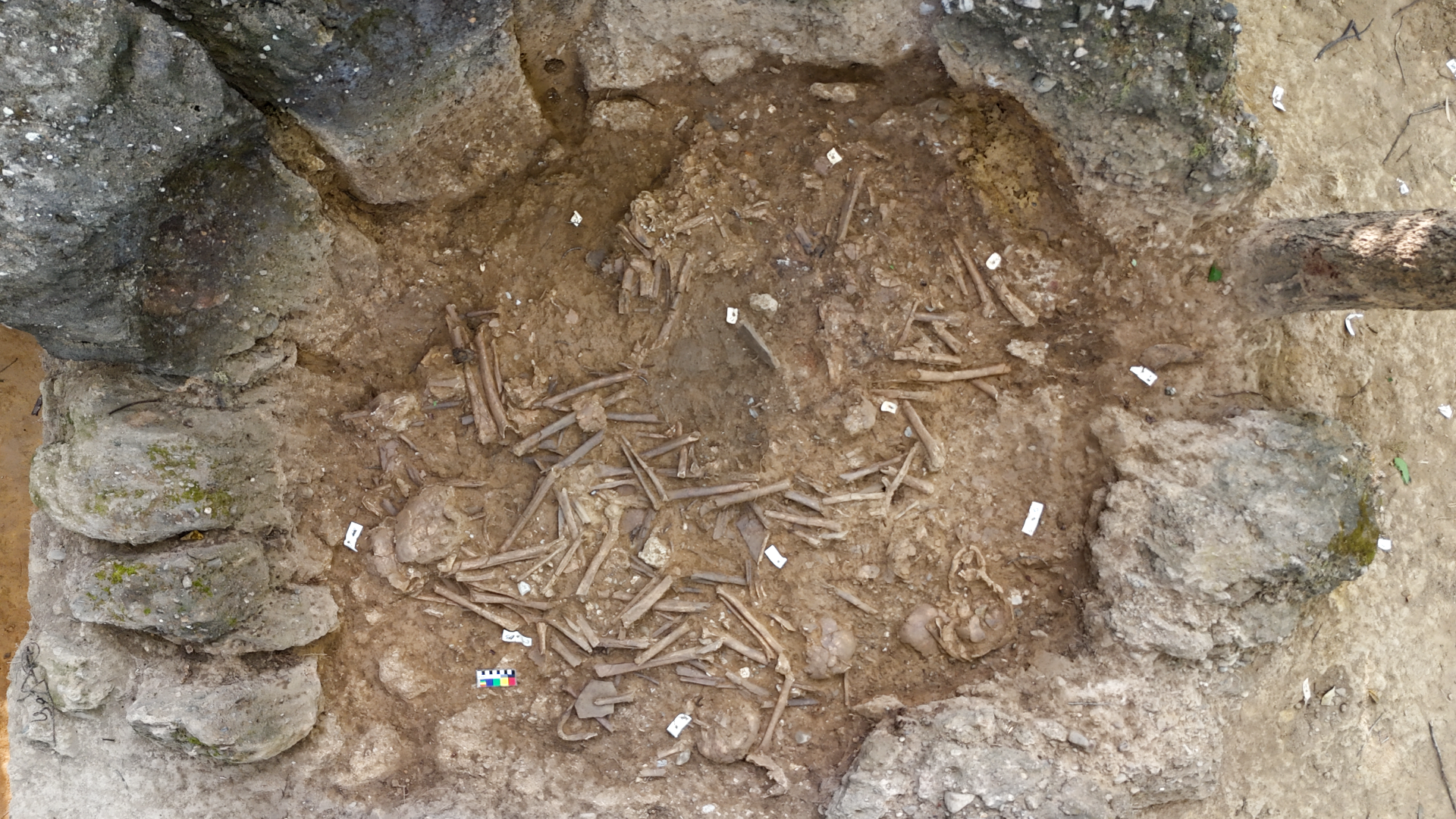 1,200-year-old giant 'death jar' in Laos contains generations of human skeletons
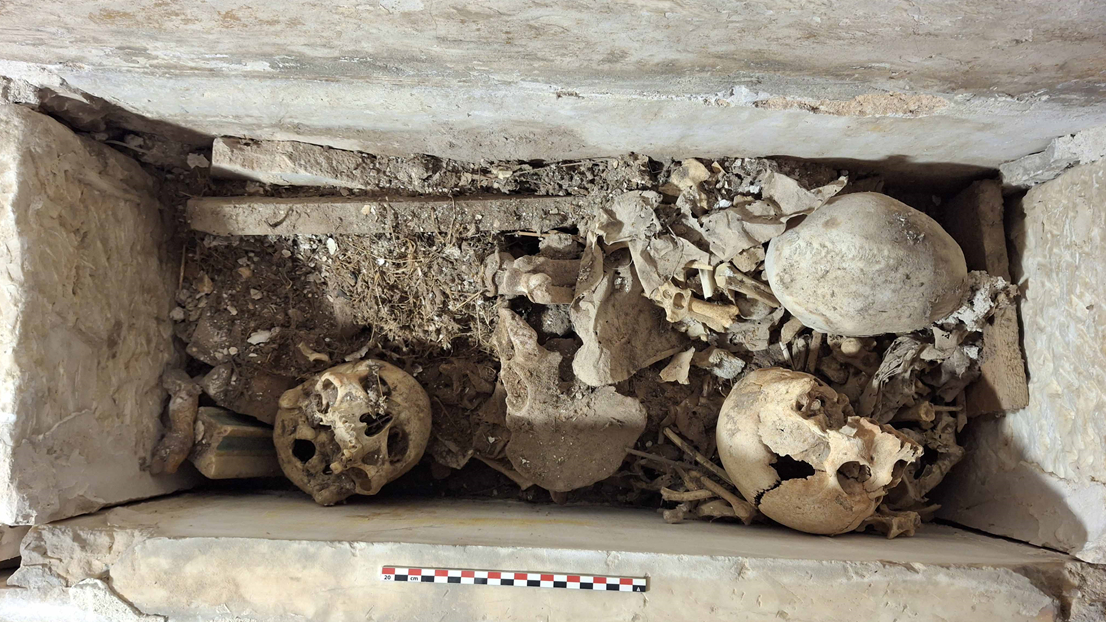
The tomb of Francesca Saportella, the monastery's second abbess and the queen's niece, actually contained at least nine people, including four male skulls that all had stab wounds and a pregnant woman.
(Image credit: Culture Institute of Barcelona)RELATED STORIES- 800-year-old 'hugging skeletons' are genetically confirmed as Poland's only medieval same-sex double burial
- Medieval knight 'Lancelot' and his stunning stone tomb found under ice cream shop in Poland
- 'I had never seen a skull like this before': Medieval Spanish knight who died in battle had a rare genetic condition, study finds
 Kristina KillgroveSocial Links NavigationStaff writer
Kristina Killgrove is a staff writer at Live Science with a focus on archaeology and paleoanthropology news. Her articles have also appeared in venues such as Forbes, Smithsonian, and Mental Floss. Kristina holds a Ph.D. in biological anthropology and an M.A. in classical archaeology from the University of North Carolina, as well as a B.A. in Latin from the University of Virginia, and she was formerly a university professor and researcher. She has received awards from the Society for American Archaeology and the American Anthropological Association for her science writing.
View MoreYou must confirm your public display name before commenting
Please logout and then login again, you will then be prompted to enter your display name.
Logout Read more
Archaeology
Massive Iron Age hoards discovered in England may be from funeral of powerful Celtic queen
Archaeology
DNA reveals ancestry of man buried in Stone Age monument in Spain, but his religion remains a mystery
SPONSORED_LABEL
SPONSORED_HEADLINE
SPONSORED_DISCLAIMER
SPONSORED_STRAPLINE
Archaeology
Stone Age tombs in Scotland reveal 'webs of descent' among male relatives
Archaeology
Unusual burials of Celtic 'warriors' discovered in France point to violent deaths
SPONSORED_LABEL
SPONSORED_HEADLINE
SPONSORED_DISCLAIMER
SPONSORED_STRAPLINE
Latest in Archaeology
 Middle East
1,200-year-old gold hoard discovered in Saudi Arabia may have been buried by a medieval pilgrim
Middle East
1,200-year-old gold hoard discovered in Saudi Arabia may have been buried by a medieval pilgrim
 Romans
The Romans and Vikings left few genetic traces of their occupations of Britain, research suggests
SPONSORED_LABEL
SPONSORED_HEADLINE
SPONSORED_DISCLAIMER
SPONSORED_STRAPLINE
Romans
The Romans and Vikings left few genetic traces of their occupations of Britain, research suggests
SPONSORED_LABEL
SPONSORED_HEADLINE
SPONSORED_DISCLAIMER
SPONSORED_STRAPLINE
 Archaeology
Death jar mystery revealed, rice reaching its 'thermal limit,' prehistoric art controversy, and the asthma drug that could help fight cancer.
Archaeology
Death jar mystery revealed, rice reaching its 'thermal limit,' prehistoric art controversy, and the asthma drug that could help fight cancer.
 Ancient China
Toxic plant on Ming dynasty-era surgical tools may be world’s oldest chemical evidence of topical anesthetic
SPONSORED_LABEL
SPONSORED_HEADLINE
SPONSORED_DISCLAIMER
SPONSORED_STRAPLINE
Ancient China
Toxic plant on Ming dynasty-era surgical tools may be world’s oldest chemical evidence of topical anesthetic
SPONSORED_LABEL
SPONSORED_HEADLINE
SPONSORED_DISCLAIMER
SPONSORED_STRAPLINE


