There are few things in the world that fire our imaginations, as well as our hopes and our fears, like the possibility of finding extraterrestrial life. Science has come remarkably far here in the 21st century:
- uncovering much about the history and origins of life on Earth,
- exploring planets, moons, and distant worlds in situ in our own Solar System,
- discovering thousands of exoplanets around stars beyond the Sun,
- measuring billions of stars in the Milky Way,
- and learning that there are trillions of galaxies within the observable Universe.
But despite everything that we’ve discovered and all the scientific and technological capabilities that we’ve unlocked, we have yet to find any surefire signatures of life in the Universe beyond the life whose home is right here on Earth.
We’ve fooled ourselves many times as far as thinking we’d found evidence for extraterrestrial life goes. Were there canals on Mars carved by intelligent aliens? Did we detect life on Mars in a Viking lander experiment? Was the Wow! Signal evidence of alien communications? Did a Martian meteorite possess microfossils that indicated the presence of life? Did the dimming of Tabby’s star indicate the presence of alien megastructures? And have UFO/UAP videos revealed the existence of alien spacecraft on Earth?
The answer to all of these questions appears to be “no,” as follow-up and searches for confirmation of these extraordinary hypotheses have all come back negative. However, we have every reason to hope that we aren’t alone in the Universe. Here are our best scientific bets for finally finding evidence for life beyond Earth.
In many ways, the prospect of life in the Universe is a lottery. With every star that forms, there’s a chance to form planets, moons, and other substantially massive bodies. On every such world with the right sets of ingredients, there’s the chance for chemical-based life to arise from those raw predecessor materials. On each world where life arises, there’s an opportunity for it to thrive and survive, rather than to peter out, sustaining itself for geologically long periods of time. On those successful worlds, there’s a chance that life can evolve into something complex, differentiated, and potentially even intelligent.
And, at last, on the worlds where sufficiently complex and intelligent life arises, perhaps some form of that life becomes technologically advanced, at least, for a period of time. There’s also the possibility that some catastrophic event will come along — perhaps naturally, like a supernova, black hole, or gamma-ray burst, or perhaps of their own doing, such as nuclear war or the complete destruction of the ecosystem that supports life — and wipe out life on that world entirely.
For each of these prospects, there’s a probability, at least on average across the Universe, for what we could consider a successful outcome. The first attempt to quantify those probabilities, and to parameterize these great unknowns, was made by Frank Drake more than 60 years ago, whose name lives on in the famed Drake equation.
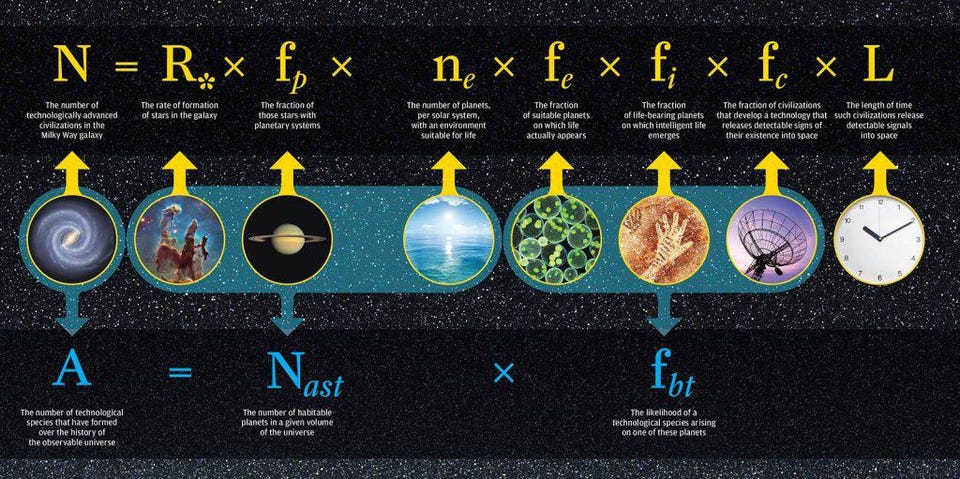
Today, however, science has caught up to many of the uncertainties that showed up in Drake’s original version of his equation. We used to have to estimate the cosmic star-formation rate; now we can simply take a census of the stars in our galaxy and the galaxies in the Universe. We used to have to estimate the fraction of stars that had planets around them; now we know that the presence of planets depends on a star’s metallicity, or heavy element content, with practically all stars with at least 25% of the Sun’s metallicity possessing them.
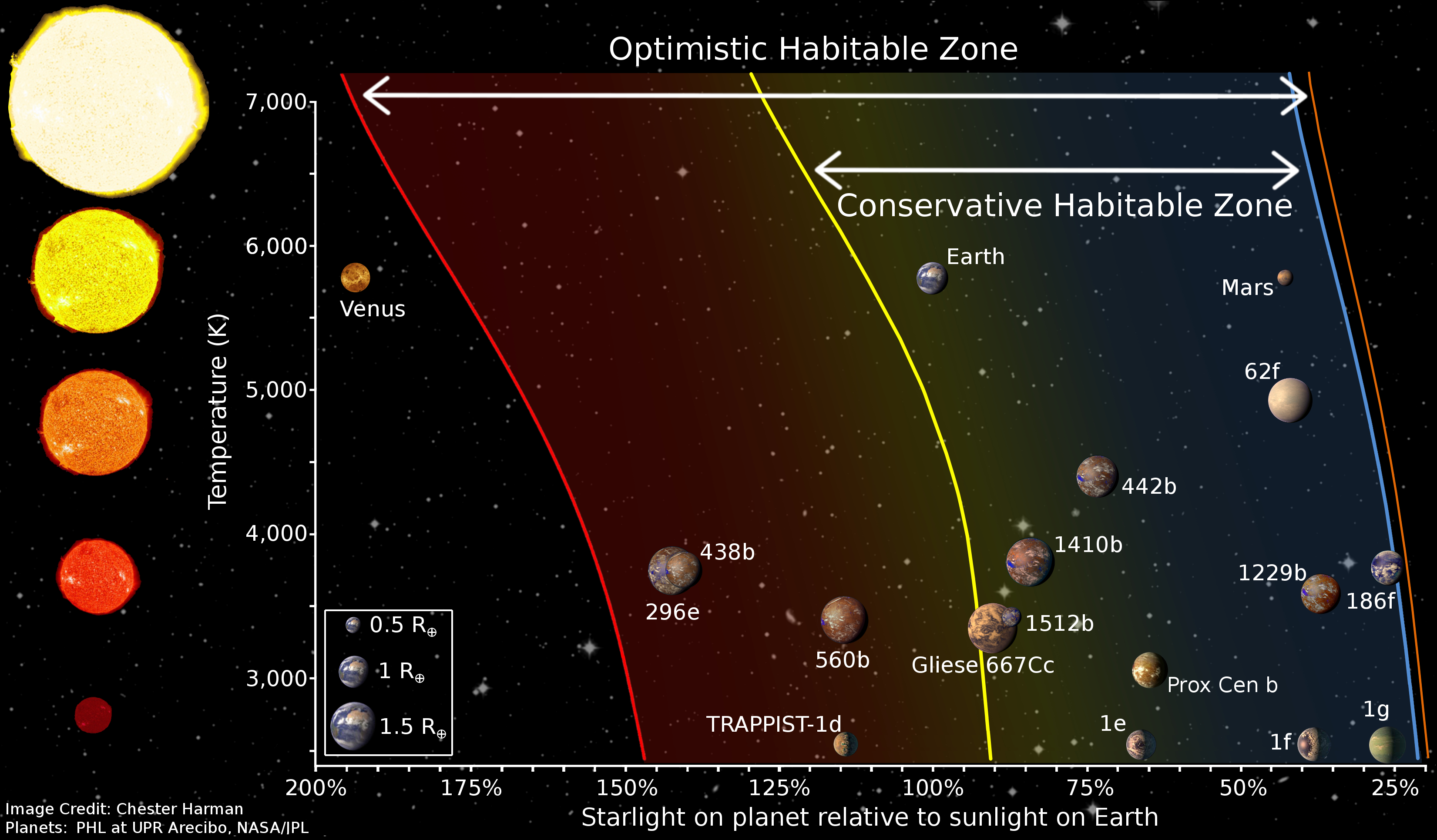
And we used to have to estimate — based largely on what we found here at home in our own Solar System — what the abundance of planets similar to Earth would be: with the right size, mass, temperature, and distance from their parent star. But here in 2026, more than 30 years after the first exoplanet had been discovered, we now know of over 6500 exoplanets, including a large number of not just Earth-sized ones, but potentially Earth-like ones. If those exoplanets have thin atmospheres like Earth, they’d be at the right distances from their parent stars to have liquid water on their surfaces: the right conditions, as far as we know, to support living organisms.

At present, the best data we’ve collected has taught us that there are likely somewhere around 10 billion (possibly more) planets out there, just in our own galaxy, that are similar to Earth in size, mass, composition, and equilibrium temperature based on their distance from their parent stars. Each one of these planets represents a chance — a lottery ticket — at something wonderful happening: the emergence of life, in one form or another.
But having a chance, or a lottery ticket, doesn’t guarantee the emergence of life. There’s been a tremendous amount of scientific research that’s gone into the topic of abiogenesis, or how life emerges from non-life. Much of that research now suggests that metabolism, or the ability to extract energy from its surroundings, was one of the major keys to unlocking the origin of life, with reproduction and a cell membrane (separating “inside” from “outside” for an organism) likely arising shortly thereafter.
While we still have a great many unknowns surrounding the origin of life on Earth, the scenario of RNA-peptide coevolution has emerged as perhaps the leading candidate for how life might not have only originated here on Earth, but all across the Universe.

Still, so many key questions remain unanswered. Of all the Earth-like, potentially habitable planets out there, in our local vicinity, throughout the Milky Way, and all across the Universe, what fraction of them:
- have life emerge,
- have that emergent life persist,
- have that persistent life evolve into something complex and differentiated,
- have that complex, differentiated life give rise to intelligent life,
- and have that intelligent life become technologically advanced,
- all while avoiding extinction, or worse, self-destruction?
We know that here on Earth, life was successful in all of these ways, at least, so far. But we don’t know what the odds of successfully achieving any of these steps are: they could be common, uncommon, rare, or Earth’s success could even be unique in all the Universe.
With only one example of success, we cannot know what the odds are for any other planet to achieve similar successes. We know that life arose on Earth early on, at least 3.8 billion years ago (and possibly longer). We know that it took billions of years for complex and differentiated life to arise on Earth, and that intelligent life came about even more recently than that. We only became technologically advanced, in a modern sense, in the 20th century, and no one knows how long we’ll persist in this state. We also don’t even know if we represent “the grand prize” in the cosmic lottery that goes on as far as life in our Universe is concerned.
To know more, we’ll have to find at least a second example of life in the Universe. Fortunately, there are three main options by which we can attempt to find it.

1.) We can explore the worlds right here in our own Solar System.
This is literally the lowest-hanging fruit of all. Sure, there’s unlikely to be intelligent, or even complex-and-differentiated, life hanging out on any world in our vicinity other than our own. But:
- Mars and Venus likely had a water-rich surface in the ancient past,
- several other worlds have lots of water (some more than Earth) and can have it flow beneath a solid or icy surface, like Europa, Ganymede, Enceladus, and Triton,
- many worlds have interesting, perhaps potentially habitable conditions in their atmospheres, such as Venus and Titan,
- and the raw ingredients that gave rise to life here on Earth should be abundantly present on all of them.
Because they’re all so close by, we can reach any of them, in less than the span of one human generation, with current technology. We can perform sample return missions to analyze material collected from them directly. We can send robotic orbiters, landers, helicopters, and even diggers (or “melters” through the ice) to them, seeking the presence of life remotely. Or, if we get even more ambitious, we can send a crewed mission there: complete with scientists and equipment capable of analyzing what they find for biological activity.
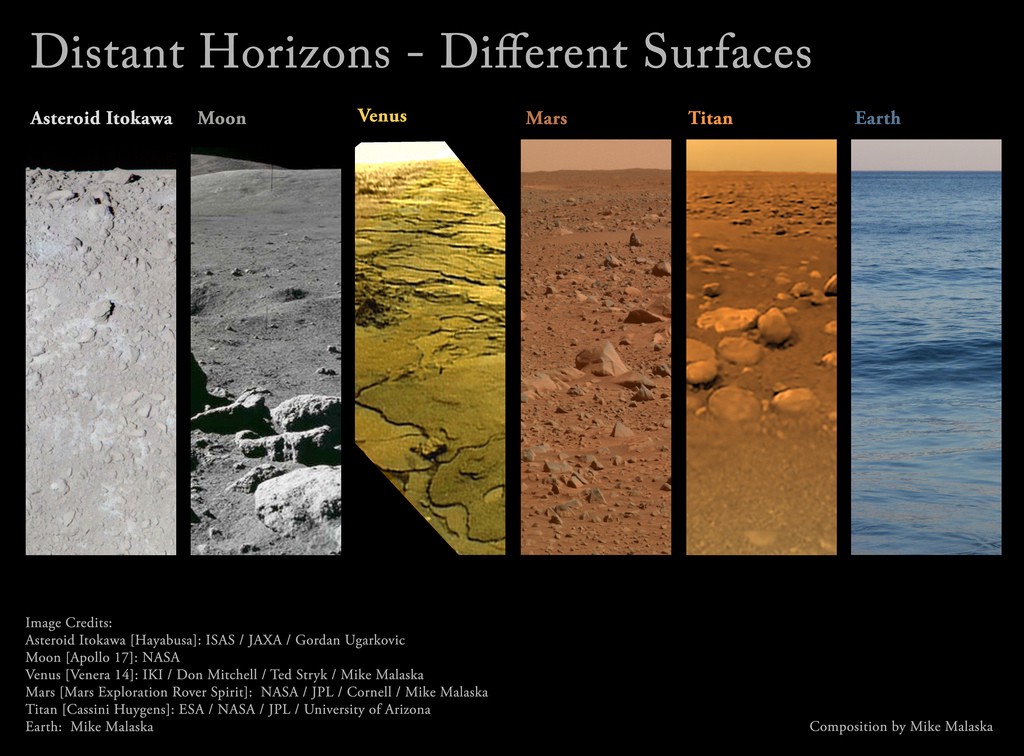
Only within the Solar System can we actively perform planetary paleontology: the science of looking not only for active biosignatures and signs of life processes, but for ancient, past, and now-extinct life. We can literally dig it up: perhaps in the soils of Mars or one of its moons (which JAXA’s Martian Moons eXploration mission will soon probe), buried beneath the surface of Venus, or even on one of the Solar System’s dwarf planets. There’s even the possibility that the life that exists here on Earth either began elsewhere in the Solar System, or that it provided the seeds for life that now thrives elsewhere in the Solar System. Our own backyard, after all, is the best place to look closely as we begin our search for life outside of our home.
2.) We can look to exoplanets, remotely, for potential signatures of life.
As the number of known exoplanets continues to rise, the science case becomes stronger and stronger for developing the technologies capable of measuring, remotely, just what’s occurring on a world light-years away from us. Biological processes, at least as we understand them, always involve not only the metabolization of resources from the environment, but the expulsion of waste products. Those two processes, utilizing existing resources and producing and eliminating waste products, are hallmarks of life that, over time, can change the composition of a planet’s atmosphere in detectable ways.

That’s where the science of transit spectroscopy comes in. When a planet passes in front of its parent star relative to our line-of-sight, it blocks a fraction of that star’s light, which is the primary method by which exoplanets have been detected with observatories like Kepler and TESS. However, if those exoplanets also possess atmospheres, then a fraction of that light will not be blocked by the planet during a transit, but instead will behave as though it was filtered: with the absorption signatures of molecules in the atmosphere imprinted on that light.
Through these methods, we can detect a variety of molecules that could signify the presence of life: oxygen, water, methane, carbon dioxide, ozone, and potentially even extremely complex molecules that only intelligent life would develop, like chlorofluorocarbons. For planets that don’t transit, there’s another option that we hope to realize with the planned Habitable Worlds Observatory: direct imaging of Earth-sized planets at Earth-like distances around Sun-like stars. Even from just a single pixel, we could determine whether a world has oceans, icecaps, continents, partial cloud cover, portions that green and brown with seasons, or seasonal variations in gas concentrations.

3.) The search for technosignatures.
If we were located far away and wanted to know if planet Earth was inhabited, there are a variety of ways we could find out. Sure, we could go there and view it from up close: that’s the first option we considered, which is currently limited to worlds in our Solar System with present technology. We could view it remotely, from afar, and detect the molecular signatures associated with life as well as the atmospheric and visual changes that life induces. But we could also listen for the uniquely human signatures — signatures made by an intelligent, technologically advanced species — that are created here on Earth.
Such signatures include:
- radio broadcasts,
- television signals,
- artificial lighting at night,
- the presence of artificial satellite swarms around the Earth,
- spacecraft that have left low-Earth orbit or even the Solar System,
as well as whatever technologies we have yet to dream up. Endeavors like SETI are designed to detect the types of signatures that we know humans have created or that we can imagine other intelligent aliens creating remotely: simply by listening to whatever signals are broadcast. If a series of prime numbers were broadcast, or a message that was encoded with too much information to have been created naturally, we could discover it simply by listening and deciphering it.
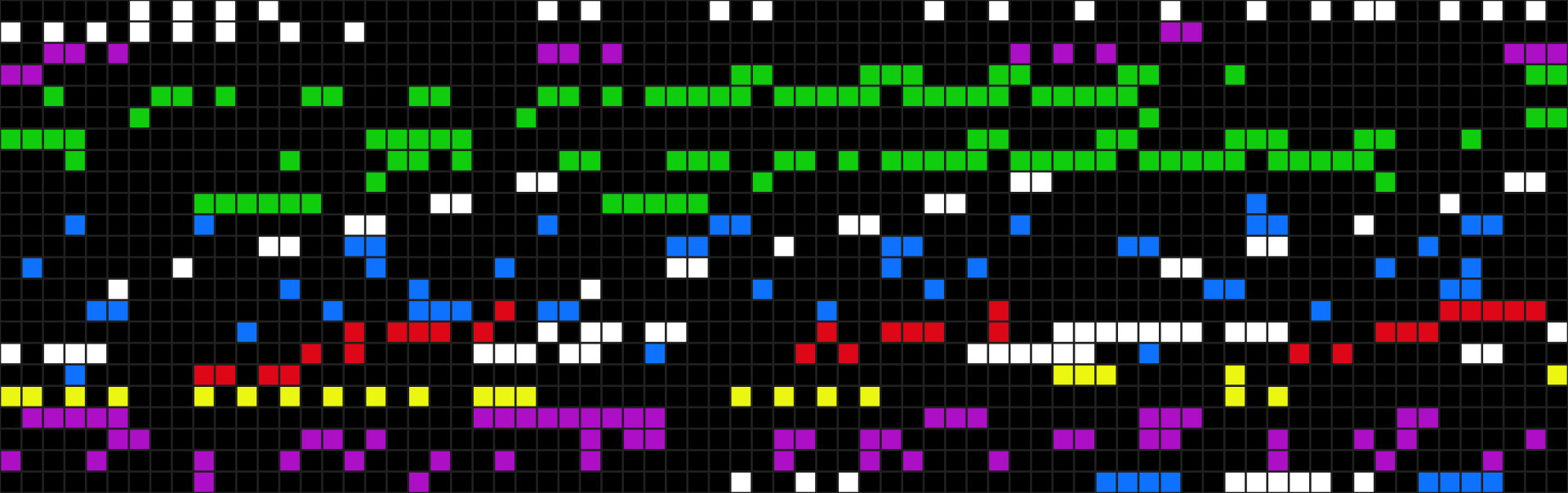
As is always true in science, you cannot know what you’ll find until you look. Our current tools have failed to yield any positive successes, but we’ve only just begun to probe the Milky Way for signs of life: ancient, microbial, complex, intelligent, technologically advanced, or otherwise. But we’ve barely waded into the shallowest waters of the cosmic ocean; all we’ve established is that life isn’t maximally ubiquitous throughout the Universe.
To determine just how abundant life is, and to make that all-important discovery of the first inhabited world beyond our own, we need the right tools to get the job done. That includes:
- a fleet of spacecraft dedicated to exploring the Solar System, returning samples, analyzing the atmosphere, surface, and sub-surface of the worlds we can access,
- an array of ground-based and space-based telescopes that can probe exoplanet atmospheres directly, including 30-meter-class ground based telescopes, the Habitable World Observatory with a next-generation coronagraph, and potentially even a telescope partnered with a starshade,
- and a new array of radio telescopes, such as the ngVLA, as well as a gigantic single-dish telescope, such as a rebuilt Arecibo.
All of this is feasible and within reach of current technology, and the discovery of life beyond Earth’s origin would be the most profound scientific finding in human history. After all, the only way to know for sure that we aren’t alone in the Universe is to find a second example of an inhabited planet. But unless we build and use the right tools for the job, we won’t be able to know.
This article Science’s three big hopes for finding alien life is featured on Big Think.