- Archaeology
- Middle East
Archaeologists have unearthed a 1,200-year-old hoard of gold, silver and gemstones that was buried along a medieval pilgrimage route in Saudi Arabia.
 By
Kristina Killgrove
published
27 May 2026
in News
By
Kristina Killgrove
published
27 May 2026
in News
When you purchase through links on our site, we may earn an affiliate commission. Here’s how it works.
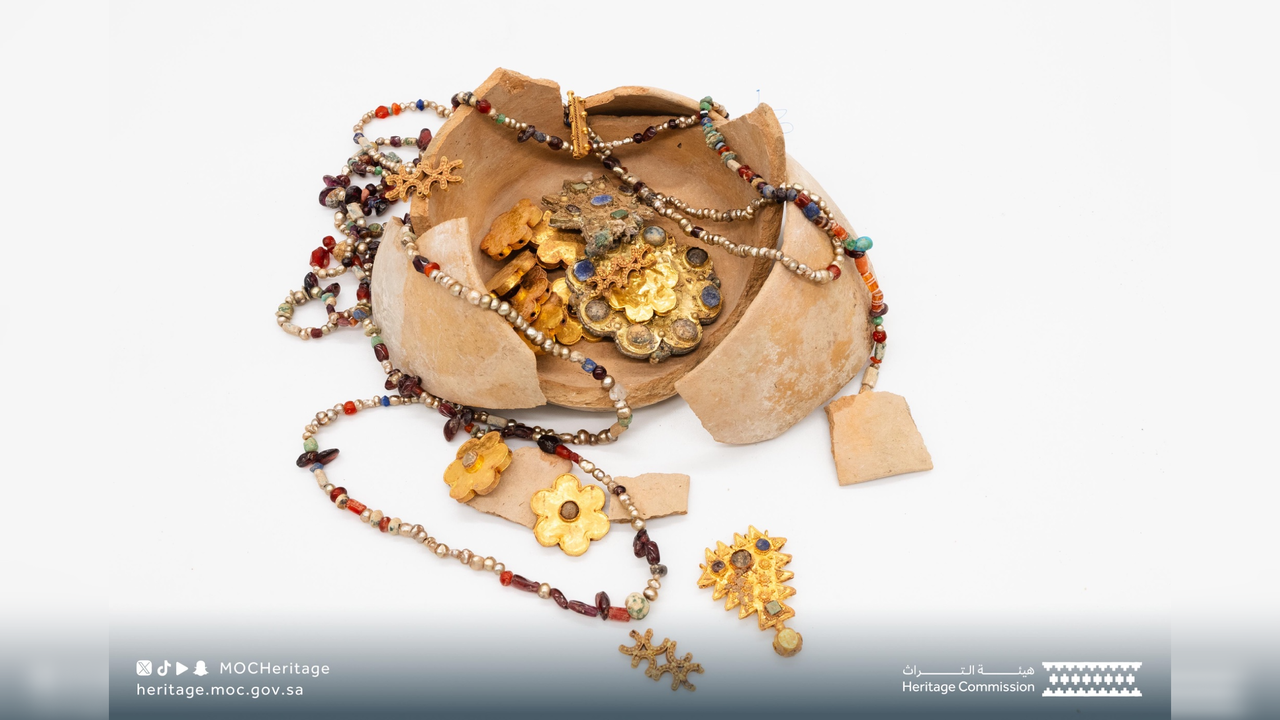
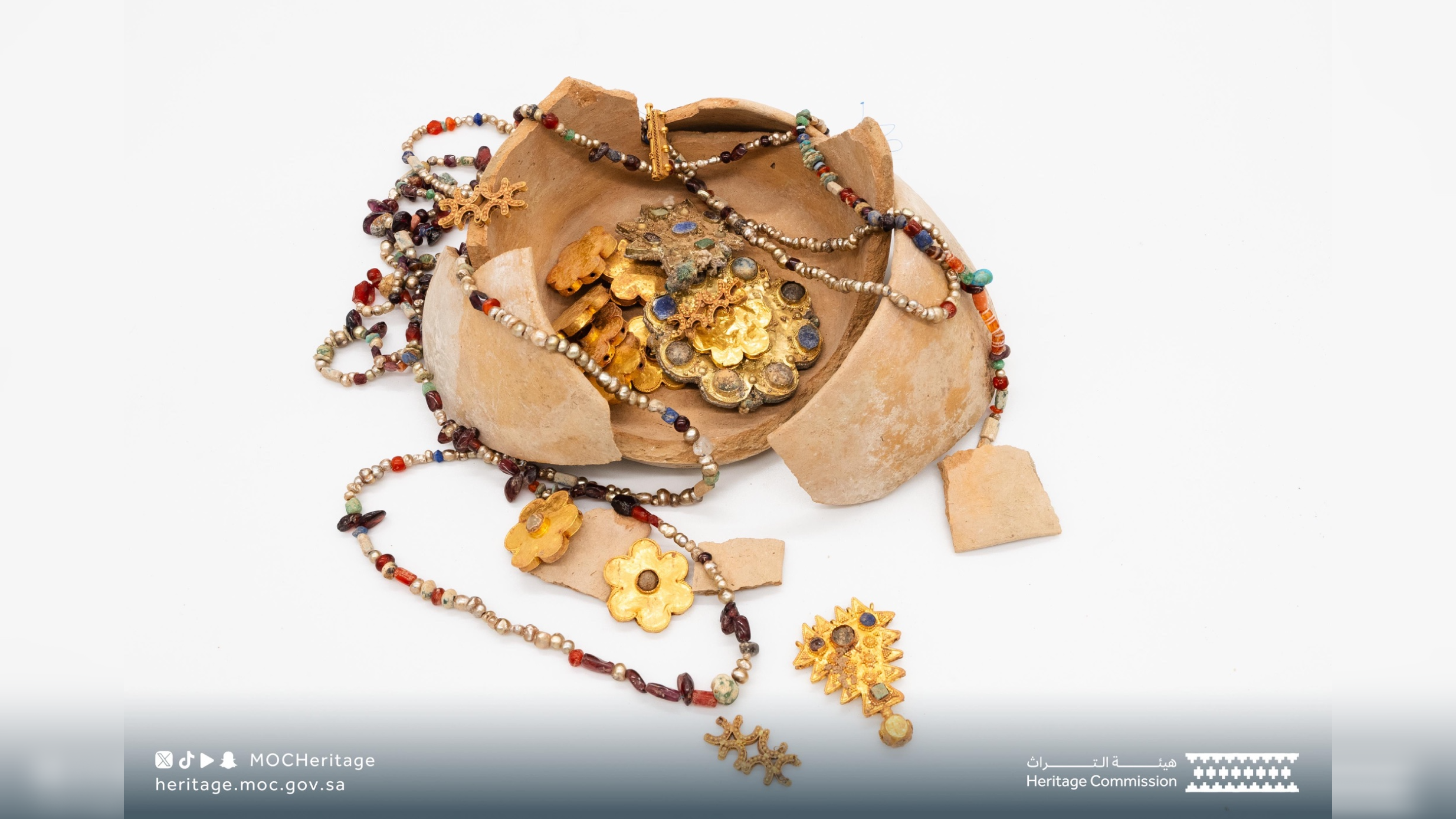 Archaeologists discovered a ceramic jar containing over 100 gold and silver artifacts at the site of Diriyah.
(Image credit: Saudi Heritage Commission)
Archaeologists discovered a ceramic jar containing over 100 gold and silver artifacts at the site of Diriyah.
(Image credit: Saudi Heritage Commission)
- Copy link
- X
Archaeologists in Saudi Arabia have unearthed a clay pot full of gold, silver and gemstone-encrusted jewelry that may have been buried by an Islamic pilgrim en route to Mecca more than a millennium ago.
The team nicknamed the hoard the "Diriyah Treasure" after the archaeological site where it was discovered. Located on the outskirts of Riyadh, Diriyah was a key station on the Hajj route for Islamic pilgrims between Basra, Iraq, and Mecca, Saudi Arabia. According to archaeologists with the Saudi Heritage Commission who have been excavating Diriyah for six years, radiocarbon analysis of organic remains puts the main settlement in the period of 743 to 753.
You may like-
 Gold sword scabbard discovered under toppled tree in Norway was likely 'sacrificed' by an elite warrior 1,500 years ago
-
 Gold coin discovered by a metal detectorist in the UK may have been dropped by a Viking invader from the Great Heathen Army
-
 Russian Revolution gold coin hoard worth over $500,000 discovered during house construction
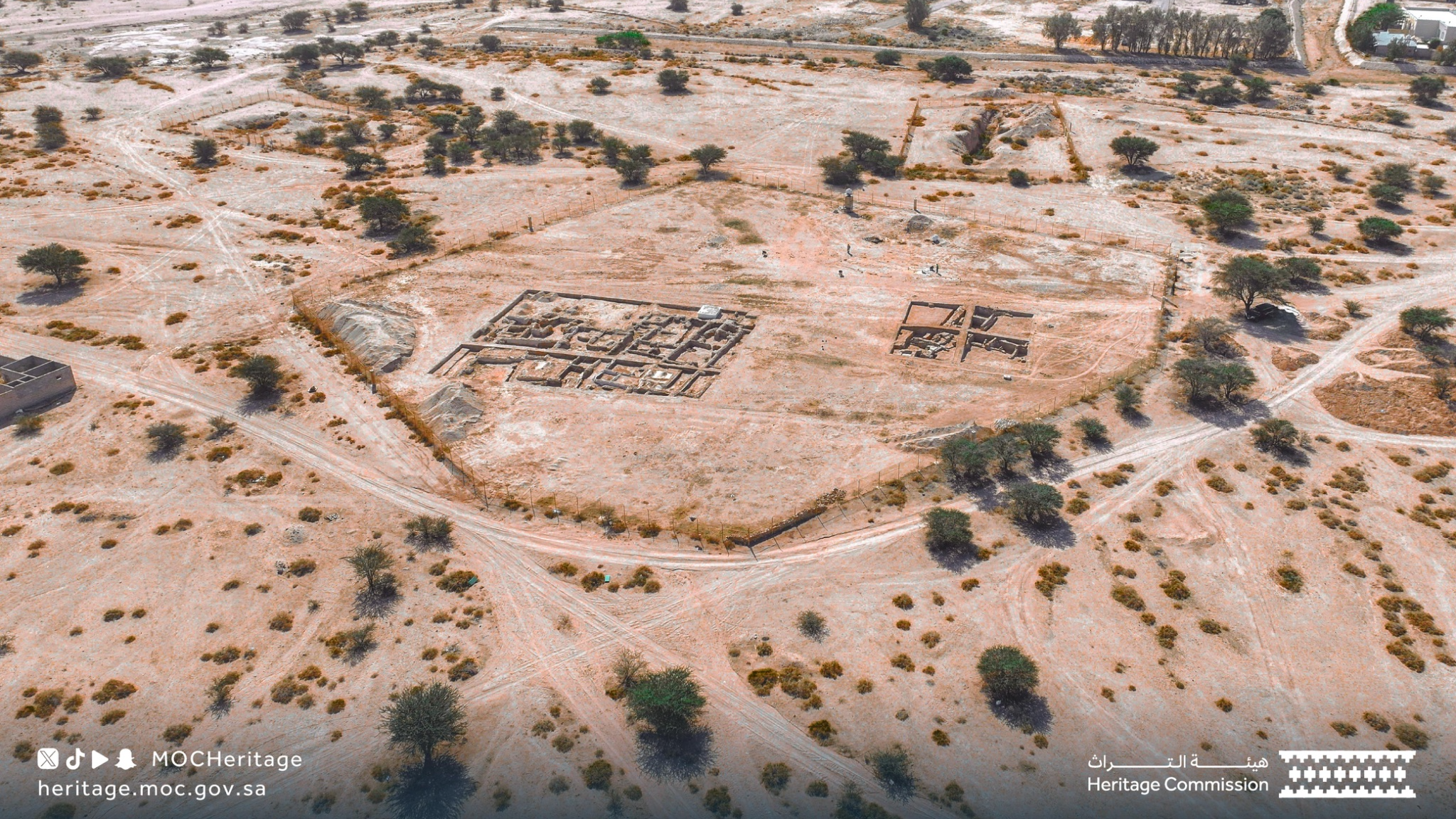
An aerial photograph of the archaeological excavations at Diriyah.
(Image credit: Saudi Heritage Commission)RELATED STORIES- 'Magical artifacts' found along centuries-old pilgrimage route to Mecca may have protected against evil eye
- Paleo-Arabic inscription on rock was made by Prophet Muhammad's companion before he converted, study finds
- DNA reveals ancestry of man buried in Stone Age monument in Spain, but his religion remains a mystery
 Kristina KillgroveSocial Links NavigationStaff writer
Kristina Killgrove is a staff writer at Live Science with a focus on archaeology and paleoanthropology news. Her articles have also appeared in venues such as Forbes, Smithsonian, and Mental Floss. Kristina holds a Ph.D. in biological anthropology and an M.A. in classical archaeology from the University of North Carolina, as well as a B.A. in Latin from the University of Virginia, and she was formerly a university professor and researcher. She has received awards from the Society for American Archaeology and the American Anthropological Association for her science writing.
View MoreYou must confirm your public display name before commenting
Please logout and then login again, you will then be prompted to enter your display name.
Logout Read more
Archaeology
Gold sword scabbard discovered under toppled tree in Norway was likely 'sacrificed' by an elite warrior 1,500 years ago
Vikings
Gold coin discovered by a metal detectorist in the UK may have been dropped by a Viking invader from the Great Heathen Army
SPONSORED_LABEL
SPONSORED_HEADLINE
SPONSORED_DISCLAIMER
SPONSORED_STRAPLINE
Archaeology
Russian Revolution gold coin hoard worth over $500,000 discovered during house construction
 Vikings
'The detectors never stopped beeping!' Nearly 3,000 coins discovered in field are Norway's largest Viking hoard on record
SPONSORED_LABEL
SPONSORED_HEADLINE
SPONSORED_DISCLAIMER
SPONSORED_STRAPLINE
Latest in Middle East
Vikings
'The detectors never stopped beeping!' Nearly 3,000 coins discovered in field are Norway's largest Viking hoard on record
SPONSORED_LABEL
SPONSORED_HEADLINE
SPONSORED_DISCLAIMER
SPONSORED_STRAPLINE
Latest in Middle East
 Middle East
Dark message warning enemy to 'learn your lesson' found inscribed on 2,000-year-old sling bullet from ancient Holy Land
Middle East
Dark message warning enemy to 'learn your lesson' found inscribed on 2,000-year-old sling bullet from ancient Holy Land
 Middle East
Gender ambiguity was a tool of power 4,500 years ago in Mesopotamia
SPONSORED_LABEL
SPONSORED_HEADLINE
SPONSORED_DISCLAIMER
SPONSORED_STRAPLINE
Middle East
Gender ambiguity was a tool of power 4,500 years ago in Mesopotamia
SPONSORED_LABEL
SPONSORED_HEADLINE
SPONSORED_DISCLAIMER
SPONSORED_STRAPLINE
 Middle East
'A huge surprise': 1,500-year-old church found next to Zoroastrianism place of worship in Iraq
Middle East
'A huge surprise': 1,500-year-old church found next to Zoroastrianism place of worship in Iraq
 Middle East
Rare 1,300-year-old medallion decorated with menorahs found near Jerusalem's Temple Mount
SPONSORED_LABEL
SPONSORED_HEADLINE
SPONSORED_DISCLAIMER
SPONSORED_STRAPLINE
Middle East
Rare 1,300-year-old medallion decorated with menorahs found near Jerusalem's Temple Mount
SPONSORED_LABEL
SPONSORED_HEADLINE
SPONSORED_DISCLAIMER
SPONSORED_STRAPLINE