- Physics & Mathematics
CERN scientists transported antimatter by truck for the first time, enabling ultraprecise studies that could reveal why matter dominates the universe.
When you purchase through links on our site, we may earn an affiliate commission. Here’s how it works.
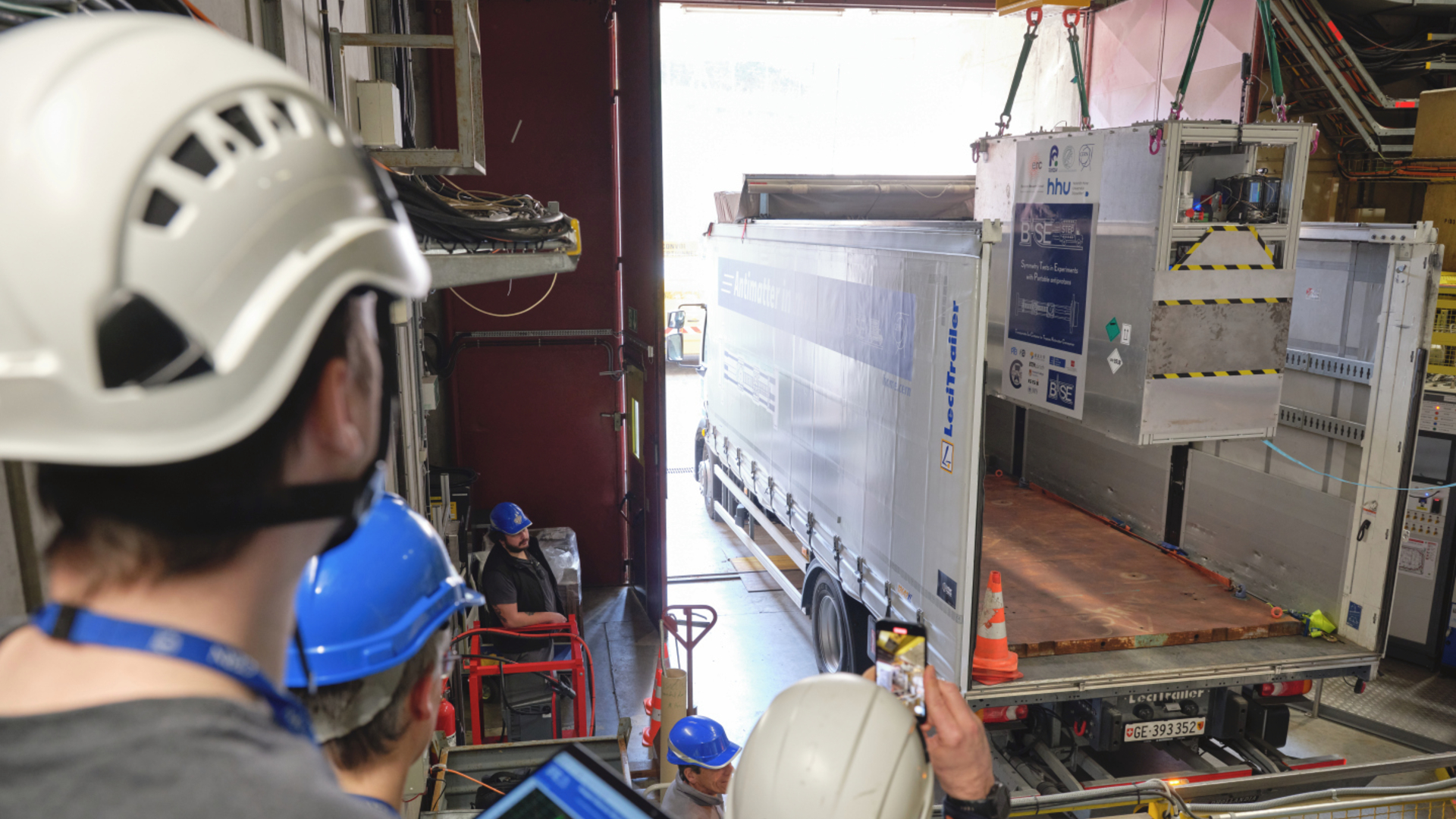 Physicists load an antimatter ‘trap’ onto a truck for a groundbreaking transport experiment.
(Image credit: CERN / Multimedia Production Team; Melanie Arnold; Maximilien Brice)
Physicists load an antimatter ‘trap’ onto a truck for a groundbreaking transport experiment.
(Image credit: CERN / Multimedia Production Team; Melanie Arnold; Maximilien Brice)
- Copy link
- X
Get the world’s most fascinating discoveries delivered straight to your inbox.
Become a Member in Seconds
Unlock instant access to exclusive member features.
Contact me with news and offers from other Future brands Receive email from us on behalf of our trusted partners or sponsors By submitting your information you agree to the Terms & Conditions and Privacy Policy and are aged 16 or over.You are now subscribed
Your newsletter sign-up was successful
Want to add more newsletters?

Delivered Daily
Daily Newsletter
Sign up for the latest discoveries, groundbreaking research and fascinating breakthroughs that impact you and the wider world direct to your inbox.
Signup +
Once a week
Life's Little Mysteries
Feed your curiosity with an exclusive mystery every week, solved with science and delivered direct to your inbox before it's seen anywhere else.
Signup +
Once a week
How It Works
Sign up to our free science & technology newsletter for your weekly fix of fascinating articles, quick quizzes, amazing images, and more
Signup +
Delivered daily
Space.com Newsletter
Breaking space news, the latest updates on rocket launches, skywatching events and more!
Signup +
Once a month
Watch This Space
Sign up to our monthly entertainment newsletter to keep up with all our coverage of the latest sci-fi and space movies, tv shows, games and books.
Signup +
Once a week
Night Sky This Week
Discover this week's must-see night sky events, moon phases, and stunning astrophotos. Sign up for our skywatching newsletter and explore the universe with us!
Signup +Join the club
Get full access to premium articles, exclusive features and a growing list of member rewards.
Explore An account already exists for this email address, please log in. Subscribe to our newsletterPhysicists have successfully transported antimatter by truck for the first time — a milestone that allows them to study the elusive material with unprecedented precision and could eventually help to explain how matter came to dominate the universe.
The short, tightly controlled journey around the campus of the European Organization for Nuclear Research (CERN) in Geneva demonstrated that antimatter, one of the most fragile substances known to science, can be moved without being destroyed. That capability allows scientists to transport antimatter to quieter labs across Europe, where ultrasensitive experiments are less affected by interference than they are at CERN.
You may like-
 Physicists push quantum boundaries by turning a superfluid into a supersolid — and back — for the first time
-
 Physicists recreated the first millisecond after the Big Bang — and found it was surprisingly soupy
-
 Dark matter and neutrinos may interact, hinting at 'fundamental breakthrough' in particle physics
What’s the matter with antimatter?
According to current theories, the Big Bang should have produced equal amounts of matter and antimatter. If that were the case, the two would have annihilated each other completely, leaving behind a dark, empty universe. Instead, the observable universe is puzzlingly, overwhelmingly made of matter, and physicists believe that any measurable difference between matter and antimatter could offer a crucial clue to resolving that mystery.
CERN has been producing antimatter for decades through high-energy particle collisions at its "antimatter factory." But the same powerful equipment used to create the particles also generates tiny magnetic fluctuations that can disrupt the extremely precise measurements scientists are trying to make. Relocating antimatter to more stable environments could help, but transporting it is notoriously difficult.
When antimatter comes into contact with ordinary matter, both are instantly destroyed in a burst of energy. To prevent that, scientists confine antimatter particles using carefully tuned electric and magnetic fields in a near-perfect vacuum — conditions that are challenging to maintain even in a stationary laboratory, let alone in a moving vehicle.
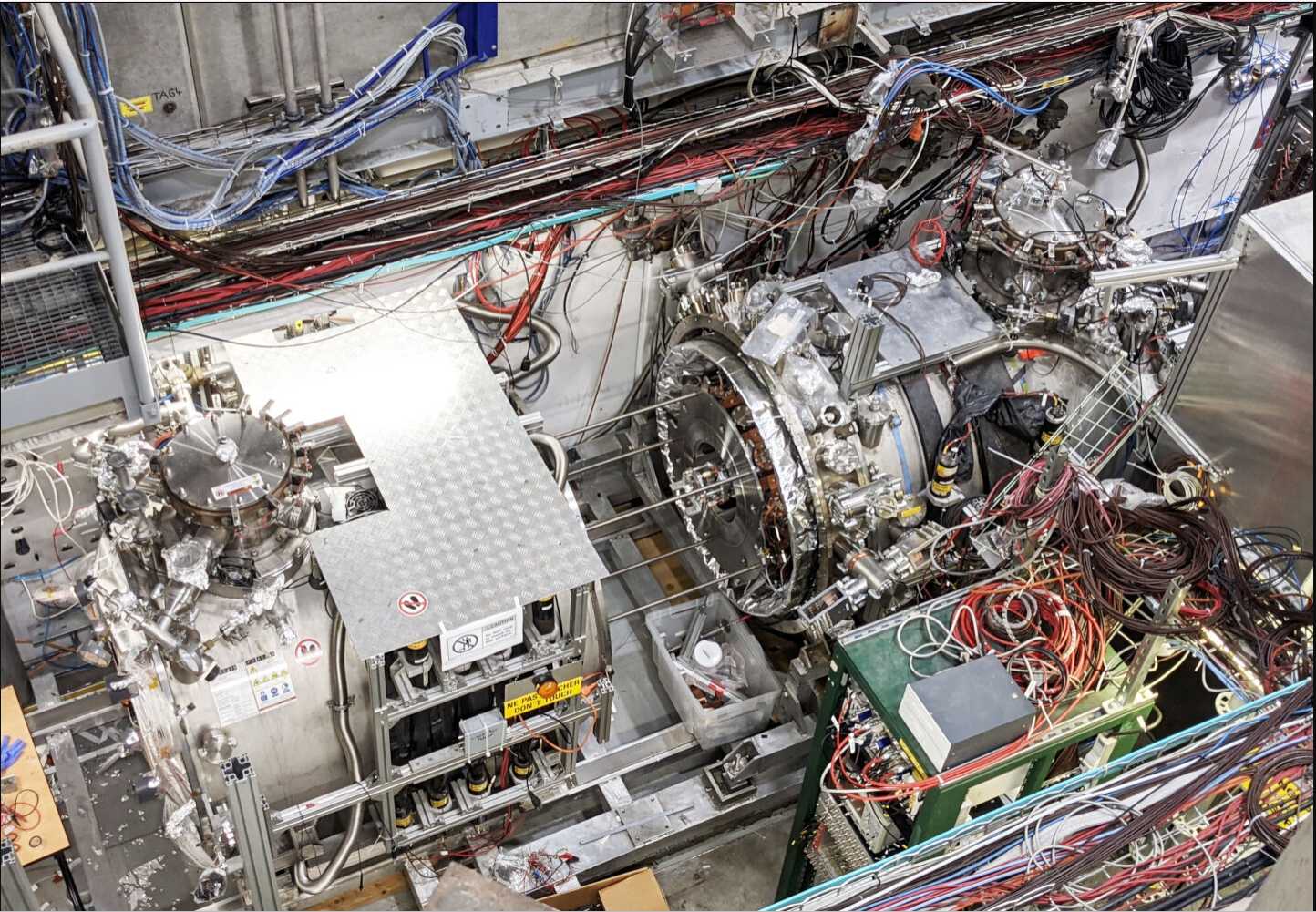
To test whether transport was feasible, Ulmer and his team loaded 92 antiprotons, the antimatter counterparts of protons, into a portable trap and drove them about 5 miles (8 kilometers) around CERN's campus.
Sign up for the Live Science daily newsletter nowContact me with news and offers from other Future brandsReceive email from us on behalf of our trusted partners or sponsorsBy submitting your information you agree to the Terms & Conditions and Privacy Policy and are aged 16 or over.Inside the device, the particles were suspended in a near-perfect vacuum and held in place by electric and magnetic fields, preventing them from touching the container walls. The team monitored the particles throughout the trip and reported that they remained stable despite road vibrations and motion, according to a CERN statement.
Even in a worst-case scenario, the experiment posed little risk. The amount of antimatter involved was extremely small, and its annihilation would have released only a negligible amount of energy. According to CERN, even all the antimatter ever produced at the facility would generate only enough energy to power a single light bulb for just a few minutes.
Beyond the Standard Model
RELATED STORIES- Heaviest antimatter particle ever discovered could hold secrets to our universe's origins
- Antimatter detected on International Space Station could reveal new physics
- Major CERN experiment proves antigravity doesn't exist — at least when it comes to antimatter
The successful test does not immediately change how antimatter is studied, but it demonstrates that transporting it is technically feasible. That, in turn, opens the possibility of moving antiprotons to quieter laboratories across Europe, such as the Heinrich Heine University Düsseldorf in Germany, located about eight hours by road from CERN, where quieter conditions could enable more precise measurements.
Such measurements could help scientists detect even the faintest differences between matter and antimatter. If those differences exist, they could point to why matter came to dominate the universe, offer clues to physics beyond the Standard Model, and ultimately explain why anything — from stars, to planets, to people — exists at all.
"We are at the beginning of an exciting scientific journey that will allow us to further deepen our understanding of antimatter," Gautier Hamel de Monchenault, CERN's director for research and computing, said in the statement.
 Sharmila KuthunurSocial Links NavigationLive Science contributor
Sharmila Kuthunur is an independent space journalist based in Bengaluru, India. Her work has also appeared in Scientific American, Science, Astronomy and Space.com, among other publications. She holds a master's degree in journalism from Northeastern University in Boston. Follow her on BlueSky @skuthunur.bsky.social
View MoreYou must confirm your public display name before commenting
Please logout and then login again, you will then be prompted to enter your display name.
Logout Read more
Quantum Physics
Physicists push quantum boundaries by turning a superfluid into a supersolid — and back — for the first time
Particle Physics
Physicists recreated the first millisecond after the Big Bang — and found it was surprisingly soupy
Particle Physics
Dark matter and neutrinos may interact, hinting at 'fundamental breakthrough' in particle physics
 Quantum Physics
Scientists smash record for superposition, bringing quantum world tantalizingly close to reality
Quantum Physics
Scientists smash record for superposition, bringing quantum world tantalizingly close to reality
 Particle Physics
Upgrade to Antarctica 'ghost particle' observatory could pave the way to physics breakthroughs
Particle Physics
Upgrade to Antarctica 'ghost particle' observatory could pave the way to physics breakthroughs
 Physics & Mathematics
'Collective hum' of black holes could settle the debate over new physics
Latest in Physics & Mathematics
Physics & Mathematics
'Collective hum' of black holes could settle the debate over new physics
Latest in Physics & Mathematics
 Physics & Mathematics
New tweak to Einstein's relativity could transform our understanding of the Big Bang
Physics & Mathematics
New tweak to Einstein's relativity could transform our understanding of the Big Bang
 Particle Physics
Physicists created an electron 'catapult' that moves particles at 'extraordinary' speed
Particle Physics
Physicists created an electron 'catapult' that moves particles at 'extraordinary' speed
 Physics & Mathematics
Live Science Today: 'Hexagonal' diamonds and fish scale down
Physics & Mathematics
Live Science Today: 'Hexagonal' diamonds and fish scale down
 Mathematics
Pi has been calculated to trillions of digits — is that completely irrational?
Mathematics
Pi has been calculated to trillions of digits — is that completely irrational?
 Physics & Mathematics
Chinese physicists create rare 'hexagonal diamond' that's harder than natural diamond
Physics & Mathematics
Chinese physicists create rare 'hexagonal diamond' that's harder than natural diamond
 Physics & Mathematics
Scientists use 'negative light' to send secret messages hidden inside heat
Latest in News
Physics & Mathematics
Scientists use 'negative light' to send secret messages hidden inside heat
Latest in News
 Archaeology
DNA reveals ancestry of man buried in Stone Age monument in Spain, but his religion remains a mystery
Archaeology
DNA reveals ancestry of man buried in Stone Age monument in Spain, but his religion remains a mystery
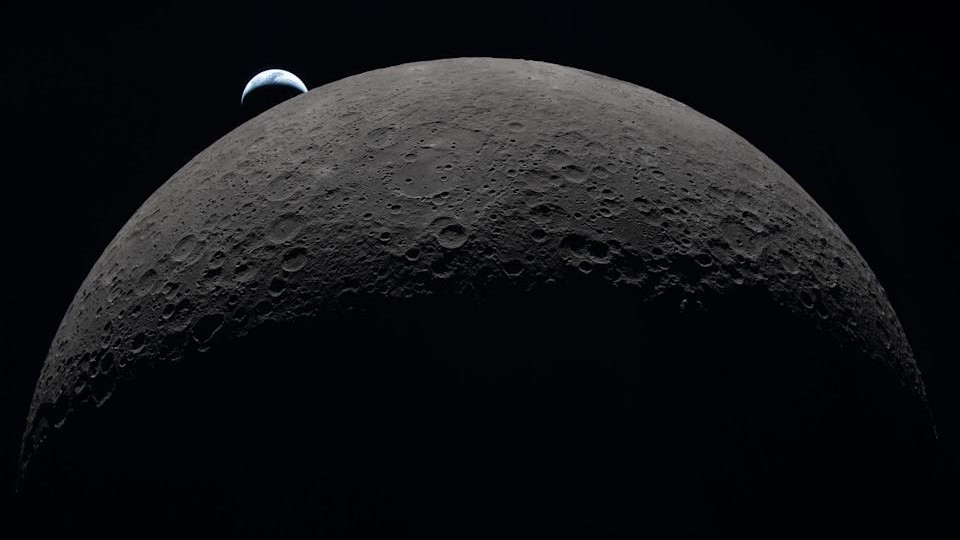 The Moon
'So much magic': Artemis II shares first images from the far side of the moon, including new 'Earthset' and total eclipse in space
The Moon
'So much magic': Artemis II shares first images from the far side of the moon, including new 'Earthset' and total eclipse in space
 Health
AI 'mirages' mean tools used to analyze medical scans could fabricate their findings
Health
AI 'mirages' mean tools used to analyze medical scans could fabricate their findings
 Birds
World's fattest parrot — on the verge of extinction 30 years ago — has record-breaking breeding season
Birds
World's fattest parrot — on the verge of extinction 30 years ago — has record-breaking breeding season
 Space Exploration
The Artemis II astronauts have just flown farther from Earth than any humans in history
Space Exploration
The Artemis II astronauts have just flown farther from Earth than any humans in history
 Space Exploration
Artemis II moon flyby begins: How to watch and what to know
LATEST ARTICLES
Space Exploration
Artemis II moon flyby begins: How to watch and what to know
LATEST ARTICLES 1'They are literally everywhere': The shocking story of how forever chemicals polluted the world
- 2DNA reveals ancestry of man buried in Stone Age monument in Spain, but his religion remains a mystery
- 3'So much magic': Artemis II shares first images from the far side of the moon, including new 'Earthset' and total eclipse in space
- 4AI 'mirages' mean tools used to analyze medical scans could fabricate their findings
- 5World's fattest parrot — on the verge of extinction 30 years ago — has record-breaking breeding season