- Space
- Astronomy
- Meteoroids
A NASA researcher in planetary sciences explains how he discovered a new meteor shower linked to a disintegrating asteroid.
When you purchase through links on our site, we may earn an affiliate commission. Here’s how it works.
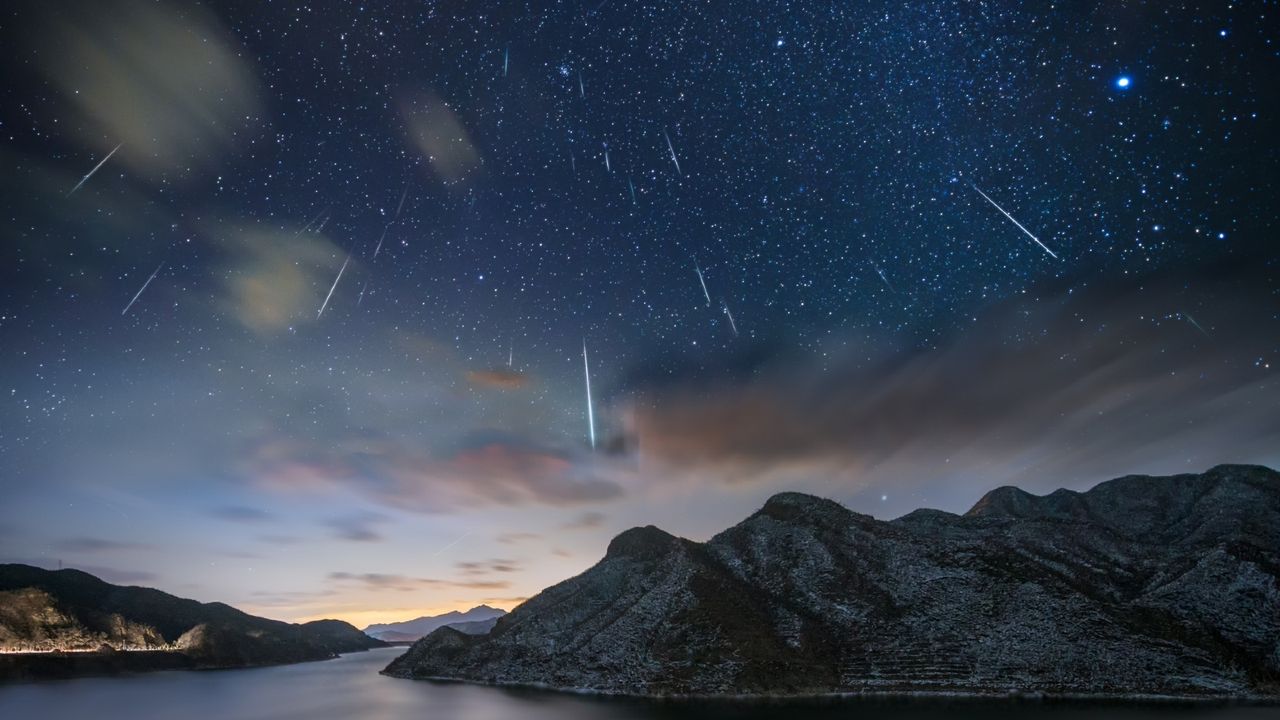
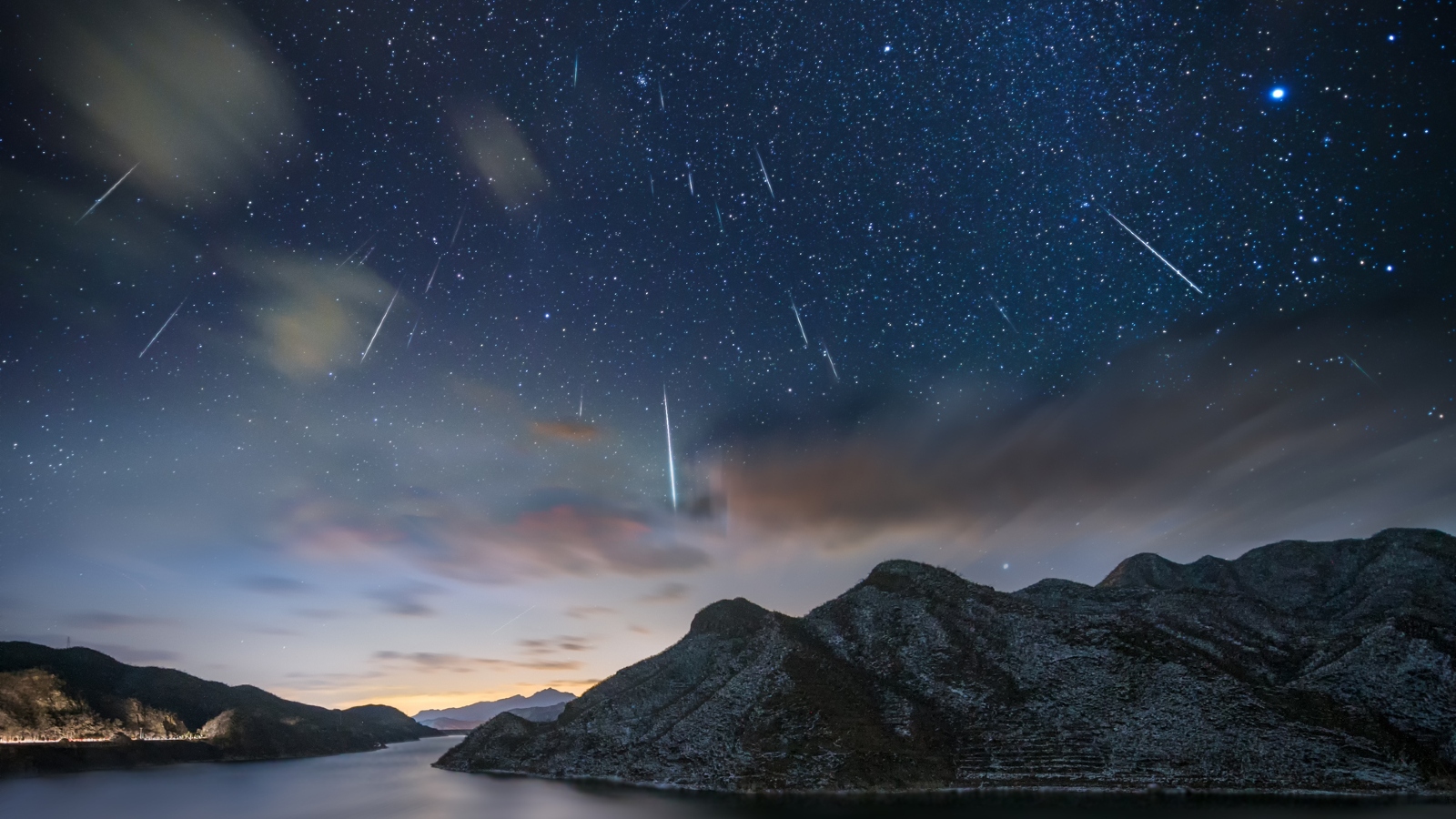 Meteor showers are key events for any stargazer to look out for.
(Image credit: Getty Images)
Meteor showers are key events for any stargazer to look out for.
(Image credit: Getty Images)
- Copy link
- X
Get the world’s most fascinating discoveries delivered straight to your inbox.
Become a Member in Seconds
Unlock instant access to exclusive member features.
Contact me with news and offers from other Future brands Receive email from us on behalf of our trusted partners or sponsors By submitting your information you agree to the Terms & Conditions and Privacy Policy and are aged 16 or over.You are now subscribed
Your newsletter sign-up was successful
Want to add more newsletters?

Delivered Daily
Daily Newsletter
Sign up for the latest discoveries, groundbreaking research and fascinating breakthroughs that impact you and the wider world direct to your inbox.
Signup +
Once a week
Life's Little Mysteries
Feed your curiosity with an exclusive mystery every week, solved with science and delivered direct to your inbox before it's seen anywhere else.
Signup +
Once a week
How It Works
Sign up to our free science & technology newsletter for your weekly fix of fascinating articles, quick quizzes, amazing images, and more
Signup +
Delivered daily
Space.com Newsletter
Breaking space news, the latest updates on rocket launches, skywatching events and more!
Signup +
Once a month
Watch This Space
Sign up to our monthly entertainment newsletter to keep up with all our coverage of the latest sci-fi and space movies, tv shows, games and books.
Signup +
Once a week
Night Sky This Week
Discover this week's must-see night sky events, moon phases, and stunning astrophotos. Sign up for our skywatching newsletter and explore the universe with us!
Signup +Join the club
Get full access to premium articles, exclusive features and a growing list of member rewards.
Explore An account already exists for this email address, please log in. Subscribe to our newsletterAcross the Earth, every night, thousands of automated stargazers are waiting to take pictures of shooting stars. I am one of the scientists who study these meteors.
Most movies and news alerts focus on large asteroids that could destroy the Earth. And your phones notifies you every few months that an object nine washing machines wide is going to just narrowly skim past. However, the small dust and rubble that enter our atmosphere daily tell an equally interesting story.
You may like-
 Asteroid 2024 YR4's collision with the moon could create a flash visible from Earth
-
 Rare 'daytime fireball' meteor creates powerful sonic boom as 7-ton space rock explodes above eastern US
-
 How to photograph a meteor shower — Next up: The Lyrids
In a study published in March 2026, I searched through millions of meteor observations collected by all-sky camera networks based in Canada, Japan, California and Europe and found a small, recently formed cluster. The 282 meteors associated with this cluster tell the story of an asteroid that got a little too close to the sun.
Meteor formation
When a sand-sized crumb of space rock hits our atmosphere, it heats up almost instantly, vaporizing its surface layer and turning it into an electrically charged gas. The whole fragment starts to glow — this is what we call a meteor. If the object is larger, like a boulder, and brighter, it's called a bolide or a fireball. On average, these objects hit our atmosphere going over 15 miles per second. For small dust or sand-sized objects, the whole process lasts only a fraction of a second before they completely disappear.
Most of these sand-sized fragments in the solar system originate from comets — cold, icy objects from the outer reaches of the solar system. As comets pass by the sun, their icy components turn to gas, releasing tons of dust. This is why comets are often called "dirty snowballs" and appear fuzzy in telescopic images.
Asteroids, on the other hand, are leftovers from the early solar system that formed closer to the sun. They are dry and rocky, and do not have the same ices that give comets their characteristic tails.
Sign up for the Live Science daily newsletter nowContact me with news and offers from other Future brandsReceive email from us on behalf of our trusted partners or sponsorsBy submitting your information you agree to the Terms & Conditions and Privacy Policy and are aged 16 or over.
What does it mean to be active?
Astronomers call an asteroid or comet "active" when it sheds dust, gas or larger fragments. This activity is caused by some external force on the object in space, like heat from the sun, a small impact, or when asteroids spin too fast and fly apart.
Understanding and identifying activity helps scientists better understand how these objects change over time.
For comets, sublimation of ices — when solid ice turns directly into gas, skipping the liquid phase — is the primary culprit. However, for asteroids, the reason for activity can vary greatly.
What to read next-
 Cannonball-size meteorite crashes through roof of Texas home as multiple 'fireballs' rain down on the US
-
 Exceptionally rare sighting of planets colliding may shed light on the crash that formed the moon
-
 All 5 'letters' of DNA found on an asteroid speeding through our solar system. What do they tell us about the origins of life?
For example, NASA's OSIRIS-REx mission, which launched into space to study an asteroid named Bennu, saw activity from its surface, with heat stress and small impacts among the leading explanations.
Other sources for asteroid activity include breakup when an asteroid spins too fast, tidal forces ripping apart asteroids during close encounters with a planet, or gas release.
Researchers most commonly search for activity using telescopes. Astronomers can look for a "tail" or fuzziness around the object. This tail is a clear sign that there is gas and dust around the body. But there is another way to search for activity — meteor showers.
Finding hidden asteroids via meteor showers
The most famous active asteroid is 3200 Phaethon. It is the parent body of the Geminid meteor shower that occurs every year in mid-December. During past close approaches with the sun, Phaethon released vast amounts of dust and larger fragments. These morsels of Phaethon have spread out along its entire orbit over time, leading to the present Geminid meteor stream.
Each meteor shower we observe occurs when the Earth passes through one of these debris streams. So if astronomers can detect meteor showers, they can also be used to find active objects in space.
At first, debris shed by an asteroid or comet travels closely together. Imagine squeezing a single drop of food dye into a moving stream of water: Initially, the dye stays in a tight, concentrated cloud. But as it flows, the water's swirling currents pull at the dye, causing it to spread out and fade.
In space, the gravitational tugs from passing planets act like those currents. They pull on the individual meteor fragments in slightly different ways, causing the once-tight stream to gradually drift apart until it completely dilutes into the background dust of our solar system.
The discovery of a rock-comet
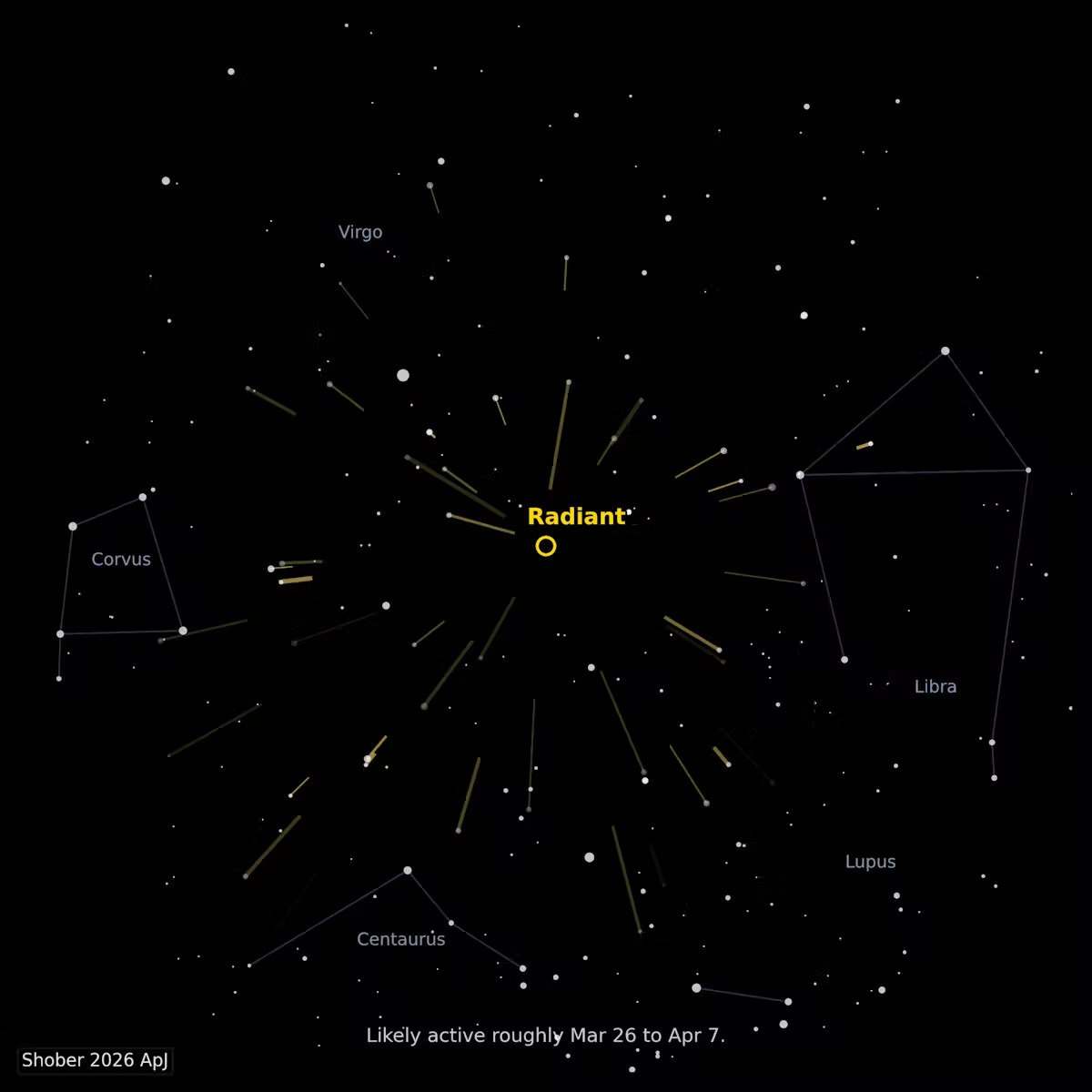
In a study published in March 2026 in the Astrophysical Journal, I used millions of observations of meteors to search for recent, unknown activity from asteroids near the Earth. I found one clear cluster of 282 meteors that stood out.
What makes this discovery so exciting is that we are essentially witnessing a hidden asteroid being baked to bits. This newly confirmed meteor stream follows an extreme orbit that plunges almost five times closer to the Sun than Earth does.
Based on how these meteors break apart when they hit our atmosphere, we can tell they are moderately fragile, but tougher than stuff from comets. This finding tells us that intense solar heat is literally cracking the asteroid’s surface, baking out trapped gases and causing it to crumble. This is likely a major source of past Phaethon activity and the main reason the meteorites on Earth are so diverse.
YouTube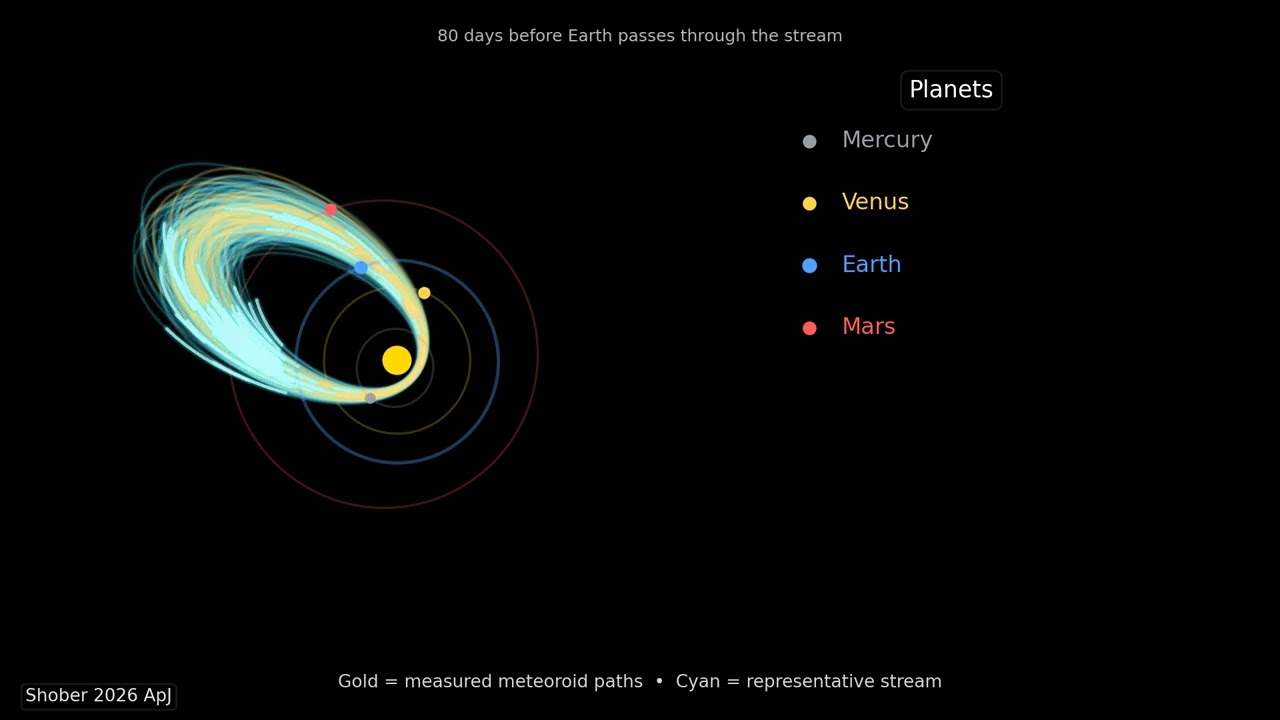 Watch On
The search for the source
Why does finding a hidden, crumbling asteroid matter? Meteor observations act as a uniquely sensitive probe that lets us study objects that are completely invisible to traditional telescopes.
Beyond solving astronomical mysteries, analyzing this debris helps us understand the physical evolution of asteroids and comets in our solar system. More importantly, it reveals hidden populations of near-Earth asteroids, which is vital information for planetary defense.
The new meteor shower's parent asteroid remains elusive. However, NASA's NEO Surveyor mission, launching in 2027, offers a promising solution. This space telescope, dedicated to planetary defense and the discovery of dark, hazardous, sun-approaching asteroids, will be the ideal tool for searching for the showe's origin.
This edited article is republished from The Conversation under a Creative Commons license. Read the original article.
 Patrick M. ShoberPostdoctoral Fellow in Planetary Sciences, NASA
Patrick M. Shober is a Postdoctoral Fellow in Planetary Sciences for NASA
View MoreYou must confirm your public display name before commenting
Please logout and then login again, you will then be prompted to enter your display name.
Logout Read more
Asteroids
Asteroid 2024 YR4's collision with the moon could create a flash visible from Earth
Meteoroids
Rare 'daytime fireball' meteor creates powerful sonic boom as 7-ton space rock explodes above eastern US
Astronomy
How to photograph a meteor shower — Next up: The Lyrids
Meteoroids
Cannonball-size meteorite crashes through roof of Texas home as multiple 'fireballs' rain down on the US
Space
Exceptionally rare sighting of planets colliding may shed light on the crash that formed the moon
Asteroids
All 5 'letters' of DNA found on an asteroid speeding through our solar system. What do they tell us about the origins of life?
Latest in Meteoroids
Meteoroids
Cannonball-size meteorite crashes through roof of Texas home as multiple 'fireballs' rain down on the US
Meteoroids
Rare 'daytime fireball' meteor creates powerful sonic boom as 7-ton space rock explodes above eastern US
 Meteoroids
Falling meteorite smashes hole in roof of German house after spectacular 'fireball' explosion over Europe
Meteoroids
Falling meteorite smashes hole in roof of German house after spectacular 'fireball' explosion over Europe
 Meteoroids
Ursid meteor shower 2025: When and where to see 'shooting stars' on the longest night of the year
Meteoroids
Ursid meteor shower 2025: When and where to see 'shooting stars' on the longest night of the year
 Meteoroids
See up to 150 'shooting stars' per hour this weekend as the Geminid meteor shower reaches its stunning peak
Meteoroids
See up to 150 'shooting stars' per hour this weekend as the Geminid meteor shower reaches its stunning peak
 Meteoroids
100,000 mph 'comet fragment' explodes in green fireball over Great Lakes, eerie videos show
Latest in Opinion
Meteoroids
100,000 mph 'comet fragment' explodes in green fireball over Great Lakes, eerie videos show
Latest in Opinion
 Space Exploration
I've witnessed nearly 100 rocket launches. Artemis II was like nothing I've ever experienced.
Space Exploration
I've witnessed nearly 100 rocket launches. Artemis II was like nothing I've ever experienced.
 Climate change
California declared war on smog in the 1970s. The knock-on effects were huge.
Climate change
California declared war on smog in the 1970s. The knock-on effects were huge.
 Artificial Intelligence
AI systems are enabling mass surveillance in the US, and there is no national law that 'meaningfully limits' the use of this data
Artificial Intelligence
AI systems are enabling mass surveillance in the US, and there is no national law that 'meaningfully limits' the use of this data
 Fossil Fuels
Our fossil fuel economy is a house of cards and Trump's war in Iran is about to topple it. The need for a clean energy transition has never been clearer.
Fossil Fuels
Our fossil fuel economy is a house of cards and Trump's war in Iran is about to topple it. The need for a clean energy transition has never been clearer.
 Rivers & Oceans
Colorado River negotiations have stalled among 7 states and water is scarce. What happens next?
Rivers & Oceans
Colorado River negotiations have stalled among 7 states and water is scarce. What happens next?
 Reproductive Health
Endometriosis messes with the immune system and causes 'ripple effects across the body'
LATEST ARTICLES
Reproductive Health
Endometriosis messes with the immune system and causes 'ripple effects across the body'
LATEST ARTICLES 1AI for breakup texts? How 'sycophantic' chatbots are messing with our ability to handle difficult social situations.
- 2Science news this week: Artemis II splashes down, the world's fattest parrot bounces back, and the Shroud of Turin is contaminated
- 310 Artemis II photos that define humanity's return to the moon
- 4Do the microbes in your gut influence what foods you like?
- 5'I'm at a loss for words': Artemis II mission comes home to joy and cheers after historic 10-day mission

