- Health
- Food & Drink
 Do the microbes in your gut influence what foods you like?
Features
By
Ashley Hamer
published
11 April 2026
Do the microbes in your gut influence what foods you like?
Features
By
Ashley Hamer
published
11 April 2026
Can the microbes in your gut influence the foods you crave?
When you purchase through links on our site, we may earn an affiliate commission. Here’s how it works.
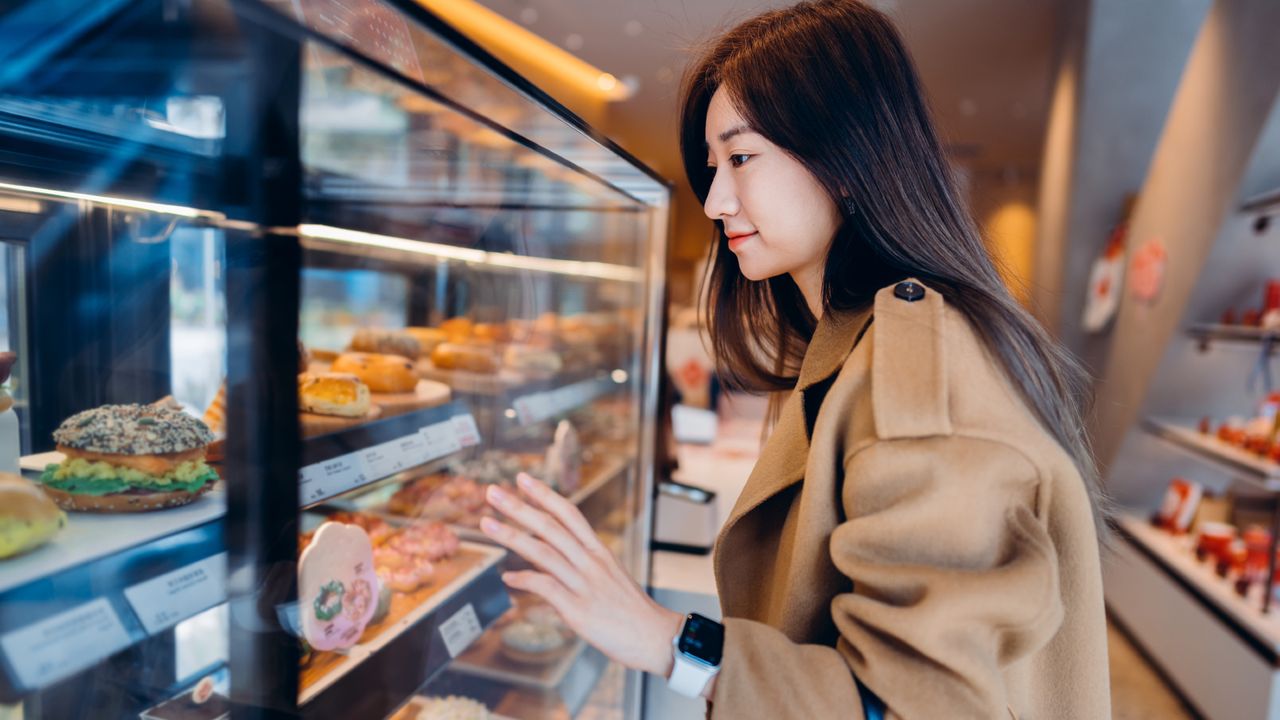
 Are you truly craving sweets, or does that urge come from the bacteria within your gut?
(Image credit: Asia-Pacific Images Studio via Getty Images)
Are you truly craving sweets, or does that urge come from the bacteria within your gut?
(Image credit: Asia-Pacific Images Studio via Getty Images)
- Copy link
- X
Get the world’s most fascinating discoveries delivered straight to your inbox.
Become a Member in Seconds
Unlock instant access to exclusive member features.
Contact me with news and offers from other Future brands Receive email from us on behalf of our trusted partners or sponsors By submitting your information you agree to the Terms & Conditions and Privacy Policy and are aged 16 or over.You are now subscribed
Your newsletter sign-up was successful
Want to add more newsletters?

Delivered Daily
Daily Newsletter
Sign up for the latest discoveries, groundbreaking research and fascinating breakthroughs that impact you and the wider world direct to your inbox.
Signup +
Once a week
Life's Little Mysteries
Feed your curiosity with an exclusive mystery every week, solved with science and delivered direct to your inbox before it's seen anywhere else.
Signup +
Once a week
How It Works
Sign up to our free science & technology newsletter for your weekly fix of fascinating articles, quick quizzes, amazing images, and more
Signup +
Delivered daily
Space.com Newsletter
Breaking space news, the latest updates on rocket launches, skywatching events and more!
Signup +
Once a month
Watch This Space
Sign up to our monthly entertainment newsletter to keep up with all our coverage of the latest sci-fi and space movies, tv shows, games and books.
Signup +
Once a week
Night Sky This Week
Discover this week's must-see night sky events, moon phases, and stunning astrophotos. Sign up for our skywatching newsletter and explore the universe with us!
Signup +Join the club
Get full access to premium articles, exclusive features and a growing list of member rewards.
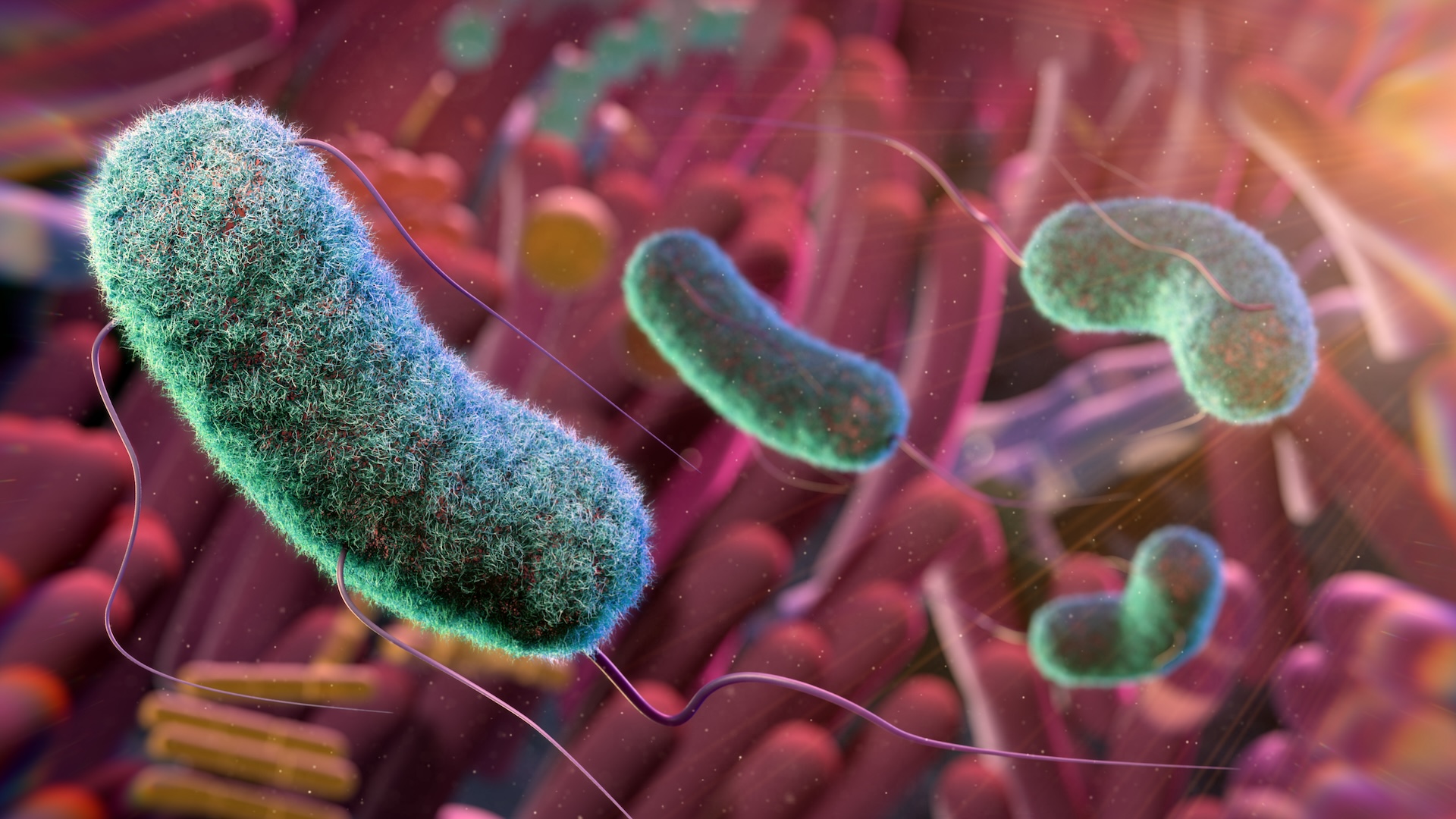
Explore An account already exists for this email address, please log in. Subscribe to our newsletterScientists have identified more than 3,000 species of bacteria living in the human gut. We know they play a role in digestion and immune function. But can they also influence the kinds of food we crave?
In a 2014 study in the journal BioEssays, researchers proposed that gut microbes might manipulate the eating behavior of their hosts by generating cravings for foods the bacteria thrive on, or even causing discomfort until the host eats what benefits them.
You may like-
 Could gut microbes hold the secret to aging well? A researcher unpacks the emerging science
-
 A gut microbe linked to the Mediterranean diet boosts muscle strength in mice
-
 Viruses in the gut may help prevent blood sugar spikes, mouse study hints

Sign up for our weekly Life's Little Mysteries newsletter to get the latest mysteries before they appear online.
Salmonella Typhimurium is one example. It hijacks the chemical signals between the gut and brain to keep its host eating through infection.
"Typically, when you have a GI [gastrointestinal] infection, you stop eating," Alcock said. "And Salmonella [Typhimurium] seems to actually impair that … so that animals continue to eat and continue to produce infectious particles in their poop that go on to infect other animals."
However, this was a theoretical paper — it proposed mechanisms by which microbes could manipulate cravings, but hadn't demonstrated that they do. The pathways it proposed — including things like altering taste receptors and hijacking the vagus nerve — were plausible, but unconfirmed, especially in the context of everyday food cravings.
How the microbiome may influence food choices
In 2022, researchers tested this hypothesis. In their study, Kevin Kohl, an associate professor of biology who focuses on how interactions with microbes impact the physiology, ecology and evolution of animal hosts at the University of Pittsburgh, and Brian Trevelline, a microbiologist and postdoctoral fellow at Cornell University, transplanted microbiomes from wild rodents with different diets — carnivore, herbivore and omnivore — into germ-free mice, and then measured what they ate.
"I perhaps naively thought that the carnivore-inoculated mice were going to eat the high-protein diet," Kohl told Live Science. "That's not what we saw."
Instead, the mice with herbivore microbiomes preferred protein, while the mice with carnivore microbiomes preferred carbs. But a key finding held: Different microbiomes led to significantly different food choices.
But how? Gut bacteria can produce many of the same neurotransmitters the brain uses to regulate appetite, including serotonin, which signals to the brain when you've had enough to eat. In fact, roughly 90% of the body's serotonin is produced in the gut, not in the brain, and research has shown that gut bacteria play a direct role in that production.
What to read next-
 Why does cannabis give people 'the munchies'?
-
 Early research hints at why women experience more severe gut pain than men do
-
 Why do kids eat their boogers?
I could totally see some feedback cycles where shifts in the microbiome either perpetuate behaviors or bring about different cravings
Kevin Kohl, associate professor of biology at the University of Pittsburgh
In the mouse study, the team found that the mice that received the herbivore microbiome had significantly more tryptophan — a building block of serotonin — in their blood. Previous research has shown that higher serotonin levels suppress carbohydrate cravings in particular, which may explain why those mice shifted toward a high-protein diet.
"That might be at least one potential avenue in which the microbiome is affecting diet, appetite and dietary preferences," Trevelline said.
The findings also raise the possibility that the relationship runs both ways. If your microbiome shapes your cravings, and your diet shapes your microbiome, small changes in what you eat could shift the cycle over time.
"I could totally see some feedback cycles where shifts in the microbiome either perpetuate behaviors or bring about different cravings," Kohl said.
RELATED MYSTERIES- How much can your stomach expand after a big meal?
- Why do you usually eat the same thing for breakfast?
- Why do we always have room for dessert?
However, Kohl and Trevelline's study was in mice. "Food choice is really tricky and totally different in humans," Kohl said. "It's influenced by culture, society, economics, learned behaviors, associations." In other words, a lot of other factors affect our dietary choices.
Still, one recent research paper has started to connect these findings to human health. In a 2025 study published in the journal Nature Microbiology, researchers found that a gut bacterium called Bacteroides vulgatus can suppress sugar cravings in mice by producing a metabolite that triggers the production of glucagon-like peptide-1 (GLP-1), the same hormone targeted by drugs like Ozempic. People with type 2 diabetes also had lower levels of this bacterium, the researchers found.
But Kohl cautioned against giving your microbes too much credit for your choices. "Free will still exists," he said. "The microbes are not driving our choices. But these cravings, low-grade feelings about food — those come from our internal nutritional state" — things like amino acids and other compounds circulating in the body — "which we know is influenced by the microbiome."
TOPICS Life's Little Mysteries Ashley HamerSocial Links NavigationLive Science Contributor
Ashley Hamer is a contributing writer for Live Science who has written about everything from space and quantum physics to health and psychology. She's the host of the podcast Taboo Science and the former host of Curiosity Daily from Discovery. She has also written for the YouTube channels SciShow and It's Okay to Be Smart. With a master's degree in jazz saxophone from the University of North Texas, Ashley has an unconventional background that gives her science writing a unique perspective and an outsider's point of view.
View MoreYou must confirm your public display name before commenting
Please logout and then login again, you will then be prompted to enter your display name.
Logout Read more
Aging
Could gut microbes hold the secret to aging well? A researcher unpacks the emerging science
Food & Drink
A gut microbe linked to the Mediterranean diet boosts muscle strength in mice
Immune System
Viruses in the gut may help prevent blood sugar spikes, mouse study hints
Health
Why does cannabis give people 'the munchies'?
Health
Early research hints at why women experience more severe gut pain than men do
Human Behavior
Why do kids eat their boogers?
Latest in Food & Drink
Food & Drink
A gut microbe linked to the Mediterranean diet boosts muscle strength in mice
 Food & Drink
Liquid-nitrogen-infused cocktail popped a man's stomach like a balloon
Food & Drink
Liquid-nitrogen-infused cocktail popped a man's stomach like a balloon
 Food & Drink
Is there such a thing as 'too much' protein?
Food & Drink
Is there such a thing as 'too much' protein?
 Food & Drink
New US food pyramid recommends very high protein diet, beef tallow as healthy fat option, and full-fat dairy
Food & Drink
New US food pyramid recommends very high protein diet, beef tallow as healthy fat option, and full-fat dairy
 Food & Drink
An otherwise 'fit' man had a stroke after drinking 8 'high-potency' energy drinks a day
Food & Drink
An otherwise 'fit' man had a stroke after drinking 8 'high-potency' energy drinks a day
 Food & Drink
A woman's homemade juice led to life-threatening 'toxic squash syndrome'
Latest in Features
Food & Drink
A woman's homemade juice led to life-threatening 'toxic squash syndrome'
Latest in Features
 Planet Earth
Aoshima: Japan's tiny 'Cat Island' where felines hugely outnumber humans
Planet Earth
Aoshima: Japan's tiny 'Cat Island' where felines hugely outnumber humans
 Health
Science history: Doctor hypothesizes that 'transmissible proteins' can cause disease, contradicting a 'central dogma' of molecular biology — April 9, 1982
Health
Science history: Doctor hypothesizes that 'transmissible proteins' can cause disease, contradicting a 'central dogma' of molecular biology — April 9, 1982
 Space
NASA telescope uncovers new mystery in supernova first spotted by Chinese astronomers 2,000 years ago — Space photo of the week
Space
NASA telescope uncovers new mystery in supernova first spotted by Chinese astronomers 2,000 years ago — Space photo of the week
 Planet Earth
Deadly, vivid-green mass sprawls across South African reservoir
Planet Earth
Deadly, vivid-green mass sprawls across South African reservoir
 Genetics
Are allergies genetic?
Genetics
Are allergies genetic?
 Ancient Egyptians
Beadnet dress: A 4,500-year-old ancient Egyptian funeral 'gown' that was in vogue during the Old Kingdom
LATEST ARTICLES
Ancient Egyptians
Beadnet dress: A 4,500-year-old ancient Egyptian funeral 'gown' that was in vogue during the Old Kingdom
LATEST ARTICLES 1'I'm at a loss for words': Artemis II mission comes home to joy and cheers after historic 10-day mission
- 2There are 'reasons to be confident' about faulty Artemis II heat shield ahead of 25,000 mph reentry, space expert Ed Macaulay says
- 3The moon is green and brown? Why scientists are already excited about Artemis II's historic lunar photos
- 4'I've seen the movies. What a horrible way to die': What it's like to be sucked into a tornado and survive
- 5'More questions than answers': Experts baffled by Alaskan mammal-eating orcas spotted near Seattle