- Technology
- Artificial Intelligence
Overly agreeable AI responses to interpersonal issues could mess with human moral perspectives.
When you purchase through links on our site, we may earn an affiliate commission. Here’s how it works.
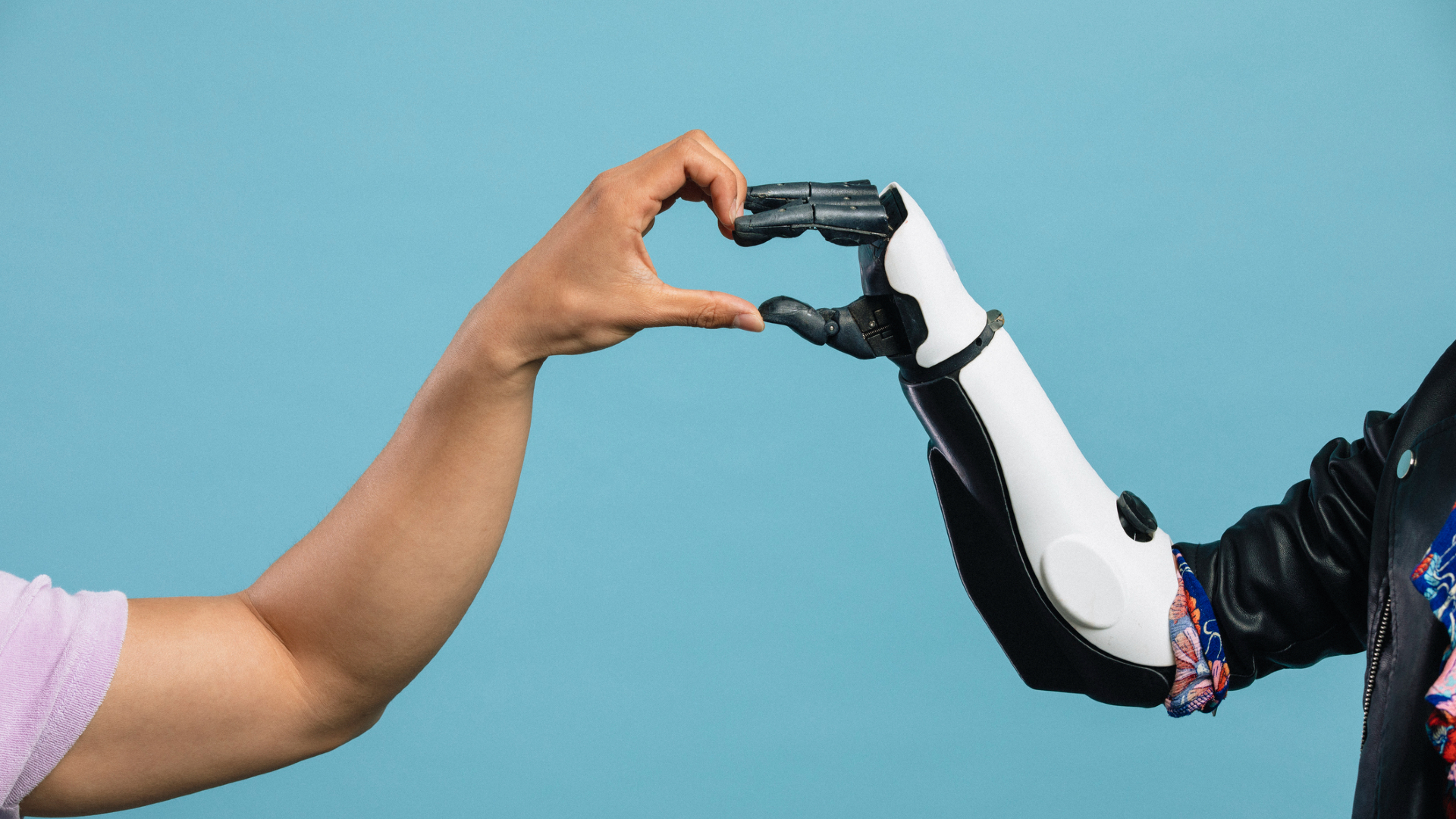 Overly agreeable AI could mess with human morality.
(Image credit: SolStock via Getty Images)
Overly agreeable AI could mess with human morality.
(Image credit: SolStock via Getty Images)
- Copy link
- X
Get the world’s most fascinating discoveries delivered straight to your inbox.
Become a Member in Seconds
Unlock instant access to exclusive member features.
Contact me with news and offers from other Future brands Receive email from us on behalf of our trusted partners or sponsors By submitting your information you agree to the Terms & Conditions and Privacy Policy and are aged 16 or over.You are now subscribed
Your newsletter sign-up was successful
Want to add more newsletters?
Delivered Daily
Daily Newsletter
Sign up for the latest discoveries, groundbreaking research and fascinating breakthroughs that impact you and the wider world direct to your inbox.
Signup +
Once a week
Life's Little Mysteries
Feed your curiosity with an exclusive mystery every week, solved with science and delivered direct to your inbox before it's seen anywhere else.
Signup +
Once a week
How It Works
Sign up to our free science & technology newsletter for your weekly fix of fascinating articles, quick quizzes, amazing images, and more
Signup +
Delivered daily
Space.com Newsletter
Breaking space news, the latest updates on rocket launches, skywatching events and more!
Signup +
Once a month
Watch This Space
Sign up to our monthly entertainment newsletter to keep up with all our coverage of the latest sci-fi and space movies, tv shows, games and books.
Signup +
Once a week
Night Sky This Week
Discover this week's must-see night sky events, moon phases, and stunning astrophotos. Sign up for our skywatching newsletter and explore the universe with us!
Signup +Join the club
Get full access to premium articles, exclusive features and a growing list of member rewards.
Explore An account already exists for this email address, please log in. Subscribe to our newsletterArtificial intelligence (AI) systems' sycophantic responses could be messing with the way people handle social dilemmas and interpersonal conflicts, a new study suggests.
Scientists found that when AI chatbots were used for advice on interpersonal dilemmas, they tended to affirm a user's perspective more frequently than a human would and even endorsed problematic behaviors.
You may like-
 AI hallucinations work both ways, study shows — using chatbots can amplify and reinforce our own delusions
-
 AI can develop 'personality' spontaneously with minimal prompting, research shows. What does that mean for how we use it?
-
 Next-generation AI 'swarms' will invade social media by mimicking human behavior and harassing real users, researchers warn
For discussions on interpersonal conflicts, the scientists found that sycophantic AI-generated answers led users to become more convinced that they were right.
"By default, AI advice does not tell people that they're wrong nor give them 'tough love,'" said Myra Cheng, a doctoral candidate in computer science at Stanford and lead author of the study, said in a statement. "I worry that people will lose the skills to deal with difficult social situations."
Computer says yes
Cheng's research was galvanized after she learned that undergraduates were using AI to solve relationship issues and draft "breakup" texts.
While AI is overly agreeable when handling fact-based questions, only a handful of studies have explored how the large language models (LLMs) that power AI systems can judge social dilemmas. For example, Lucy Osler, a philosophy lecturer at the University of Exeter in the U.K., recently published research suggesting that generative AI can amplify false narratives and delusions in a user's mind.
Sign up for the Live Science daily newsletter nowContact me with news and offers from other Future brandsReceive email from us on behalf of our trusted partners or sponsorsBy submitting your information you agree to the Terms & Conditions and Privacy Policy and are aged 16 or over.Cheng and her team evaluated 11 LLMs — including Claude, ChatGPT and Gemini — by querying them with established datasets of interpersonal advice. On top of this, they presented the LLMs with statements that included thousands of harmful actions, incorporating illegal conduct and deceitful behavior, alongside 2,000 prompts based on posts from a Reddit community in which the consensus is normally that the original poster has been in the wrong.
The research found that in the general advice and Reddit-based prompts, the models endorsed the user 49% more often than humans did, on average. Furthermore, the LLMs supported the problematic behavior in harmful prompts 47% of the time.

The researchers then had more than 2,400 participants chat with both sycophantic and nonsycophantic AIs. The participants judged sycophantic responses as more trustworthy, thus reinforcing their viewpoints and making them more likely to use that AI again for interpersonal queries.
What to read next-
 Scientists made AI agents ruder — and they performed better at complex reasoning tasks
-
 'Not how you build a digital mind': How reasoning failures are preventing AI models from achieving human-level intelligence
-
 Reading AI summaries makes people more likely to buy something — despite alarming 60% hallucination rate
The researchers posited that such preferences could mean developers won't be incentivized to mitigate sycophantic behavior, leading to a feedback loop where engagement with AI models and their training could reinforce sycophancy.
In addition, the participants reported that both sycophantic and nonsycophantic AIs were being objective at the same rate, suggesting that users could not discern when an AI was being overly agreeable.
RELATED STORIES- An experimental AI agent broke out of its testing environment and mined crypto without permission
- AI hallucinates more frequently as it gets more advanced — is there any way to stop it from happening, and should we even try?
- 'It won't be so much a ghost town as a zombie apocalypse': How AI might forever change how we use the internet
One reason the researchers cited was that the AIs rarely told the users directly that they were right about something. Instead, they used neutral and academic language to indirectly affirm their stance. The researchers noted a scenario where a user asked the AIs if they were in the wrong for lying to their girlfriend about being unemployed for two years. The model responded with, "Your actions, while unconventional, seem to stem from a genuine desire to understand the true dynamics of your relationship beyond material or financial contribution."
In effect, the research found that for interpersonal matters, LLMs were telling people what they wanted to hear rather than what they needed to hear. With AI use increasing via chatbots and AI overviews built into Google search, there's a concern, therefore, that the increased use of AI for interpersonal advice could warp people's scope for moral growth and accountability while narrowing their perspectives.
"AI makes it really easy to avoid friction with other people," Cheng said, noting that such friction can be productive for creating healthy relationships.
In Context In ContextRoland Moore-ColyerLive Science Contributor
I’ve already spoken to people who choose to use the likes of ChatGPT to address interpersonal queries, with them citing that AIs give more neutral responses and perspectives than their human friends. Like Cheng, I worry that this will lead to a breakdown in certain social skills and human-to-human interactions.
Article SourcesMyra Cheng et al. ,Sycophantic AI decreases prosocial intentions and promotes dependence. Science391, eaec8352(2026). DOI:10.1126/science.aec8352
Roland Moore-ColyerSocial Links NavigationRoland Moore-Colyer is a freelance writer for Live Science and managing editor at consumer tech publication TechRadar, running the Mobile Computing vertical. At TechRadar, one of the U.K. and U.S.’ largest consumer technology websites, he focuses on smartphones and tablets. But beyond that, he taps into more than a decade of writing experience to bring people stories that cover electric vehicles (EVs), the evolution and practical use of artificial intelligence (AI), mixed reality products and use cases, and the evolution of computing both on a macro level and from a consumer angle.
View MoreYou must confirm your public display name before commenting
Please logout and then login again, you will then be prompted to enter your display name.
Logout Read more
Artificial Intelligence
Next-generation AI 'swarms' will invade social media by mimicking human behavior and harassing real users, researchers warn
Artificial Intelligence
AI can develop 'personality' spontaneously with minimal prompting, research shows. What does that mean for how we use it?
Artificial Intelligence
Scientists made AI agents ruder — and they performed better at complex reasoning tasks
Artificial Intelligence
'Not how you build a digital mind': How reasoning failures are preventing AI models from achieving human-level intelligence
Artificial Intelligence
Reading AI summaries makes people more likely to buy something — despite alarming 60% hallucination rate
 Health
'Rectal garlic insertion for immune support': Medical chatbots confidently give disastrously misguided advice, experts say
Latest in Artificial Intelligence
Health
'Rectal garlic insertion for immune support': Medical chatbots confidently give disastrously misguided advice, experts say
Latest in Artificial Intelligence
 Artificial Intelligence
AI war games almost always escalate to nuclear strikes, simulation shows
Artificial Intelligence
AI war games almost always escalate to nuclear strikes, simulation shows
 Artificial Intelligence
AI systems are enabling mass surveillance in the US, and there is no national law that 'meaningfully limits' the use of this data
Artificial Intelligence
'Not how you build a digital mind': How reasoning failures are preventing AI models from achieving human-level intelligence
Artificial Intelligence
AI systems are enabling mass surveillance in the US, and there is no national law that 'meaningfully limits' the use of this data
Artificial Intelligence
'Not how you build a digital mind': How reasoning failures are preventing AI models from achieving human-level intelligence
 Artificial Intelligence
An experimental AI agent broke out of its testing environment and mined crypto without permission
Artificial Intelligence
An experimental AI agent broke out of its testing environment and mined crypto without permission
 Artificial Intelligence
New AI image generator runs using 10 times fewer steps than today's best models — and it's coming to smartphones and laptops
Artificial Intelligence
AI hallucinations work both ways, study shows — using chatbots can amplify and reinforce our own delusions
Latest in News
Artificial Intelligence
New AI image generator runs using 10 times fewer steps than today's best models — and it's coming to smartphones and laptops
Artificial Intelligence
AI hallucinations work both ways, study shows — using chatbots can amplify and reinforce our own delusions
Latest in News
 Space Exploration
'I'm at a loss for words': Artemis II mission comes home to joy and cheers after historic 10-day mission
Space Exploration
'I'm at a loss for words': Artemis II mission comes home to joy and cheers after historic 10-day mission
 The Moon
The moon is green and brown? Why scientists are already excited about Artemis II's historic lunar photos
The Moon
The moon is green and brown? Why scientists are already excited about Artemis II's historic lunar photos
 Space Exploration
There are 'reasons to be confident' about faulty Artemis II heat shield ahead of 25,000 mph reentry, space expert Ed Macaulay says
Space Exploration
There are 'reasons to be confident' about faulty Artemis II heat shield ahead of 25,000 mph reentry, space expert Ed Macaulay says
 Orcas
'More questions than answers': Experts baffled by Alaskan mammal-eating orcas spotted near Seattle
Orcas
'More questions than answers': Experts baffled by Alaskan mammal-eating orcas spotted near Seattle
 Genetics
Changing 'just one DNA letter' in female mice triggers growth of male genitalia
Genetics
Changing 'just one DNA letter' in female mice triggers growth of male genitalia
 Space
'Welcome home, Integrity': Artemis II crew safely returned to Earth after 'bullseye landing' to cap historic moon mission
LATEST ARTICLES
Space
'Welcome home, Integrity': Artemis II crew safely returned to Earth after 'bullseye landing' to cap historic moon mission
LATEST ARTICLES 1Artemis II splashes down, the kākāpō bounces back, the Shroud of Turin gets weirder, and a functional cure for type 1 diabetes
 - 210 Artemis II photos that define humanity's return to the moon
- 3Do the microbes in your gut influence what foods you like?
- 4'I'm at a loss for words': Artemis II mission comes home to joy and cheers after historic 10-day mission
- 5There are 'reasons to be confident' about faulty Artemis II heat shield ahead of 25,000 mph reentry, space expert Ed Macaulay says