- Archaeology
 What happened to the Minoan civilization?
Features
By
Owen Jarus
published
5 April 2026
What happened to the Minoan civilization?
Features
By
Owen Jarus
published
5 April 2026
The Minoan civilization flourished between roughly 2000 and 1500 B.C. on Crete and nearby islands. How did it come to an end?
When you purchase through links on our site, we may earn an affiliate commission. Here’s how it works.
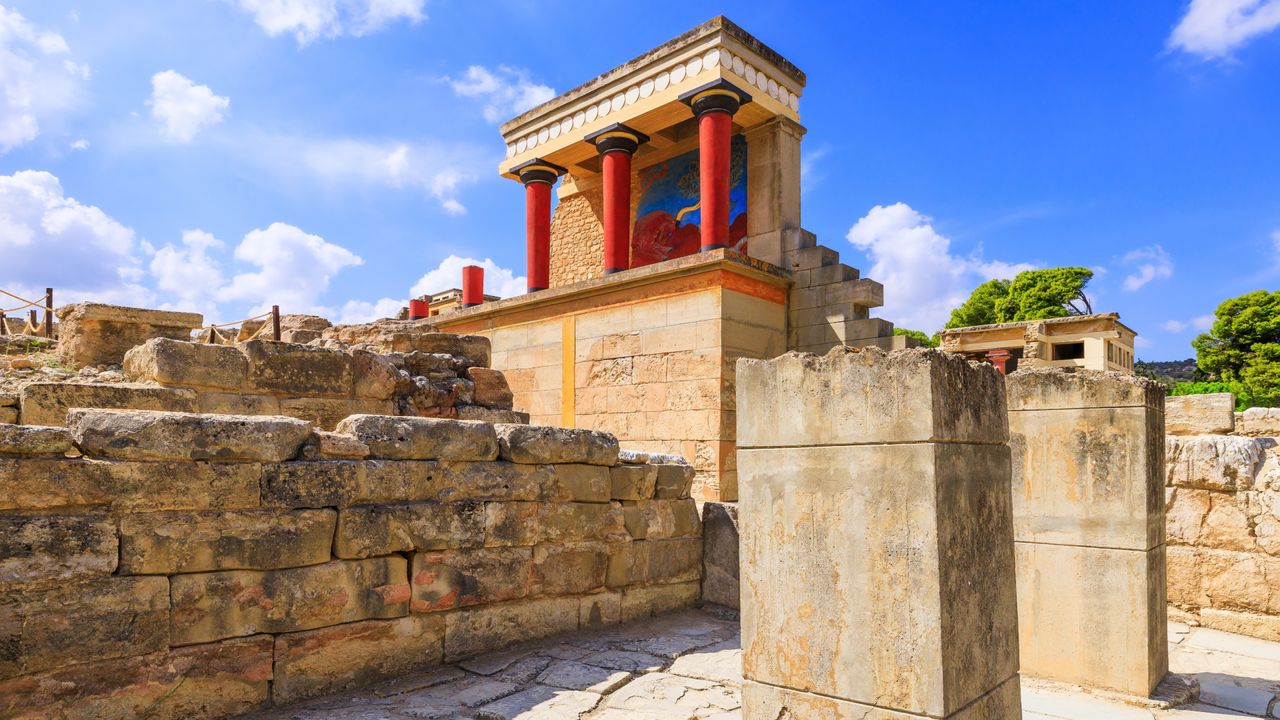
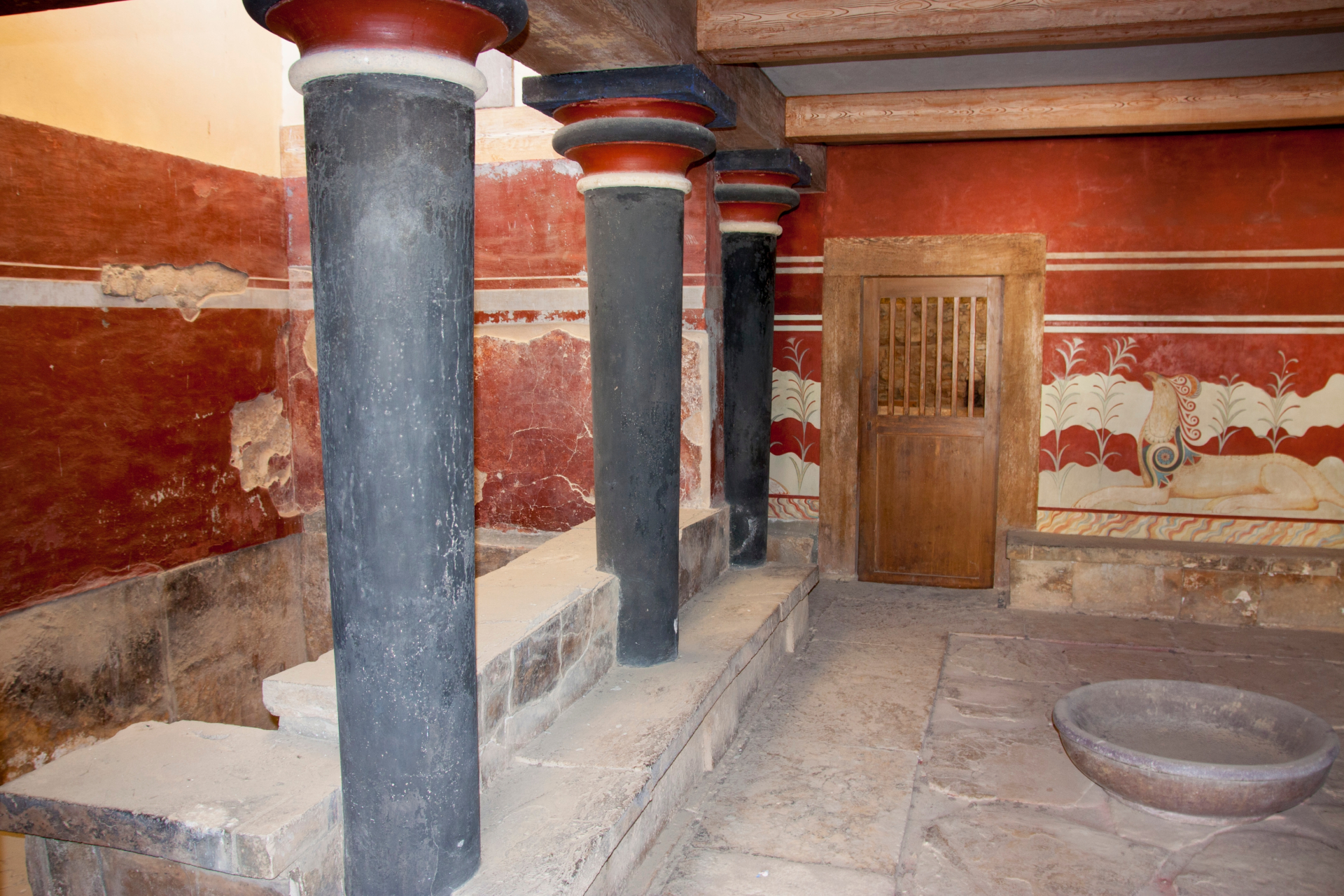
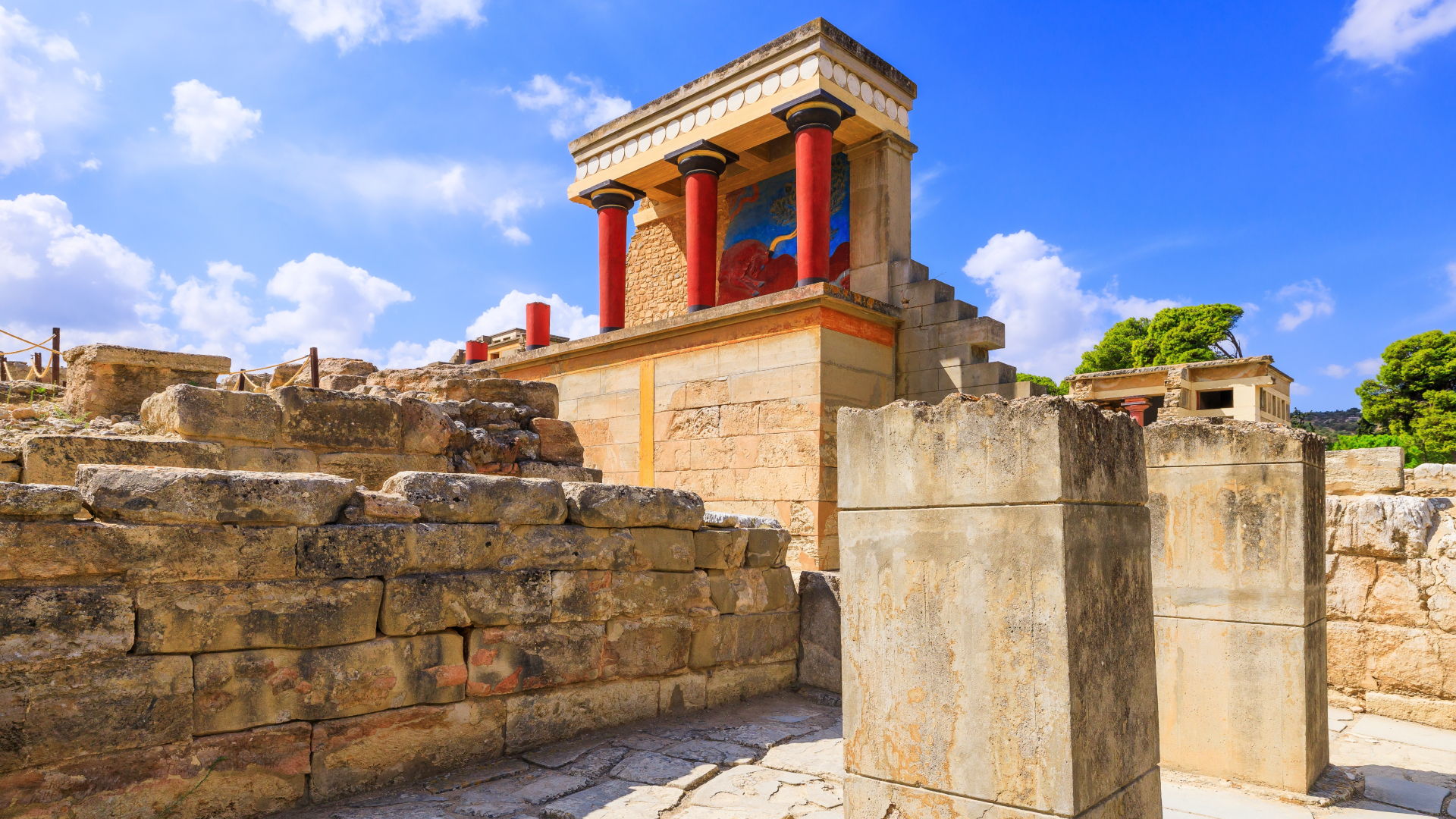 Knossos is a city built by the Minoans. It has a palace the size of two football fields.
(Image credit: SCStock via Shutterstock)
Knossos is a city built by the Minoans. It has a palace the size of two football fields.
(Image credit: SCStock via Shutterstock)
- Copy link
- X
Get the world’s most fascinating discoveries delivered straight to your inbox.
Become a Member in Seconds
Unlock instant access to exclusive member features.
Contact me with news and offers from other Future brands Receive email from us on behalf of our trusted partners or sponsors By submitting your information you agree to the Terms & Conditions and Privacy Policy and are aged 16 or over.You are now subscribed
Your newsletter sign-up was successful
Want to add more newsletters?

Delivered Daily
Daily Newsletter
Sign up for the latest discoveries, groundbreaking research and fascinating breakthroughs that impact you and the wider world direct to your inbox.
Signup +
Once a week
Life's Little Mysteries
Feed your curiosity with an exclusive mystery every week, solved with science and delivered direct to your inbox before it's seen anywhere else.
Signup +
Once a week
How It Works
Sign up to our free science & technology newsletter for your weekly fix of fascinating articles, quick quizzes, amazing images, and more
Signup +
Delivered daily
Space.com Newsletter
Breaking space news, the latest updates on rocket launches, skywatching events and more!
Signup +
Once a month
Watch This Space
Sign up to our monthly entertainment newsletter to keep up with all our coverage of the latest sci-fi and space movies, tv shows, games and books.
Signup +
Once a week
Night Sky This Week
Discover this week's must-see night sky events, moon phases, and stunning astrophotos. Sign up for our skywatching newsletter and explore the universe with us!
Signup +Join the club
Get full access to premium articles, exclusive features and a growing list of member rewards.
Explore An account already exists for this email address, please log in. Subscribe to our newsletterBetween roughly 2000 and 1500 B.C., the Minoan civilization flourished on Crete and nearby islands, building palaces decorated with frescoes, engaging in athletic activities such as bull leaping, and creating written scripts that experts have never been able to decipher. One of the most important cities they constructed was at Knossos, on the northern coast of Crete, and it contained a palace the size of two football fields.
Around 1500 B.C. their written scripts stopped being used and Minoan palaces show evidence of decline and destruction. So how did this civilization end?
You may like-
 Did modern humans wipe out the Neanderthals? New evidence may finally provide answers.
-
 Missing megaflood: How did the Mediterranean transform from a salt-filled bowl to a deep sea if it wasn't a cataclysmic deluge?
-
 Why do some people still believe that aliens shaped ancient civilizations?
What was the Minoan civilization?
SIGN UP FOR OUR NEWSLETTER

Sign up for our weekly Life's Little Mysteries newsletter to get the latest mysteries before they appear online.
The Minoan civilization got its name from the British archaeologist Sir Arthur Evans, who excavated the remains of Knossos in the early 20th century. Evans named the civilization after King Minos who, according to ancient legends, ruled Crete and constructed a labyrinth where a minotaur was kept. The Minoans flourished during the "Bronze Age" (3300 to 1200 B.C.), and they are known for their palaces decorated with marine motifs such as dolphins.
To figure out what happened to the Minoans, scholars need to define exactly what Minoan civilization was and determine how different it was from the Mycenaean civilization that thrived on Crete after 1500 B.C. The Mycenaeans were based on the Greek mainland, and they boasted a warrior-elite society that inspired Homeric epics as well as a religion with deities similar to the later Olympic gods. The Mycenaeans are sometimes considered to be the earliest Greeks.
"[What] do we mean by Minoan or Mycenaean civilization, and what do we mean by 'end'?" said Guy Middleton, a visiting fellow at Newcastle University who specializes in the archaeology of Late Bronze Age Greece, the Aegean and the eastern Mediterranean.
"What archaeologists mean by Minoan and [Mycenaean] is sets of material culture — archaeological cultures — not a people, and not ethnic groups," Middleton told Live Science in an email. "Any person could adopt a particular material culture, and would then look like a Minoan or Mycenaean person."
For instance, the lavish burial of a high-ranking warrior at the site of Pylos on mainland Greece dates to around 1500 B.C. and has artifacts with Minoan designs. But the warrior was buried on the Greek mainland, which is thought to be where the Mycenaeans originated. "Was he a Mycenaean or a Minoan? These are modern distinctions. Who knows how he thought of himself," Middleton said.
A time of change
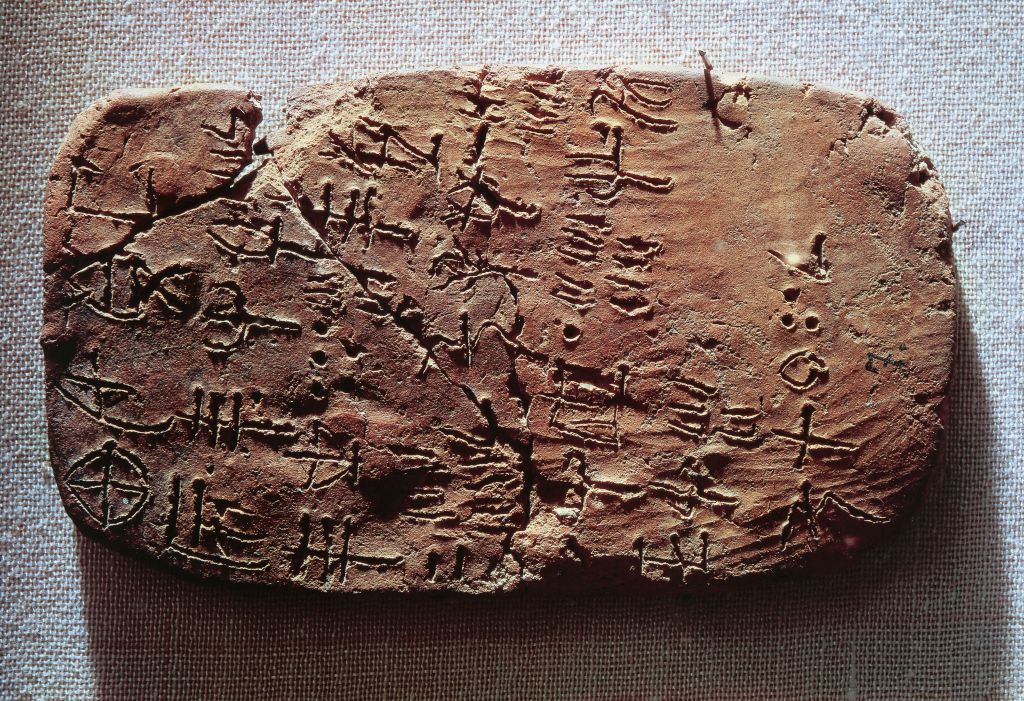
One thing that changed after 1500 B.C. was language. Whereas the Minoans used two undeciphered scripts, known as Linear A and Cretan hieroglyphs, the Mycenaeans used a text called Linear B, which encoded the Greek language, said Philip Betancourt, a professor emeritus of prehistoric Aegean art history and archaeology at Temple University in Philadelphia.
"If the gradual disappearance of the Minoan language is used as the sign for the culture, it was gradually lost after an invasion by Greek-speakers gradually changed the complexion of the culture," Betancourt told Live Science in an email. This linguistic change, which "did not affect all of the island at the same time, happened around the middle of the second millennium [B.C.]," Betancourt said.
What to read next-
 Remote region in Greece has one of the most genetically distinct populations in Europe
-
 Did the Vikings reach Maine?
-
 Did ancient Greeks let women compete in the Olympics?
Although Middleton thinks a takeover by the Greek-speaking Mycenaeans is plausible, he proposed another possibility. The change in culture "can also be seen as an internal Cretan [development] — since not all Cretans were identical," he said. "Just as Mycenaeans adopted elements of Minoan culture into their own, for their own reasons, so Minoans may have adopted elements of Mainland culture."
However, Nanno Marinatos, a professor emerita of classics and Mediterranean studies at the University of Illinois Chicago, said there was no invasion. "Minoans had all the technology to avoid threats," she told Live Science in an email, noting that they had a navy that could stop any invaders.
Marinatos thinks that a major climatic event could have contributed to the Minoans' decline. The eruption of Thera, a volcano on an island in the Aegean Sea 70 miles (110 kilometers) north of Crete, around 1500 B.C. may have caused considerable damage to the Minoans by destroying ships and disrupting trade networks. This catastrophe may have played a significant role in the decline of their civilization.
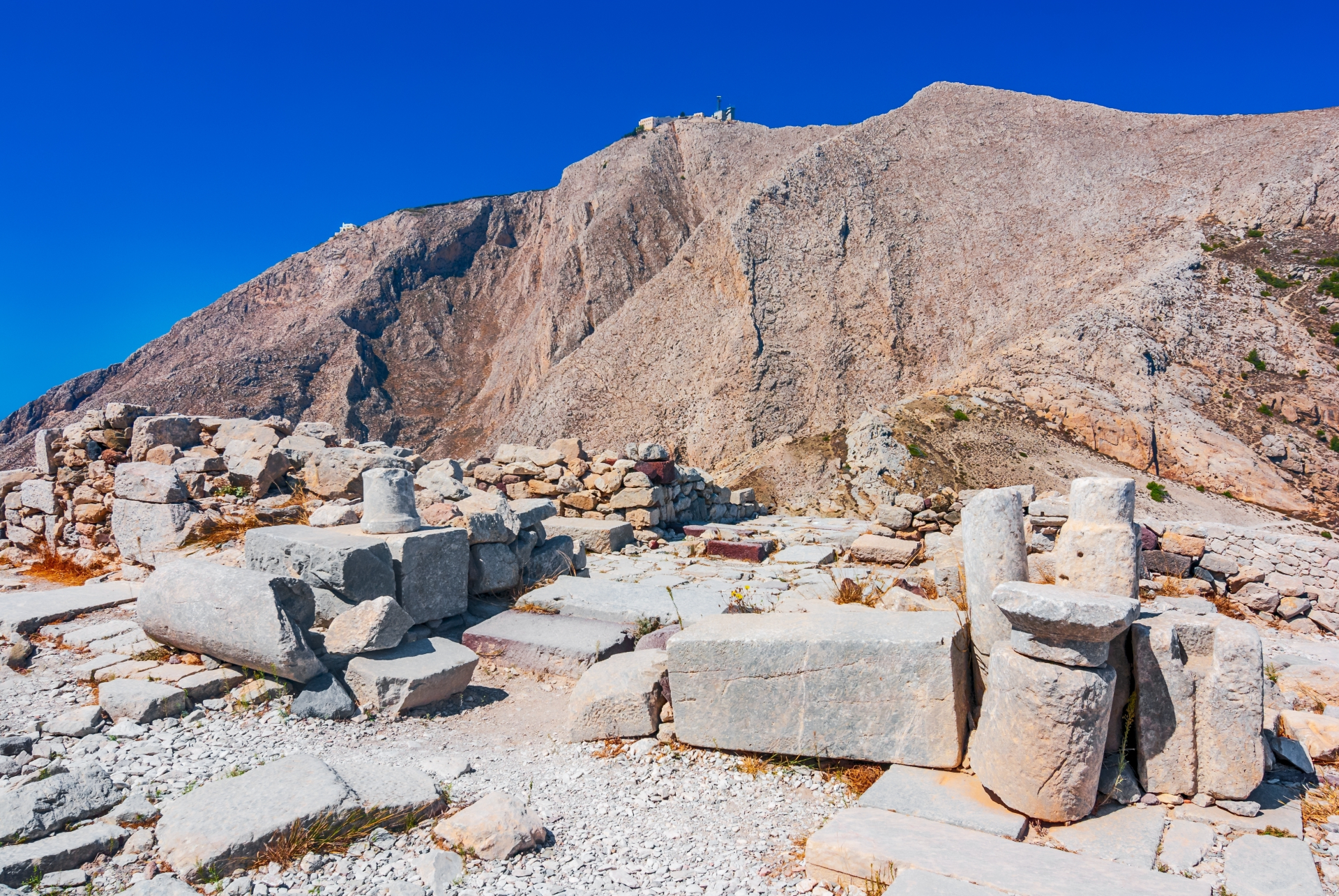
Did the Minoan civilization ever end?
Another possibility is that the Minoan civilization never had a formal end.
RELATED MYSTERIES—Did ancient Greeks let women compete in the Olympics?
—What happened to Rome after the empire fell?
—Were there female gladiators in ancient Rome?
The "simple reply is that like most ancient complex societies, it simply evolved into one with a later modern definition," Betancourt said. "Genetic studies show that the Minoan genes are still around. The descendants still live in Crete and elsewhere."
Middleton agreed that there was "no sudden end to Minoan Crete, just a series of changes over a long period of time." He noted that Minoan deities continued to be worshipped for centuries after 1500 B.C.
"To some extent, the way we divide up history, geographically and chronologically, makes us think in terms of 'ends," Middleton said. "But what we really have is constant and normal interaction and change."
TOPICS Life's Little Mysteries Owen JarusSocial Links NavigationLive Science Contributor
Owen Jarus is a regular contributor to Live Science who writes about archaeology and humans' past. He has also written for The Independent (UK), The Canadian Press (CP) and The Associated Press (AP), among others. Owen has a bachelor of arts degree from the University of Toronto and a journalism degree from Ryerson University.
View MoreYou must confirm your public display name before commenting
Please logout and then login again, you will then be prompted to enter your display name.
Logout Read more
Archaeology
Did modern humans wipe out the Neanderthals? New evidence may finally provide answers.
Weather
Missing megaflood: How did the Mediterranean transform from a salt-filled bowl to a deep sea if it wasn't a cataclysmic deluge?
Archaeology
Why do some people still believe that aliens shaped ancient civilizations?
Human Evolution
Remote region in Greece has one of the most genetically distinct populations in Europe
Vikings
Did the Vikings reach Maine?
 Ancient China
Climate disasters caused societal upheaval 3,000 years ago in China, study of 'oracle bones' hints
Latest in Archaeology
Ancient China
Climate disasters caused societal upheaval 3,000 years ago in China, study of 'oracle bones' hints
Latest in Archaeology
 Archaeology
Ancient children's teeth reveal a syphilis-like disease was spreading in Vietnam 4,000 years ago
Archaeology
Ancient children's teeth reveal a syphilis-like disease was spreading in Vietnam 4,000 years ago
 Archaeology
Tasmanian tigers discovered in Indigenous rock art in Australia, suggesting these marsupials lived there much longer than thought
Archaeology
Tasmanian tigers discovered in Indigenous rock art in Australia, suggesting these marsupials lived there much longer than thought
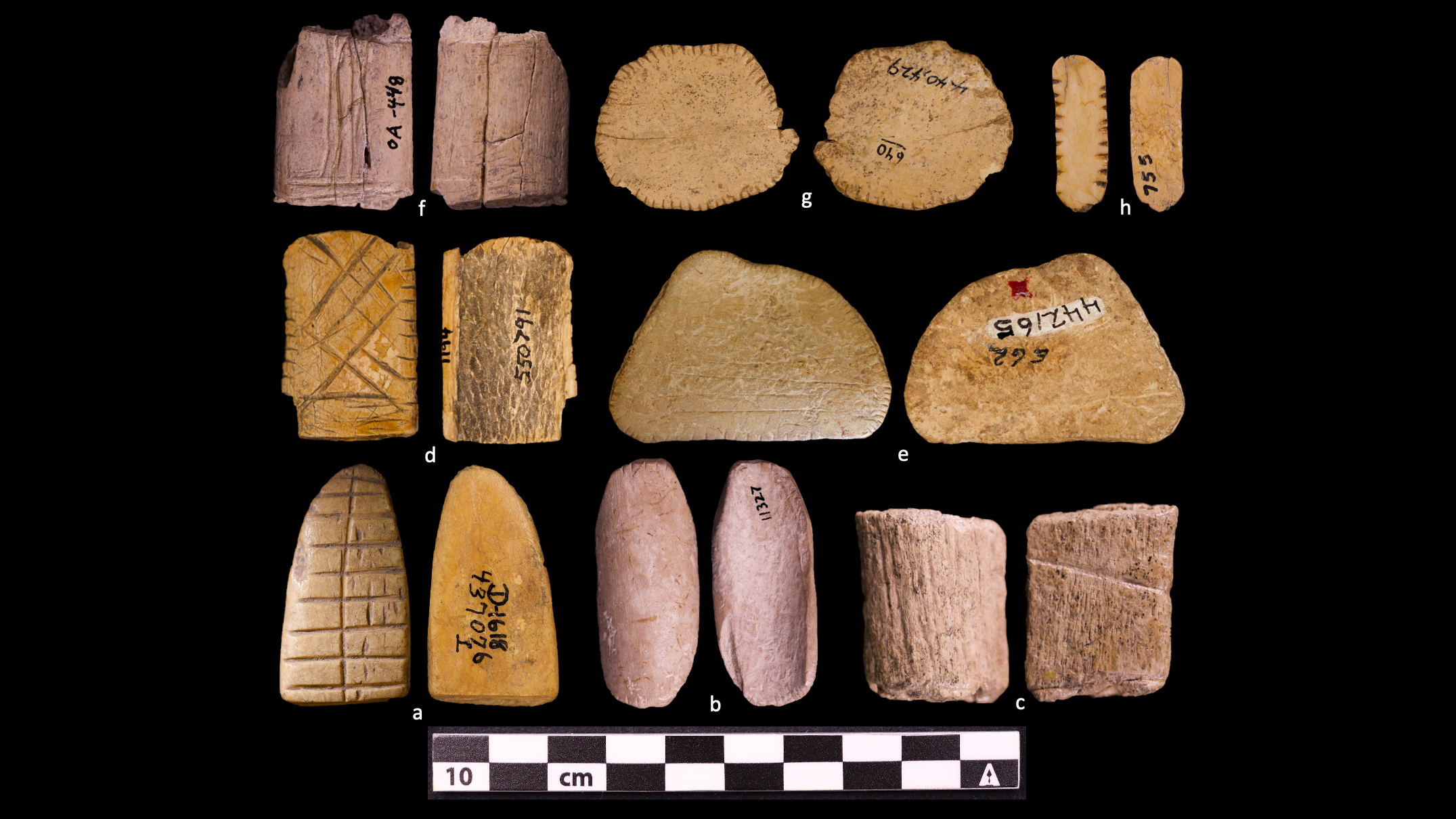 The Americas
Native Americans invented dice and games of chance more than 12,000 years ago, archaeological study reveals
The Americas
Native Americans invented dice and games of chance more than 12,000 years ago, archaeological study reveals
 Neanderthals
'Major disruption in Neanderthal history': 65,000 years ago, all Neanderthals in Europe died out except for one lineage
Neanderthals
'Major disruption in Neanderthal history': 65,000 years ago, all Neanderthals in Europe died out except for one lineage
 Neanderthals
2 Neanderthals present at same Siberian cave 10,000 years apart were distant relatives, 110,000-year-old bone reveals
Neanderthals
2 Neanderthals present at same Siberian cave 10,000 years apart were distant relatives, 110,000-year-old bone reveals
 Human Evolution
18 million-year-old fossils of ape found in Africa, but in an unexpected place
Latest in Features
Human Evolution
18 million-year-old fossils of ape found in Africa, but in an unexpected place
Latest in Features
 Genetics
Are allergies genetic?
Genetics
Are allergies genetic?
 Space
Hubble images taken 25 years apart show big changes in the iconic Crab Nebula — Space photo of the week
Space
Hubble images taken 25 years apart show big changes in the iconic Crab Nebula — Space photo of the week
 Rivers & Oceans
Lençóis Maranhenses: Brazil's dune-filled expanse that sits at the intersection of 3 biomes
Rivers & Oceans
Lençóis Maranhenses: Brazil's dune-filled expanse that sits at the intersection of 3 biomes
 Planet Earth
DNA shed by every living thing is lurking in the environment — and it could tell us how Earth is changing in real time
Planet Earth
DNA shed by every living thing is lurking in the environment — and it could tell us how Earth is changing in real time
 Archaeology
Tudor Heart: A Renaissance gold necklace featuring a French-English pun on the love between Henry VIII and his first wife, Katherine of Aragon
Archaeology
Tudor Heart: A Renaissance gold necklace featuring a French-English pun on the love between Henry VIII and his first wife, Katherine of Aragon
 Geology
Concentric rocky rings adorned with ancient artwork wear a magma 'hat' in the Sahara
LATEST ARTICLES
Geology
Concentric rocky rings adorned with ancient artwork wear a magma 'hat' in the Sahara
LATEST ARTICLES 1Fossil site in China reveals bevy of complex creatures lived prior to the Cambrian explosion, including a 'Dune'-like sandworm
- 2Cheap, decades-old transplant drug delays full onset of type 1 diabetes
- 3Octopus quiz: Are you a sucker for cephalopod science?
- 4Science news this week: Artemis II lifts off, diabetes cured in mice, and smog in China shapes Arctic storms
- 5I've witnessed nearly 100 rocket launches. Artemis II was like nothing I've ever experienced.