- Archaeology
An analysis of samples taken from the Shroud of Turin, the cloth thought by some to have been wrapped around Jesus, reveals a rich tapestry of animal and plant DNA. But what does it mean?
When you purchase through links on our site, we may earn an affiliate commission. Here’s how it works.
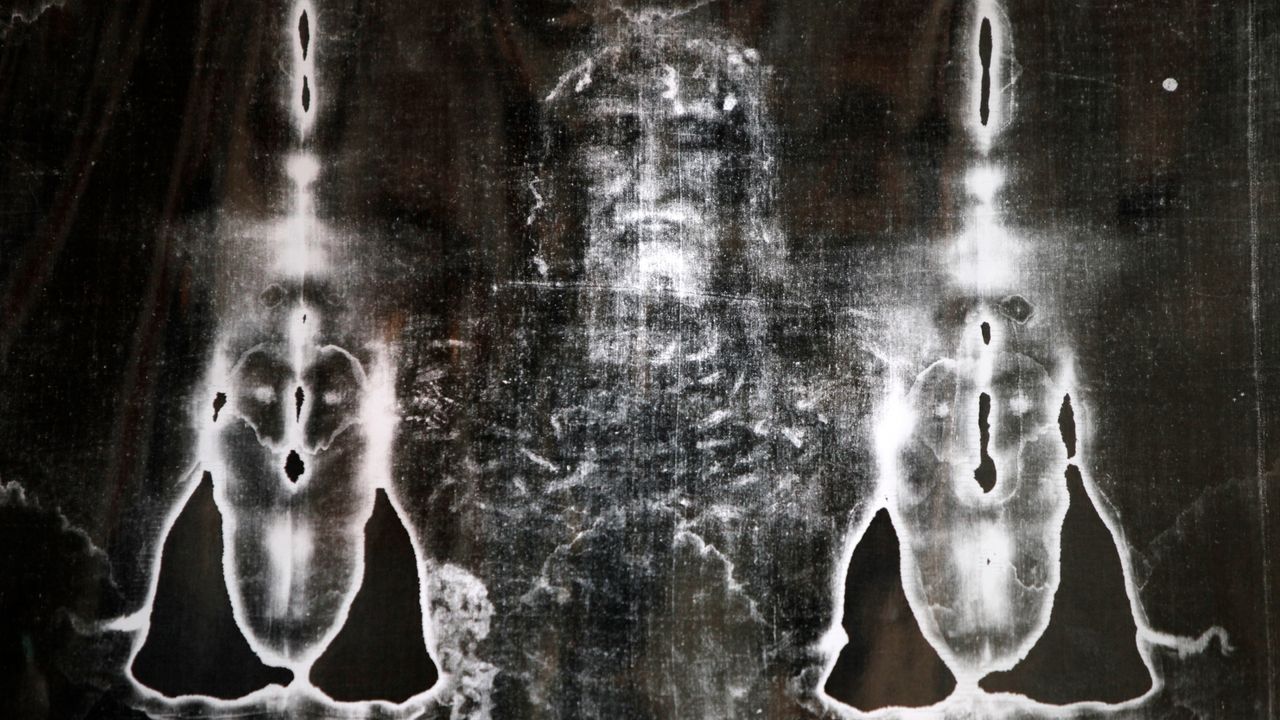
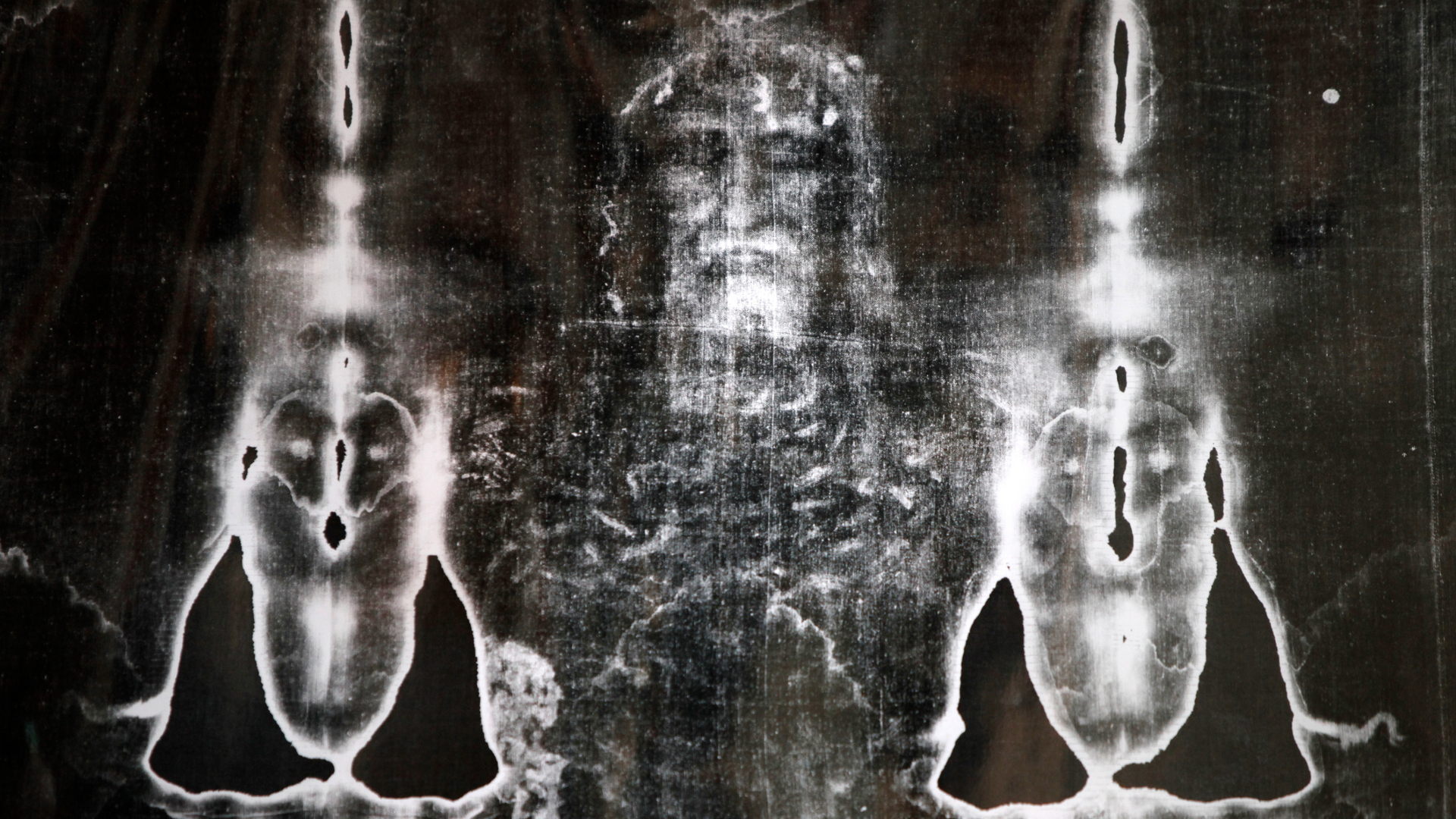 Is the famous "Shroud of Turin" a fake?
(Image credit: Philippe Lissac via Getty Images)
Is the famous "Shroud of Turin" a fake?
(Image credit: Philippe Lissac via Getty Images)
- Copy link
- X
Get the world’s most fascinating discoveries delivered straight to your inbox.
Become a Member in Seconds
Unlock instant access to exclusive member features.
Contact me with news and offers from other Future brands Receive email from us on behalf of our trusted partners or sponsors By submitting your information you agree to the Terms & Conditions and Privacy Policy and are aged 16 or over.You are now subscribed
Your newsletter sign-up was successful
Want to add more newsletters?

Delivered Daily
Daily Newsletter
Sign up for the latest discoveries, groundbreaking research and fascinating breakthroughs that impact you and the wider world direct to your inbox.
Signup +
Once a week
Life's Little Mysteries
Feed your curiosity with an exclusive mystery every week, solved with science and delivered direct to your inbox before it's seen anywhere else.
Signup +
Once a week
How It Works
Sign up to our free science & technology newsletter for your weekly fix of fascinating articles, quick quizzes, amazing images, and more
Signup +
Delivered daily
Space.com Newsletter
Breaking space news, the latest updates on rocket launches, skywatching events and more!
Signup +
Once a month
Watch This Space
Sign up to our monthly entertainment newsletter to keep up with all our coverage of the latest sci-fi and space movies, tv shows, games and books.
Signup +
Once a week
Night Sky This Week
Discover this week's must-see night sky events, moon phases, and stunning astrophotos. Sign up for our skywatching newsletter and explore the universe with us!
Signup +Join the club
Get full access to premium articles, exclusive features and a growing list of member rewards.
Explore An account already exists for this email address, please log in. Subscribe to our newsletterThe Shroud of Turin, which some people claim is Jesus' burial cloth, contains the DNA of multiple people, along with a huge array of other species, including carrots, melons and red coral.
Some of the DNA traces suggest there's an influence from India, which could mean the cloth originated there, researchers argue in a new study.
You may like-
 Leonardo da Vinci's DNA may be embedded in his art — and scientists think they've managed to extract some
-
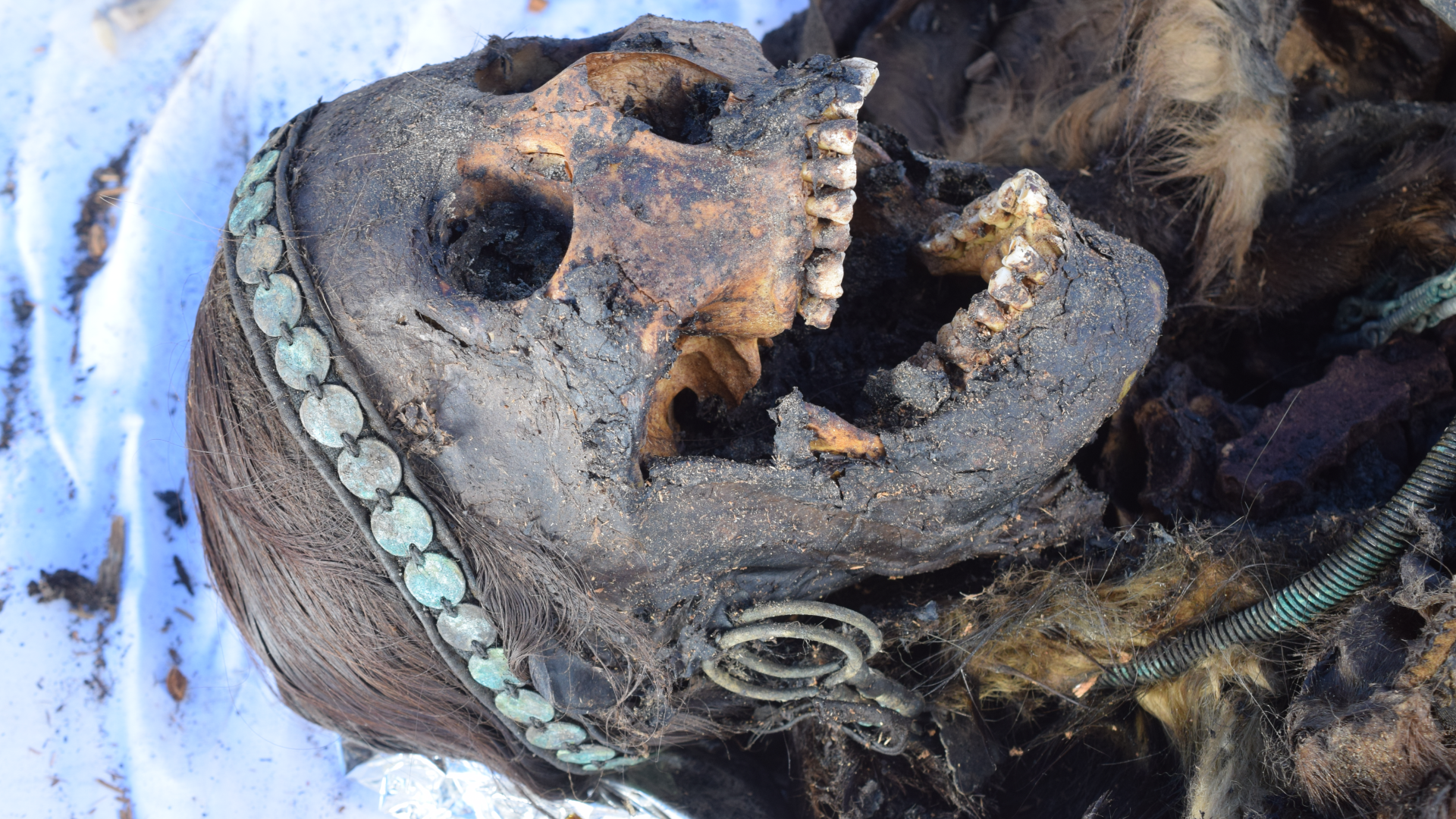 One of the last Siberian shamans was an 18th-century woman whose parents were related, DNA study reveals
-
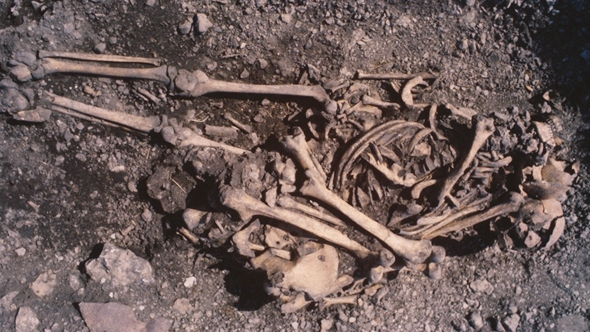 5,500 years ago, a teenage girl was buried with her father's bones on her chest, new DNA study reveals
Likely a fake
The famous shroud has moved around Europe for centuries, but the first documented mention of the shroud was in Lirey, a village in northern France in 1354, and even then, there were debates about whether it was an authentic relic from the crucifixion. The rectangular cloth measures 14.4 by 3.6 feet (4.4 by 1.1 meters) and bears the faint image of a man and numerous stains, some of which are claimed to be blood.
The most robust evidence for the shroud's age comes from a carbon-dating analysis carried out in 1989, which placed the shroud's creation between 1260 and 1390, firmly in the medieval period. And last year, work revealed that the human image on the shroud probably resulted from the cloth being laid on a low-relief sculpture.
Some Christian scholars still believe the shroud is genuine and dates back 2,000 years. Yet there is no evidence that the multishaft looms required to manufacture the type of cloth in the shroud existed in Europe, India or the Levant region 2,000 years ago.
Sign up for the Live Science daily newsletter nowContact me with news and offers from other Future brandsReceive email from us on behalf of our trusted partners or sponsorsBy submitting your information you agree to the Terms & Conditions and Privacy Policy and are aged 16 or over."These structures need a loom with four shafts that was invented in the Middle Ages [in Europe]," Andrea Nicolotti, a historian at the University of Turin who wasn't involved in the work, told Live Science.
Analyzing the DNA
In 2015, Gianni Barcaccia, a professor of genetics and genomics at the University of Padova in Italy, and his colleagues suggested that the Shroud of Turin may have been made in India, based on a genetic analysis of samples collected from the shroud in 1978.
More powerful genomics techniques are available now, so Barcaccia and his colleagues did a new DNA and metagenomic analysis on the samples from 1978 to determine which species any traces of DNA came from. The research was posted to the preprint server bioRxiv March 22 and has not been peer-reviewed yet.
What to read next-
 Remnants of spills on Renaissance-era textbook reveal recipes for 'curing' ailments with lizard heads and human feces
-
 'More advanced' farming women married hunter-gatherer men in Europe thousands of years ago, ancient DNA reveals
-
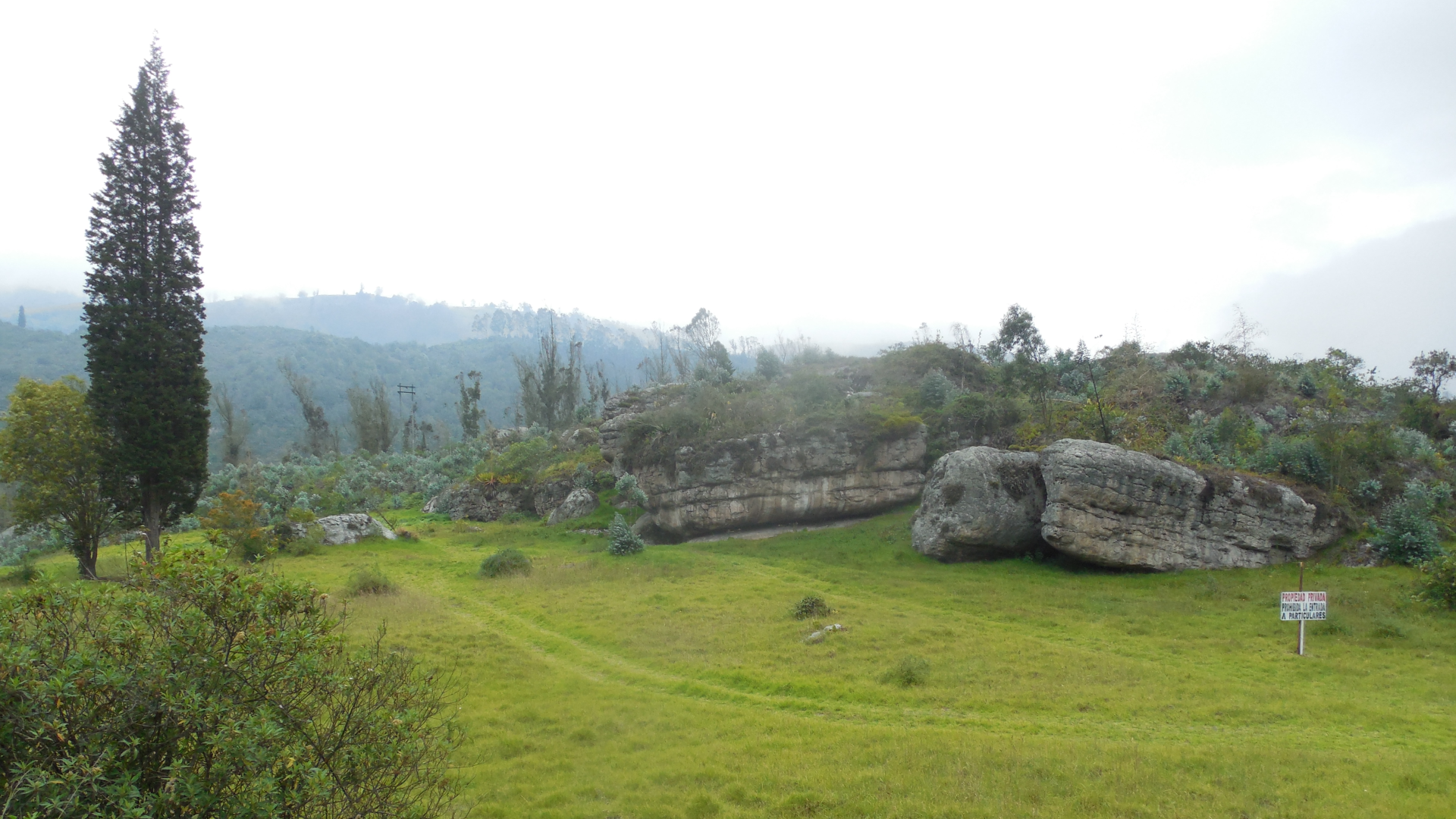 5,500-year-old human skeleton discovered in Colombia holds the oldest evidence yet that syphilis came from the Americas
The researchers found human DNA that seems to have come from multiple people, one of whom was the person who collected the samples in 1978. Bacterial species accounted for 10% to 31% of the DNA. Barcaccia's team noted the presence of DNA from Mediterranean red coral (Corallium rubrum), which suggests "Mediterranean origins or transit through Mediterranean regions."
Even if the coral came from a particular place, however, it doesn't mean the shroud was there, too, Nicolotti noted. "Red coral perhaps makes people think of the sea of Palestine," he said, adding that there was a much more likely scenario for how coral ended up on the shroud. "It makes me think of the coral crucifixes and rosaries, or reliquaries that we know were placed in contact with the cloth."
Barcaccia's team found that cats and dogs accounted for about 44% of the animal DNA, but there were also traces from chickens, cattle, goats, sheep, pigs, horses, deer and rabbits. In addition, there were slight traces of skin mites, ticks and an assortment of fish.
We are confident that this diversity of animal and plant species identified highlights the significant environmental contamination of the shroud that likely occurred in recent centuries, particularly following the voyages of Marco Polo and Christopher Columbus
Gianni Barcaccia, professor of genetics and genomics at the University of Padova in Italy
Plants species were richly represented too. Carrot DNA provided about 31% of the plant DNA. But there was also DNA from wheat, maize, rye, peppers, tomatoes, potatoes, melons or cucumbers, and peanuts, as well as traces of grasses, bananas, almonds, walnuts and oranges.
Some of these plants may reflect typical agricultural practices in Europe and the Mediterranean, the study authors wrote, but some of those plants, such as bananas, potatoes, peppers and tomatoes, were introduced to Europe mainly from the Americas in the 16th century and later. And the carrot DNA is genetically similar to cultivars bred from orange carrots originally grown in Western Europe between the 15th and 16th centuries, which suggests relatively recent contamination, Barcaccia told Live Science via email.
"We are confident that this diversity of animal and plant species identified highlights the significant environmental contamination of the shroud that likely occurred in recent centuries, particularly following the voyages of Marco Polo and Christopher Columbus," he said.
Notably, some species historically associated with the Mediterranean region were lacking.
"The vast range of animal and plant material doesn't seem indicative of any particular environment, but I note the absence of olives, dates, pomegranates, camels and of course myrrh and aloes," Hugh Farey, an independent researcher who runs a blog called The Medieval Shroud and wasn't involved in the work, told Live Science via email.
I try to imagine how many people must have touched the shroud, all the instruments used by the American scholars in 1978, and even who may have touched and made the brushes that were used to dust the shroud periodically,
Andrea Nicolotti, historian at the University of Turin
Human DNA can be transferred to an object with or without touch, and it’s the same with DNA from other animals and plants, so many traces may have ended up on the shroud due to its public displays in medieval cities. "All the vegetables make me think of the market that is 100 meters [330 feet] from the square where public exhibitions were held for centuries in Turin, or of the dust of Chambéry when the Shroud used to be displayed along a tree-lined avenue," Nicolotti said.
The researchers dated a couple of threads in the shroud, one to between 1451 and 1622 and the other to between 1642 and 1800. These dates align with when the shroud was repaired in 1534, not long after it was damaged by fire, and in further conservation work in 1694, the team noted.
Importantly, none of the new findings contradict the definitive carbon-dating analysis carried out in 1989, Nicolotti said.
RELATED STORIES—Shroud of Turin wasn't laid on Jesus' body, but rather a sculpture, modeling study suggests
—When was Jesus born?
—Reliquary of the Holy Crib: Remains of Jesus' manger from Bethlehem
However, what's more controversial is Barcaccia and colleagues' interpretation that nearly 40% of the human DNA found on the shroud is from Indian lineages, suggesting "the possibility that the yarn was produced in India."
Nicolotti doesn't think the shroud is likely to have come from India and remains convinced it is a forgery originating in medieval Europe as the carbon dating from 1989 implies. He is also not surprised that a range of human DNA was found on the cloth.
"I try to imagine how many people must have touched the shroud, all the instruments used by the American scholars in 1978, and even who may have touched and made the brushes that were used to dust the shroud periodically," he said.
Article SourcesBarcaccia, G., Migliore, N. R., Gabelli, G., Agostini, V., Palumbo, F., Moroni, E., Nicolini, V., Gao, L., Mattutino, G., Porter, A., Palmowski, P., Procopio, N., Perego, U. A., Iorizzo, M., Sharbel, T. F., Bollone, P. B., Torroni, A., Squartini, A., & Achilli, A. (2026). DNA traces on the Shroud of Turin: Metagenomics of the 1978 official sample collection. bioRxiv (Cold Spring Harbor Laboratory). https://doi.org/10.64898/2026.03.19.712852
 Chris SimmsLive Science Contributor
Chris Simms is a freelance journalist who previously worked at New Scientist for more than 10 years, in roles including chief subeditor and assistant news editor. He was also a senior subeditor at Nature and has a degree in zoology from Queen Mary University of London. In recent years, he has written numerous articles for New Scientist and in 2018 was shortlisted for Best Newcomer at the Association of British Science Writers awards.
View MoreYou must confirm your public display name before commenting
Please logout and then login again, you will then be prompted to enter your display name.
Logout Read more
Genetics
Leonardo da Vinci's DNA may be embedded in his art — and scientists think they've managed to extract some
Archaeology
One of the last Siberian shamans was an 18th-century woman whose parents were related, DNA study reveals
Archaeology
5,500 years ago, a teenage girl was buried with her father's bones on her chest, new DNA study reveals
Archaeology
Remnants of spills on Renaissance-era textbook reveal recipes for 'curing' ailments with lizard heads and human feces
Archaeology
'More advanced' farming women married hunter-gatherer men in Europe thousands of years ago, ancient DNA reveals
The Americas
5,500-year-old human skeleton discovered in Colombia holds the oldest evidence yet that syphilis came from the Americas
Latest in Archaeology
 Archaeology
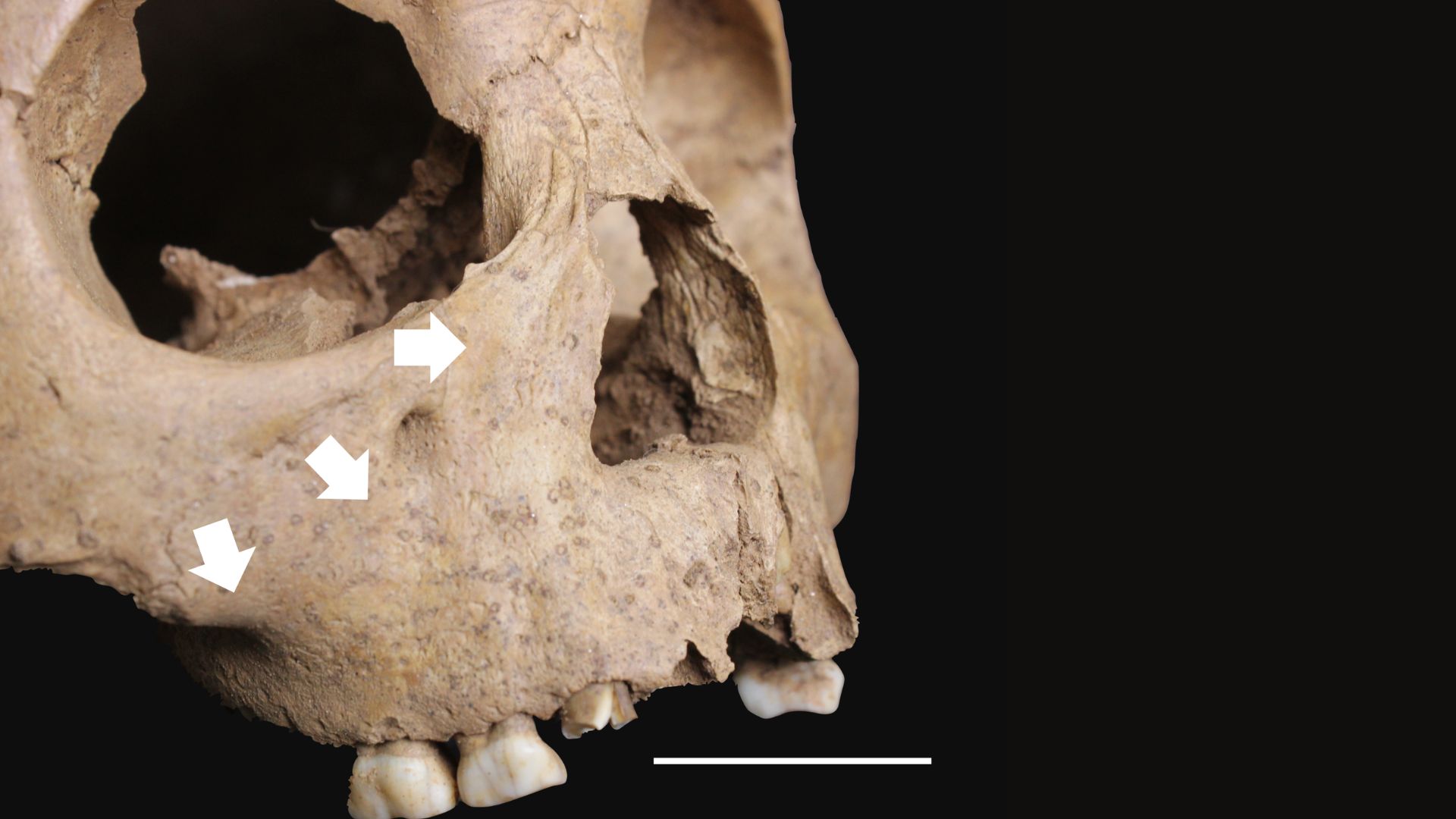
Ancient children's teeth reveal a syphilis-like disease was spreading in Vietnam 4,000 years ago
Archaeology
Ancient children's teeth reveal a syphilis-like disease was spreading in Vietnam 4,000 years ago
 Archaeology
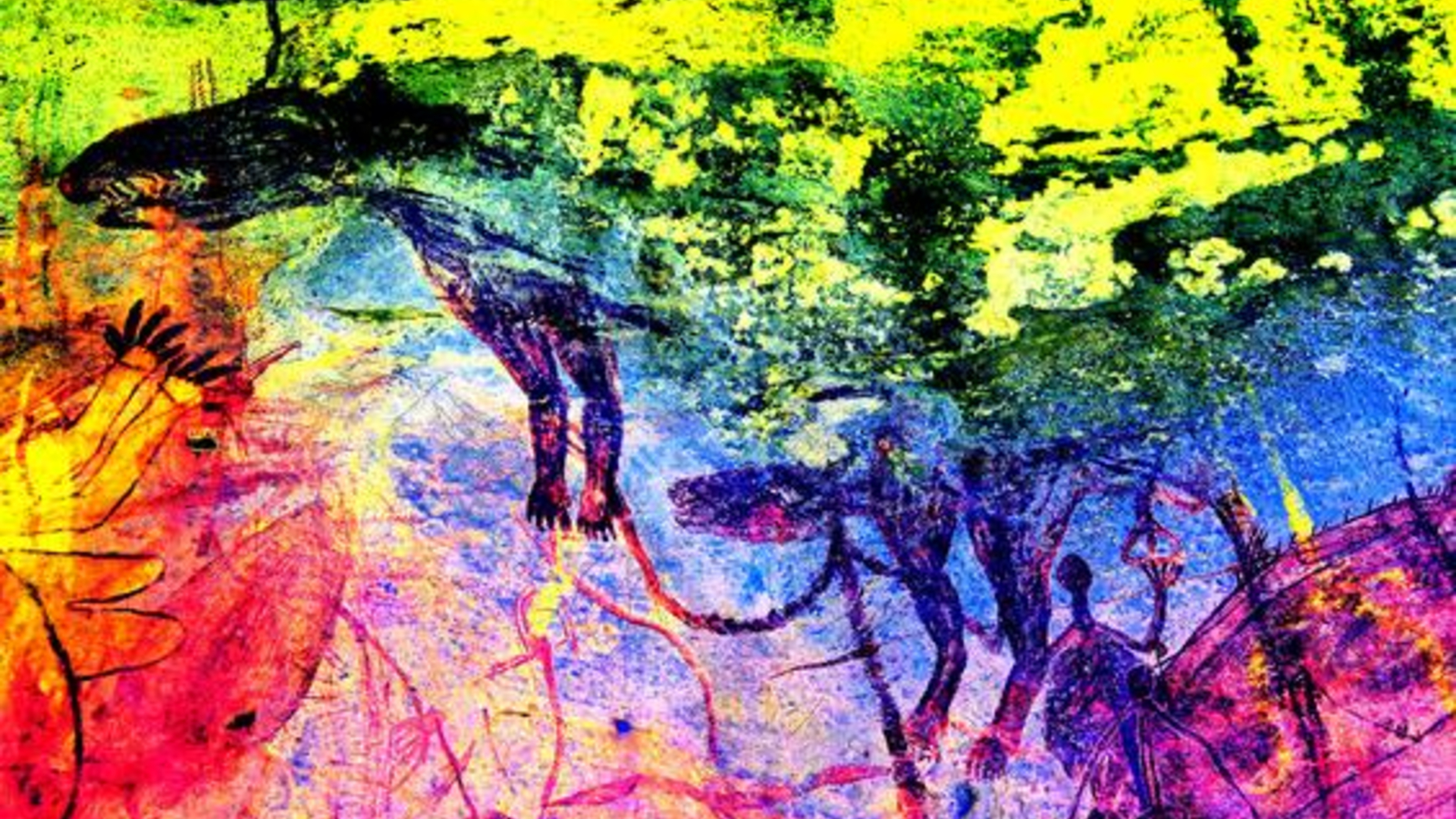
Tasmanian tigers discovered in Indigenous rock art in Australia, suggesting these marsupials lived there much longer than thought
Archaeology
Tasmanian tigers discovered in Indigenous rock art in Australia, suggesting these marsupials lived there much longer than thought
 The Americas
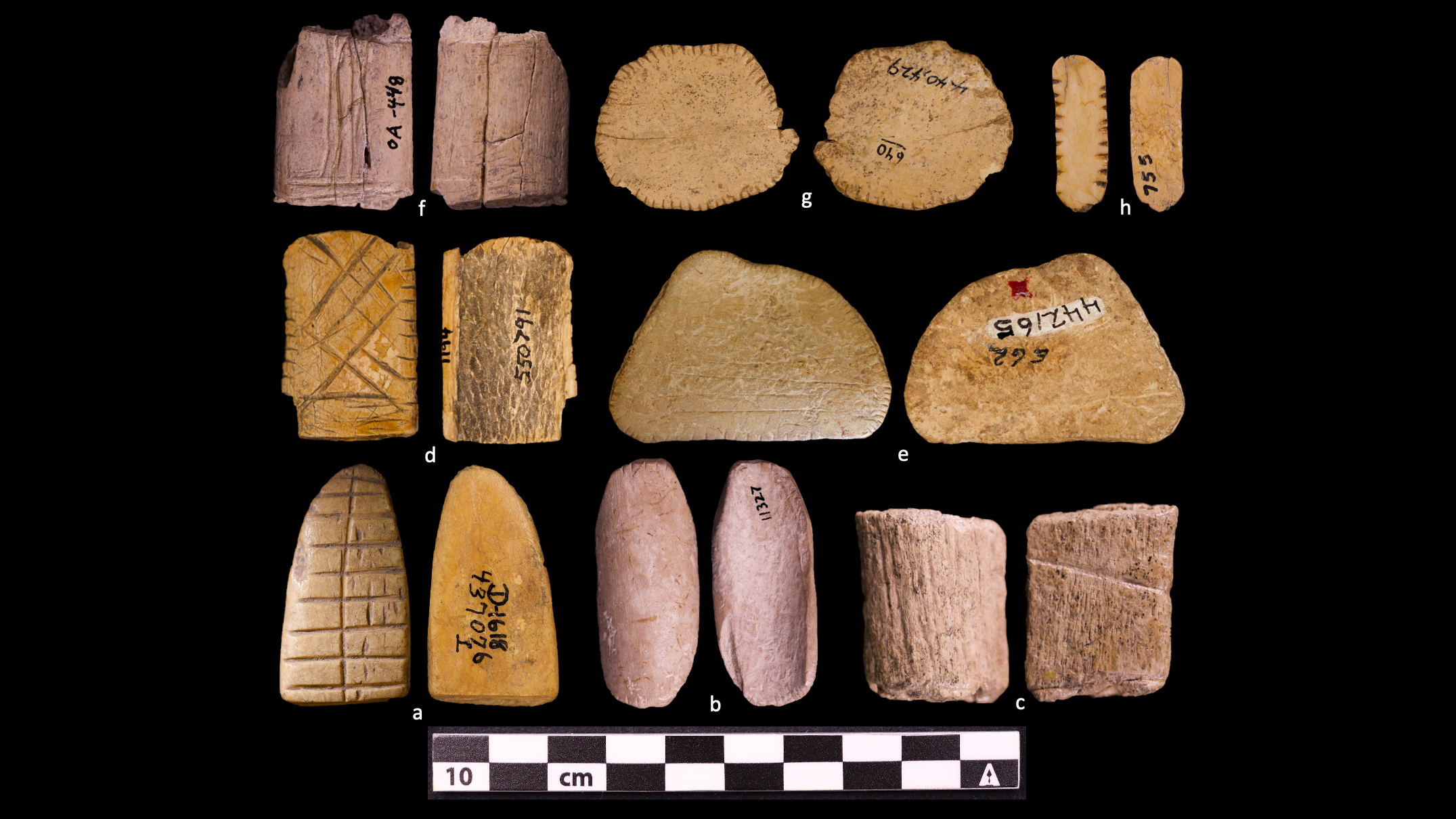
Native Americans invented dice and games of chance more than 12,000 years ago, archaeological study reveals
The Americas
Native Americans invented dice and games of chance more than 12,000 years ago, archaeological study reveals
 Ancient Egyptians
Beadnet dress: A 4,500-year-old ancient Egyptian funeral 'gown' that was in vogue during the Old Kingdom
Ancient Egyptians
Beadnet dress: A 4,500-year-old ancient Egyptian funeral 'gown' that was in vogue during the Old Kingdom
 Neanderthals
'Major disruption in Neanderthal history': 65,000 years ago, all Neanderthals in Europe died out except for one lineage
Neanderthals
'Major disruption in Neanderthal history': 65,000 years ago, all Neanderthals in Europe died out except for one lineage
 Neanderthals
2 Neanderthals present at same Siberian cave 10,000 years apart were distant relatives, 110,000-year-old bone reveals
Latest in News
Neanderthals
2 Neanderthals present at same Siberian cave 10,000 years apart were distant relatives, 110,000-year-old bone reveals
Latest in News
 Space Exploration
'Trust us; you look amazing': Artemis II crewmembers share first message from space
Space Exploration
'Trust us; you look amazing': Artemis II crewmembers share first message from space
 Space
Science news this week: Artemis II lifts off, diabetes cured in mice, and smog in China shapes Arctic storms
Space
Science news this week: Artemis II lifts off, diabetes cured in mice, and smog in China shapes Arctic storms
 Extinct species
Fossil site in China reveals bevy of complex creatures lived prior to the Cambrian explosion, including a 'Dune'-like sandworm
Extinct species
Fossil site in China reveals bevy of complex creatures lived prior to the Cambrian explosion, including a 'Dune'-like sandworm
 Health
Diabetes rates are lower in high-altitude environments — and scientists may have discovered why
Health
Diabetes rates are lower in high-altitude environments — and scientists may have discovered why
 Anatomy
Scientists mapped all the nerves of the clitoris for the first time
Anatomy
Scientists mapped all the nerves of the clitoris for the first time
 Black Holes
The hungriest black holes in the universe are running out of food, survey of 8,000 cosmic monsters reveals
LATEST ARTICLES
Black Holes
The hungriest black holes in the universe are running out of food, survey of 8,000 cosmic monsters reveals
LATEST ARTICLES 1'They could spend 4 or 5 hours per day underwater': How humans adapted to the most challenging environments
- 2We went to Finland to hear about the new 'sand battery' that will turn stored renewable energy back into power for the electrical grid
- 3The hungriest black holes in the universe are running out of food, survey of 8,000 cosmic monsters reveals
- 4Beadnet dress: A 4,500-year-old ancient Egyptian funeral 'gown' that was in vogue during the Old Kingdom
- 5'This generation's moment': How the Artemis missions will reframe humanity's relationship with the moon