- Archaeology
- Ancient Egyptians
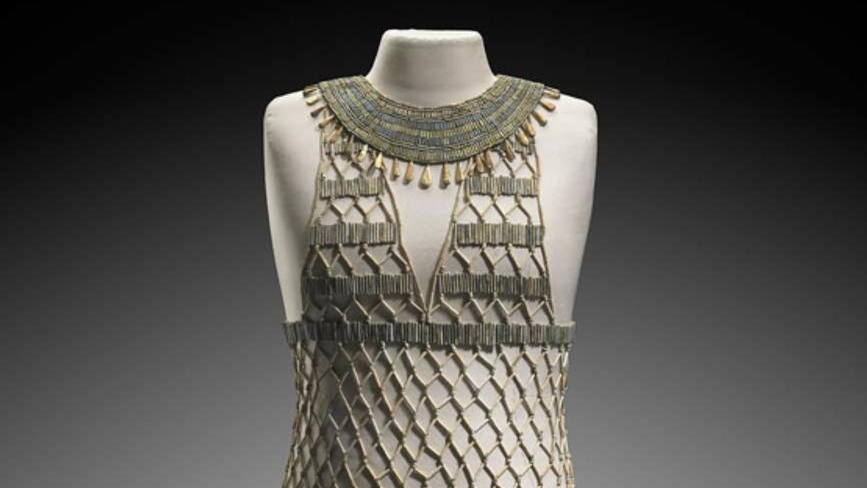
This rare example of an ancient Egyptian beaded dress was likely crafted specifically for a woman's funeral.
When you purchase through links on our site, we may earn an affiliate commission. Here’s how it works.
- Copy link
- X
Get the world’s most fascinating discoveries delivered straight to your inbox.
Become a Member in Seconds
Unlock instant access to exclusive member features.
Contact me with news and offers from other Future brands Receive email from us on behalf of our trusted partners or sponsors By submitting your information you agree to the Terms & Conditions and Privacy Policy and are aged 16 or over.You are now subscribed
Your newsletter sign-up was successful
Want to add more newsletters?

Delivered Daily
Daily Newsletter
Sign up for the latest discoveries, groundbreaking research and fascinating breakthroughs that impact you and the wider world direct to your inbox.
Signup +
Once a week
Life's Little Mysteries
Feed your curiosity with an exclusive mystery every week, solved with science and delivered direct to your inbox before it's seen anywhere else.
Signup +
Once a week
How It Works
Sign up to our free science & technology newsletter for your weekly fix of fascinating articles, quick quizzes, amazing images, and more
Signup +
Delivered daily
Space.com Newsletter
Breaking space news, the latest updates on rocket launches, skywatching events and more!
Signup +
Once a month
Watch This Space
Sign up to our monthly entertainment newsletter to keep up with all our coverage of the latest sci-fi and space movies, tv shows, games and books.
Signup +
Once a week
Night Sky This Week
Discover this week's must-see night sky events, moon phases, and stunning astrophotos. Sign up for our skywatching newsletter and explore the universe with us!
Signup +Join the club
Get full access to premium articles, exclusive features and a growing list of member rewards.
Explore An account already exists for this email address, please log in. Subscribe to our newsletter
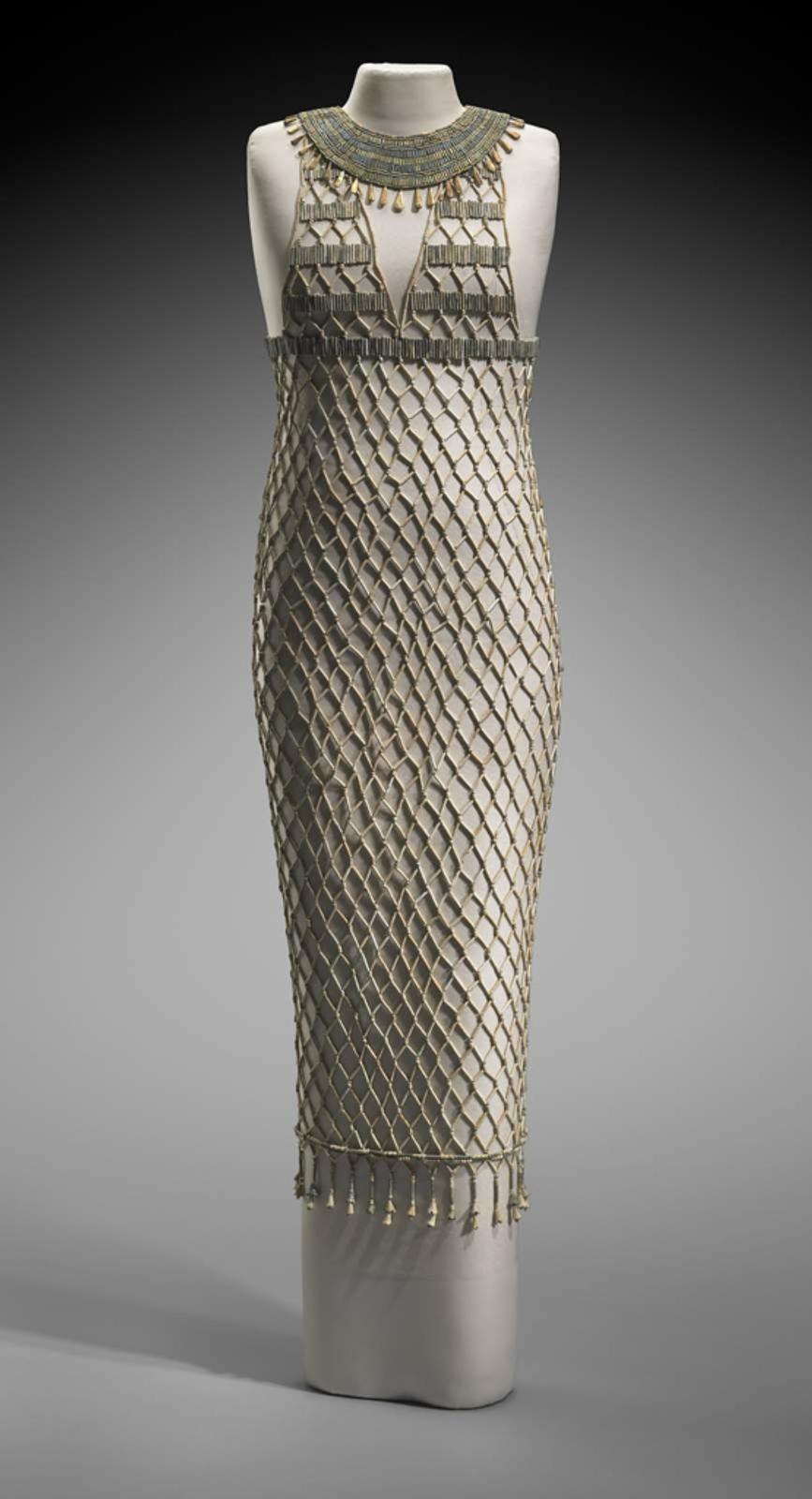
Name: Beadnet dress
What it is: A beaded funeral dress
Where it is from: Giza, Egypt
When it was made: Circa 2551 to 2528 B.C.
According to the Museum of Fine Arts, Boston, which has this dress and several other examples of beadnet objects in its collection, the net was made from linen string and faience — a glazed ceramic made from finely crushed quartz. In this case, before firing, the faience paste was mixed with copper, which turned the beads blue and blue-green to mimic the semiprecious stones lapis lazuli and turquoise.
The midi-length beadnet features a diamond-patterned skirt and an empire-waist bodice made with rows of vertically strung faience beads. The dress is topped with a neckline of beads in concentric circles, and the bottom features a beaded fringe of mitre shells (sea snails). The completed beadwork net was likely draped over a linen dress or sewn directly onto it, rather than worn by itself.
You may like-
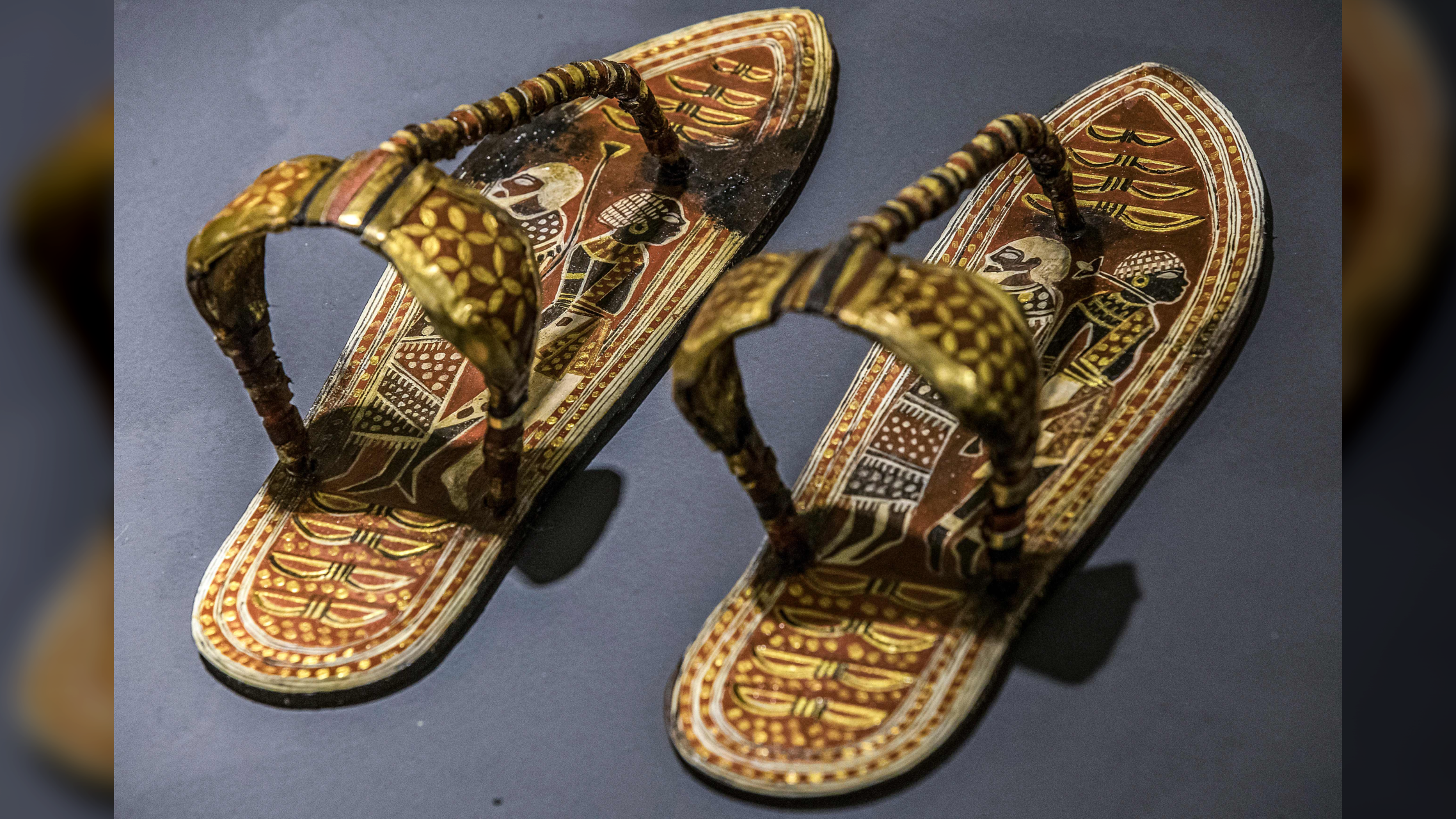 Sandals of Tutankhamun: 3,300-year-old footwear that let King Tut walk all over his enemies
-
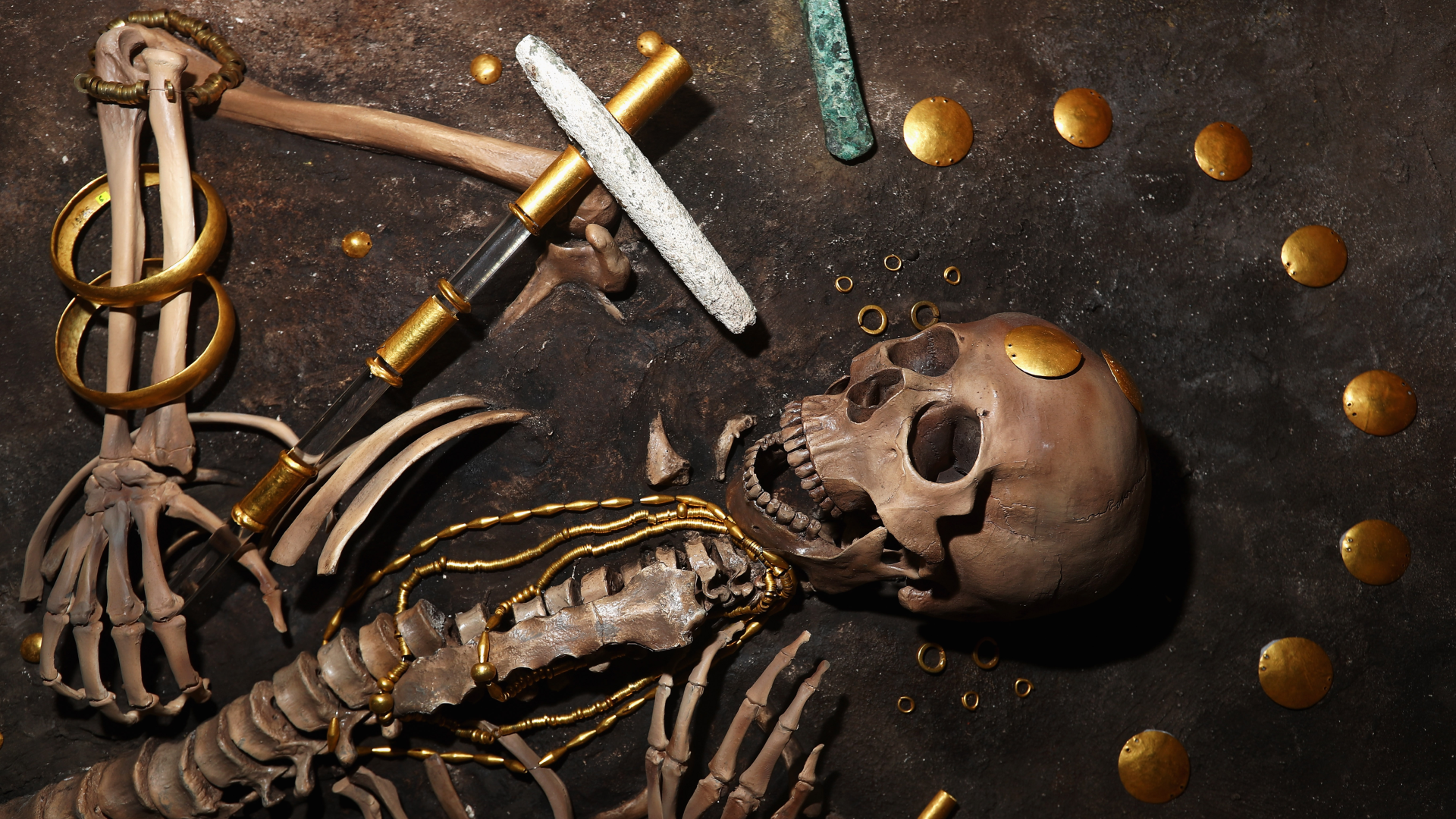 Varna Gold: Humanity's first gold jewelry was found in a cemetery with a gold 'penis sheath'
-
 Lady of Elche: A 2,400-year-old bust of a mysterious 'highborn' woman from pre-Roman Spain
Since Egyptian faience beads are quite fragile, the dress may have been worn only on special occasions, or it might have been made specifically for the woman's funeral, according to Tom Hardwick, an Egyptologist at the Houston Museum of Natural Science. The blue and green on the dress may symbolize the Nile River and springtime, both of which were tied to the Egyptian idea of resurrection in the afterlife, according to Hardwick.
MORE ASTONISHING ARTIFACTS—Tudor Heart: A Renaissance gold necklace featuring a French-English pun on the love between Henry VIII and his first wife, Katherine of Aragon
—Urfa Man: An 11,500-year-old life-size statue of a man holding his penis
—Equestrian statue of Marcus Aurelius: The only surviving larger-than-life-size statue of a pagan Roman emperor — a rarity that Michelangelo refurbished
This beadnet dress is the earliest surviving example of the style, according to MFA Boston. Only about two dozen beadnet dresses exist in museums around the world. Two have been reconstructed at MFA Boston, and one has been reconstructed at the Petrie Museum at University College London. When ancient Egyptian clothing specialist Janet Johnstone, a clothing consultant who specializes in the interpretation and construction of ancient Egyptian clothing, reconstructed the Petrie Museum beadnet dress, she discovered that it was far too heavy to be worn regularly. (For anyone who wants to test their own beadnet sewing skills, Johnstone has provided a basic DIY guide.)
In the New Kingdom period (1550 to 1070 B.C.), the beadnet dress appears to have gone out of fashion while simpler beaded nets rose in popularity as grave goods. These "bead cloaks" have been found on top of New Kingdom mummies, revealing that beaded accessories remained an important part of ancient Egyptian funeral rituals for centuries.
For more stunning archaeological discoveries, check out our Astonishing Artifacts archives.
Sign up for the Live Science daily newsletter nowContact me with news and offers from other Future brandsReceive email from us on behalf of our trusted partners or sponsorsBy submitting your information you agree to the Terms & Conditions and Privacy Policy and are aged 16 or over. TOPICS astonishing artifacts Kristina KillgroveSocial Links NavigationStaff writer
Kristina Killgrove is a staff writer at Live Science with a focus on archaeology and paleoanthropology news. Her articles have also appeared in venues such as Forbes, Smithsonian, and Mental Floss. Kristina holds a Ph.D. in biological anthropology and an M.A. in classical archaeology from the University of North Carolina, as well as a B.A. in Latin from the University of Virginia, and she was formerly a university professor and researcher. She has received awards from the Society for American Archaeology and the American Anthropological Association for her science writing.
View MoreYou must confirm your public display name before commenting
Please logout and then login again, you will then be prompted to enter your display name.
Logout Read more
Ancient Egyptians
Sandals of Tutankhamun: 3,300-year-old footwear that let King Tut walk all over his enemies
Archaeology
Lady of Elche: A 2,400-year-old bust of a mysterious 'highborn' woman from pre-Roman Spain
Archaeology
Varna Gold: Humanity's first gold jewelry was found in a cemetery with a gold 'penis sheath'
 Ancient Egyptians
5,000-year-old rock art from ancient Egypt depicts 'terrifying' conquest of the Sinai Peninsula
Ancient Egyptians
5,000-year-old rock art from ancient Egypt depicts 'terrifying' conquest of the Sinai Peninsula
 The Americas
World's oldest known sewn clothing may be stitched pieces of ice age hide unearthed in Oregon cave
The Americas
World's oldest known sewn clothing may be stitched pieces of ice age hide unearthed in Oregon cave
 Archaeology
Stone Age boy in Sweden was buried in deerskin and a woodpecker headdress, archaeologists discover
Latest in Ancient Egyptians
Archaeology
Stone Age boy in Sweden was buried in deerskin and a woodpecker headdress, archaeologists discover
Latest in Ancient Egyptians
 Ancient Egyptians
'Cikai Korran came here and saw': Visitors from India graffitied dozens of Egyptian tombs 2,000 years ago
Ancient Egyptians
'Cikai Korran came here and saw': Visitors from India graffitied dozens of Egyptian tombs 2,000 years ago
 Ancient Egyptians
Ancient rock art depicting hunters and geometric shapes discovered in Egypt's Sinai Desert — and it spans a period of 10,000 years
Ancient Egyptians
Sandals of Tutankhamun: 3,300-year-old footwear that let King Tut walk all over his enemies
Ancient Egyptians
5,000-year-old rock art from ancient Egypt depicts 'terrifying' conquest of the Sinai Peninsula
Ancient Egyptians
Ancient rock art depicting hunters and geometric shapes discovered in Egypt's Sinai Desert — and it spans a period of 10,000 years
Ancient Egyptians
Sandals of Tutankhamun: 3,300-year-old footwear that let King Tut walk all over his enemies
Ancient Egyptians
5,000-year-old rock art from ancient Egypt depicts 'terrifying' conquest of the Sinai Peninsula
 Ancient Egyptians
Nefertiti's tomb close to discovery, famed archaeologist Zahi Hawaas claims in new documentary
Ancient Egyptians
Nefertiti's tomb close to discovery, famed archaeologist Zahi Hawaas claims in new documentary
 Ancient Egyptians
Ancient Egyptian valley temple excavated — and it's connected to a massive upper temple dedicated to the sun god, Ra
Latest in Features
Ancient Egyptians
Ancient Egyptian valley temple excavated — and it's connected to a massive upper temple dedicated to the sun god, Ra
Latest in Features
 Space
NASA telescope uncovers new mystery in supernova first spotted by Chinese astronomers 2,000 years ago — Space photo of the week
Space
NASA telescope uncovers new mystery in supernova first spotted by Chinese astronomers 2,000 years ago — Space photo of the week
 Genetics
Are allergies genetic?
Genetics
Are allergies genetic?
 Space
Hubble images taken 25 years apart show big changes in the iconic Crab Nebula — Space photo of the week
Space
Hubble images taken 25 years apart show big changes in the iconic Crab Nebula — Space photo of the week
 Rivers & Oceans
Lençóis Maranhenses: Brazil's dune-filled expanse that sits at the intersection of 3 biomes
Rivers & Oceans
Lençóis Maranhenses: Brazil's dune-filled expanse that sits at the intersection of 3 biomes
 Planet Earth
DNA shed by every living thing is lurking in the environment — and it could tell us how Earth is changing in real time
Planet Earth
DNA shed by every living thing is lurking in the environment — and it could tell us how Earth is changing in real time
 Archaeology
Tudor Heart: A Renaissance gold necklace featuring a French-English pun on the love between Henry VIII and his first wife, Katherine of Aragon
LATEST ARTICLES
Archaeology
Tudor Heart: A Renaissance gold necklace featuring a French-English pun on the love between Henry VIII and his first wife, Katherine of Aragon
LATEST ARTICLES 1AI-written code can beat humans at biomedical analysis, some studies find. What does that mean for the field?
- 2Artemis II moon flyby begins: How to watch and what to know
- 3'A cure on the horizon': Are we finally close to ending type 1 diabetes?
- 4'They could spend 4 or 5 hours per day underwater': How humans adapted to the most challenging environments
- 5We went to Finland to hear about the new 'sand battery' that will turn stored renewable energy back into power for the electrical grid