- Space
- Astronomy
- Black Holes
Astronomers studied 1.3 million galaxies and 8,000 X-ray-spewing supermassive black holes to find out why these gravitational monsters are growing more slowly than ever.
When you purchase through links on our site, we may earn an affiliate commission. Here’s how it works.
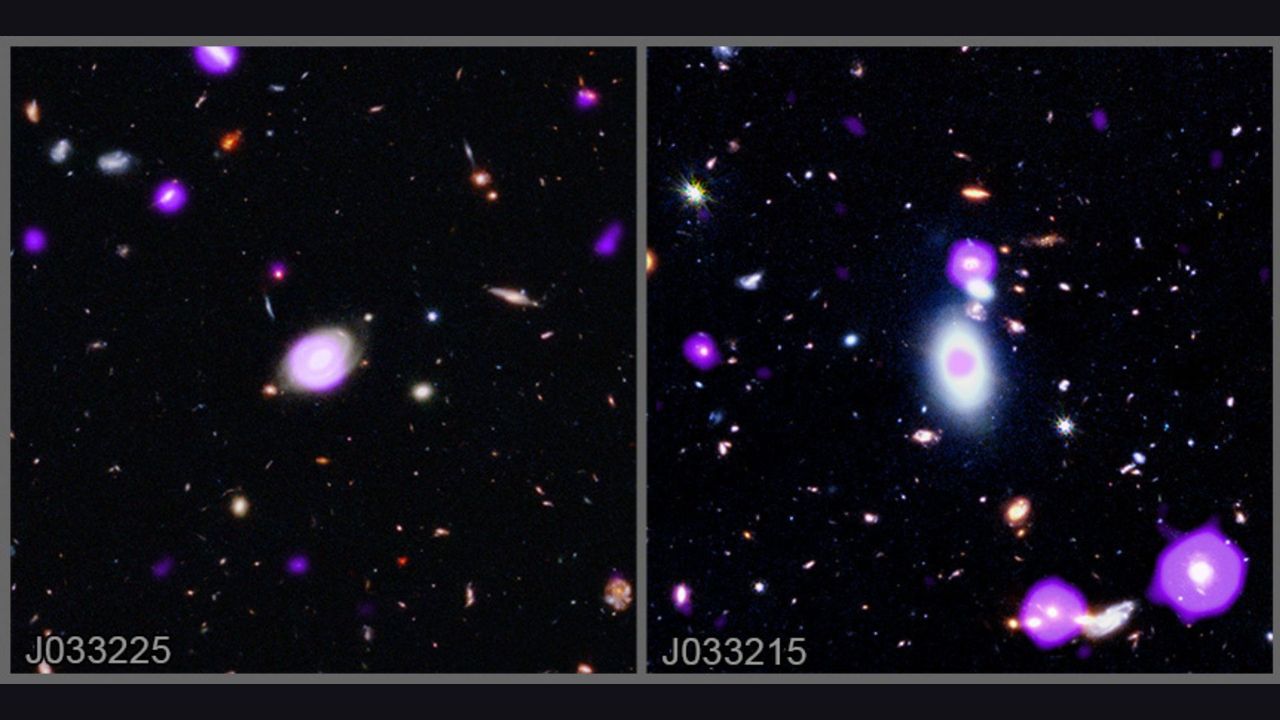
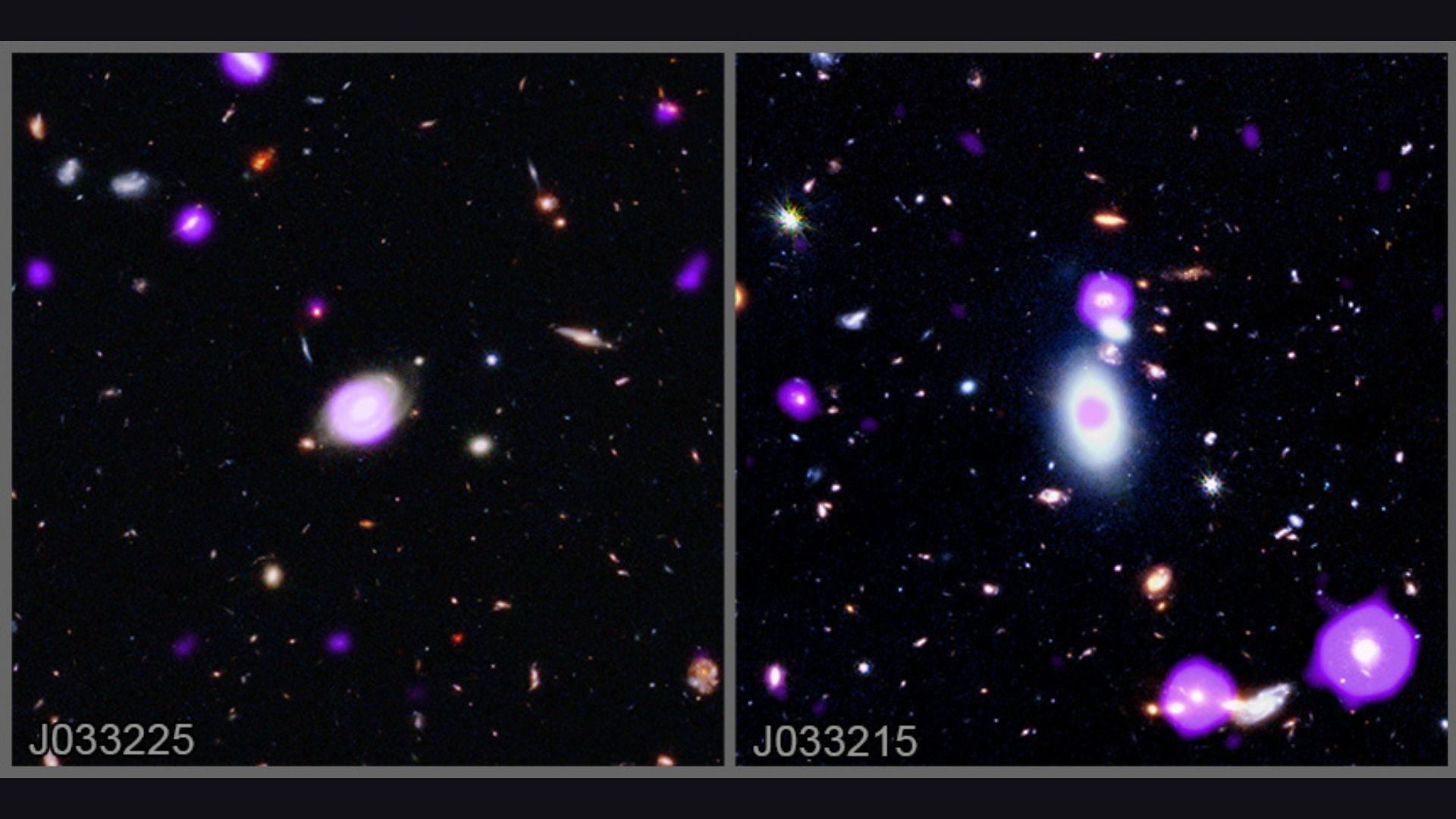 Galaxy J033225 shines brighter in X-rays than the galaxy J033215 because of its increased consumption.
(Image credit: X-ray: NASA/CXC/Penn State Univ./Z. Yu et al.; Optical (HST): NASA/ESA/STScI; Infrared: NASA/ESA/CSA/STScI; Image Processing: NASA/CXC/SAO/P. Edmonds, L. Frattare)
Galaxy J033225 shines brighter in X-rays than the galaxy J033215 because of its increased consumption.
(Image credit: X-ray: NASA/CXC/Penn State Univ./Z. Yu et al.; Optical (HST): NASA/ESA/STScI; Infrared: NASA/ESA/CSA/STScI; Image Processing: NASA/CXC/SAO/P. Edmonds, L. Frattare)
- Copy link
- X
Get the world’s most fascinating discoveries delivered straight to your inbox.
Become a Member in Seconds
Unlock instant access to exclusive member features.
Contact me with news and offers from other Future brands Receive email from us on behalf of our trusted partners or sponsors By submitting your information you agree to the Terms & Conditions and Privacy Policy and are aged 16 or over.You are now subscribed
Your newsletter sign-up was successful
Want to add more newsletters?

Delivered Daily
Daily Newsletter
Sign up for the latest discoveries, groundbreaking research and fascinating breakthroughs that impact you and the wider world direct to your inbox.
Signup +
Once a week
Life's Little Mysteries
Feed your curiosity with an exclusive mystery every week, solved with science and delivered direct to your inbox before it's seen anywhere else.
Signup +
Once a week
How It Works
Sign up to our free science & technology newsletter for your weekly fix of fascinating articles, quick quizzes, amazing images, and more
Signup +
Delivered daily
Space.com Newsletter
Breaking space news, the latest updates on rocket launches, skywatching events and more!
Signup +
Once a month
Watch This Space
Sign up to our monthly entertainment newsletter to keep up with all our coverage of the latest sci-fi and space movies, tv shows, games and books.
Signup +
Once a week
Night Sky This Week
Discover this week's must-see night sky events, moon phases, and stunning astrophotos. Sign up for our skywatching newsletter and explore the universe with us!
Signup +Join the club
Get full access to premium articles, exclusive features and a growing list of member rewards.
Explore An account already exists for this email address, please log in. Subscribe to our newsletterFor years, astronomers have been puzzled by why the biggest black holes in the universe have been growing much more slowly over the past 10 billion years. Now, a new study offers a potential solution to this astrophysical enigma: They're starved for gas.
Supermassive black holes (SMBHs) have immense gravitational appetites that allowed them to grow to many millions or billions of times the mass of the sun at surprisingly rapid rates in the first few billion years after the Big Bang. However, SMBHs have been growing ever more slowly since the period known as "cosmic noon," when the universe was less than a quarter of its current age.
You may like-
 Scientists spot 'rule-breaking' black hole growing 13 times faster than should be possible
-
 The earliest black holes in the universe may still be with us, surprising study claims
-
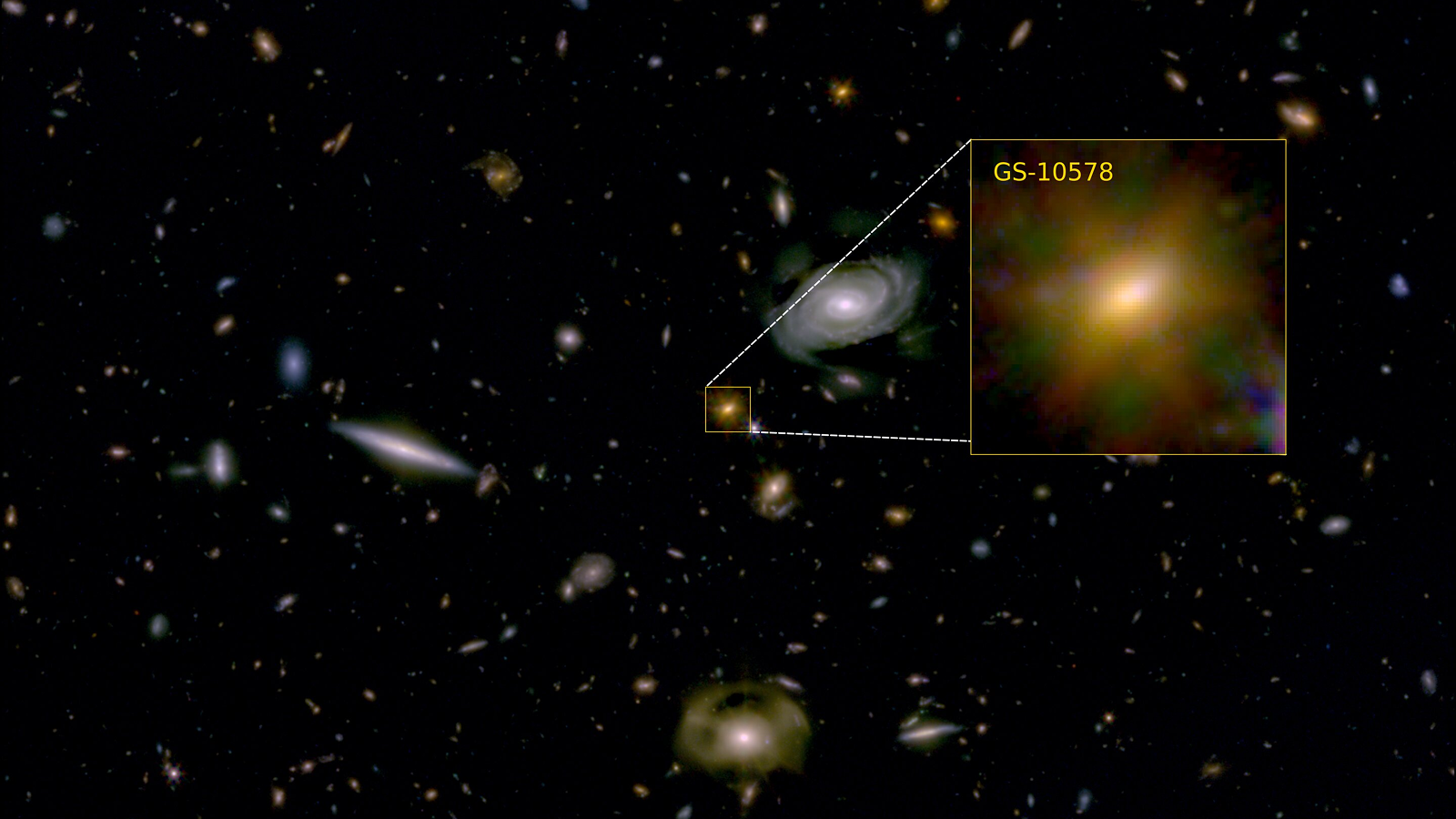 Strange, 'starved' galaxy died 'a death of 1,000 cuts' in the ancient universe, JWST reveals
The actual reason may be that there's simply less material for them to munch on, scientists suggested in a paper published Dec. 17 in The Astrophysical Journal.
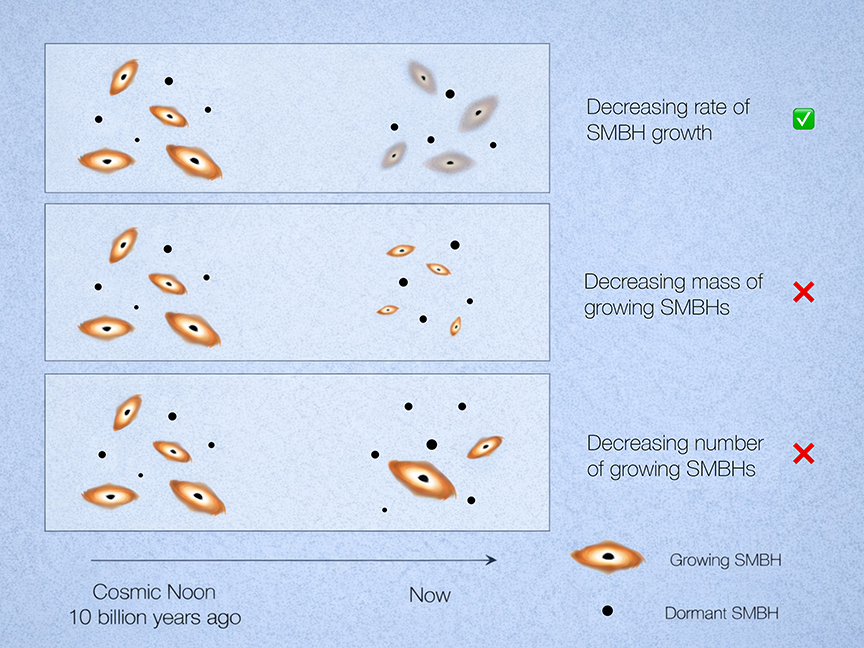
"We knew black holes were growing more slowly, but not why — and it turned out to be that individual black holes are consuming material much less rapidly, rather than there simply being fewer growing black holes or smaller ones," study co-author Fan Zou, an astronomer at the University of Michigan, told Live Science via email.
Beefy black holes on a diet
Studying the growth of black holes is crucial for understanding galactic evolution and star birth, because SMBHs and their host galaxies evolve in a coordinated manner. SMBH sizes also correlate with the total mass of stars and their chaotic movements in a galaxy's bulge — the football-shaped central region where stars are densely packed.
To measure how black hole growth has changed throughout cosmic time, the researchers utilized data from nine extragalactic surveys collected in a "wedding cake" design. These tiered layers include shallow surveys of large, relatively nearby regions of the sky, as well as extremely deep "pencil-beam" looks at smaller fields, gathered from the world's premier X-ray-based space telescopes, including NASA's Chandra X-ray Observatory, the European Space Agency's XMM-Newton and the German-Russian eROSITA.
Sign up for the Live Science daily newsletter nowContact me with news and offers from other Future brandsReceive email from us on behalf of our trusted partners or sponsorsBy submitting your information you agree to the Terms & Conditions and Privacy Policy and are aged 16 or over."X-ray light is arguably the best tracer of black hole growth," lead author Zhibo Yu, an astronomer at Penn State, told Live Science via email. "It is ubiquitously produced by growing supermassive black holes and has high contrast compared to the background star light. It also has high-penetrating power — that's why it's commonly used in medical imaging — so that it is less affected by the obscuring gas and dust in the galaxy."
Altogether, the researchers analyzed multiwavelength observations of 1.3 million galaxies and 8,000 actively feeding, X-ray-spewing SMBHs to determine why the black holes' growth rate has plummeted.
Have black holes had their heyday?
The research tested three main ideas. For example, are the black holes in the modern universe gobbling less matter? Alternatively, are they simply smaller and, therefore, less gravitationally gluttonous than their ancient predecessors? Or are there fewer actively growing black holes overall?
What to read next-
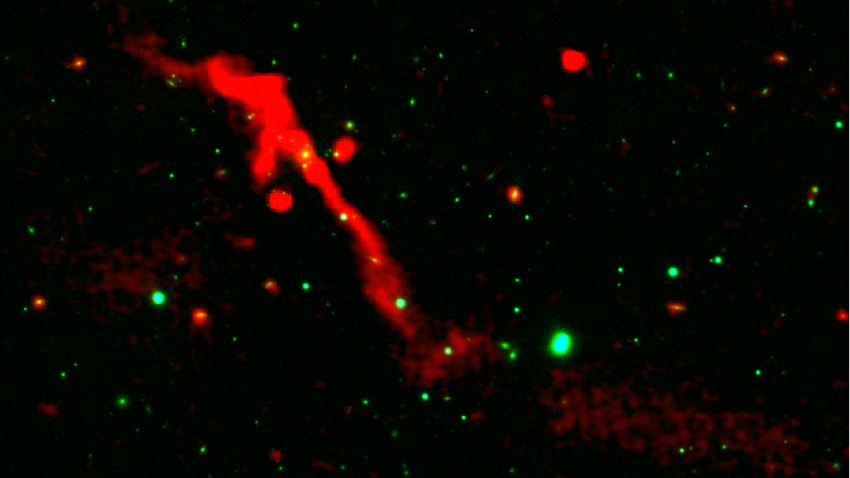 Scientists see monster black hole 'reborn' after 100 million years of rest
-
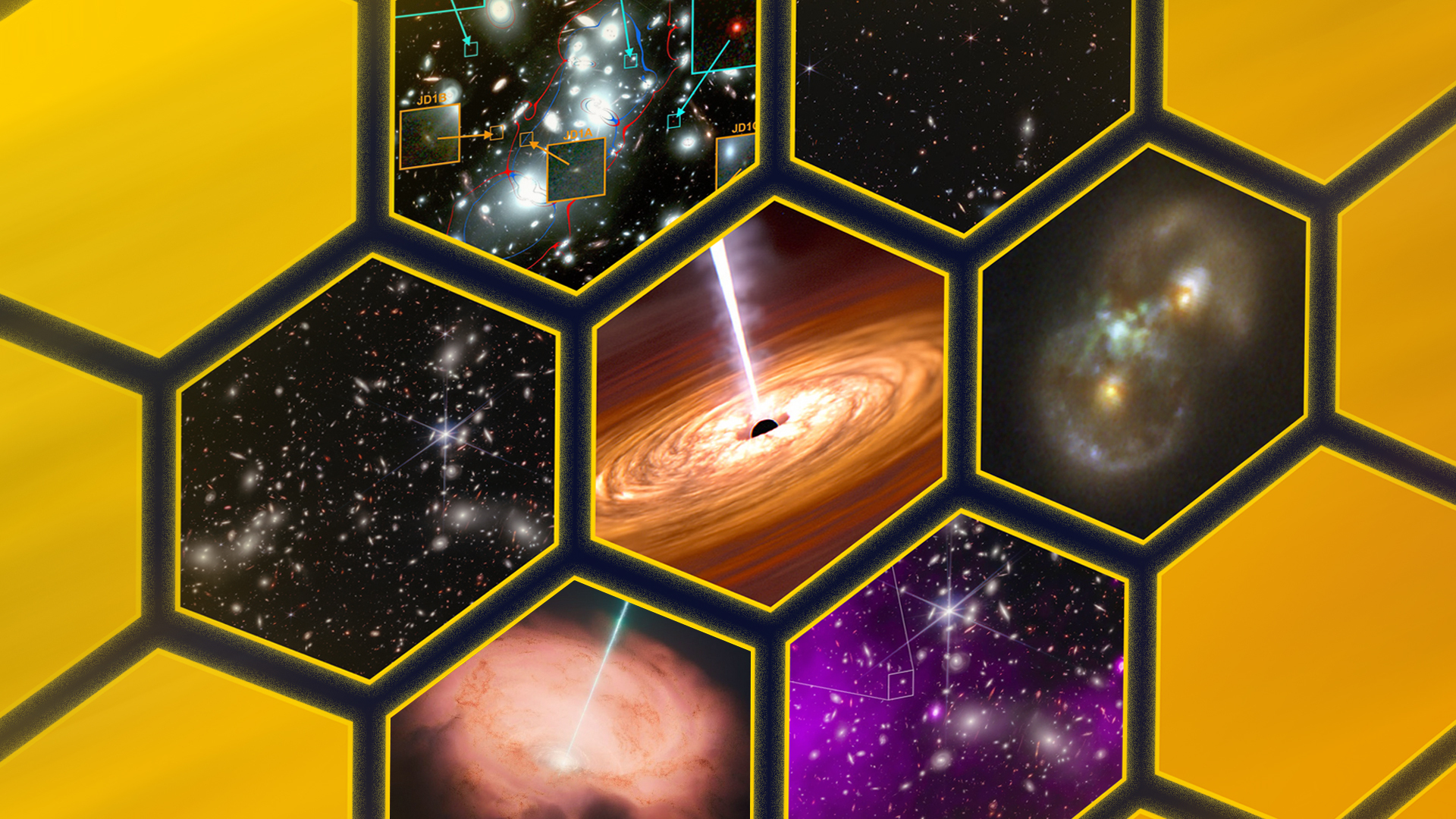 'A real revolution': The James Webb telescope is upending our understanding of the biggest, oldest black holes in the universe
-
 James Webb telescope saw black holes emerging from 'cocoons' near the dawn of time
The researchers concluded that the black holes' consumption has slackened as the amount of cold gas for them to gobble has decreased since cosmic noon, approximately 10 billion years ago. "What surprised me most was that we could actually isolate the main reason, and there is indeed a dominating reason instead of a messy mix," Zou explained.
- James Webb telescope confirms a supermassive black hole running away from its host galaxy at 2 million mph, researchers say
- 'Like watching a cosmic volcano erupt': Scientists see monster black hole 'reborn' after 100 million years
- Black hole outburst named 'Jetty McJetface' is one of the most energetic objects in the universe
This decrease in growth rates appears to be significant. "Our best estimate is that the decrease is a factor of 22," study co-author Neil Brandt, an astrophysicist at Penn State, told Live Science via email. Although this study did not address the bafflingly fast black hole growth in the very early universe, "it does the best job so far of [addressing] the final 75% of cosmic time — a large majority!"
Future work may focus on additional datasets, such as wide-field X-ray surveys from Chandra and XMM-Newton, as well as multiwavelength data from other observatories. As a result, astronomers will be able to uncover larger SMBH populations, including even older examples and those that are obscured by dense dust and gas.
Finally, the research further confirms that the eras of rampant SMBHs are behind us. "We do not expect many SMBHs to emerge and significantly grow in the future," Zou said. "Actually, we found in 2024 that the number of SMBHs was almost settled by 7 billion years ago — and will likely continue to be so in the future."
Article Sources喻 Z. 知. Y., Brandt, W. N., Zou, F., Luo, B., Ni, Q., Schneider, D. P., & Vito, F. (2025). The Drivers of the Decline in Supermassive Black Hole Growth at z < 2. The Astrophysical Journal, 995(2), 205. https://doi.org/10.3847/1538-4357/ae173d
How much do you know about black holes? Test your knowledge with our black hole quiz!
Ivan FarkasLive Science ContributorIvan is a long-time writer who loves learning about technology, history, culture, and just about every major “ology” from “anthro” to “zoo.” Ivan also dabbles in internet comedy, marketing materials, and industry insight articles. An exercise science major, when Ivan isn’t staring at a book or screen he’s probably out in nature or lifting progressively heftier things off the ground. Ivan was born in sunny Romania and now resides in even-sunnier California.
View MoreYou must confirm your public display name before commenting
Please logout and then login again, you will then be prompted to enter your display name.
Logout Read more
Black Holes
The earliest black holes in the universe may still be with us, surprising study claims
Astronomy
Strange, 'starved' galaxy died 'a death of 1,000 cuts' in the ancient universe, JWST reveals
Black Holes
'A real revolution': The James Webb telescope is upending our understanding of the biggest, oldest black holes in the universe
Cosmology
James Webb telescope saw black holes emerging from 'cocoons' near the dawn of time
 Physics & Mathematics
'Collective hum' of black holes could settle the debate over new physics
Physics & Mathematics
'Collective hum' of black holes could settle the debate over new physics
 Astronomy
James Webb telescope reveals sharpest-ever look at the edge of a supermassive black hole
Latest in Black Holes
Astronomy
James Webb telescope reveals sharpest-ever look at the edge of a supermassive black hole
Latest in Black Holes
 Black Holes
Universe-shaking collision of black hole and neutron star could upend our understanding of monster cosmic mergers
Black Holes
Universe-shaking collision of black hole and neutron star could upend our understanding of monster cosmic mergers
 Black Holes
Exotic prime numbers could be hiding inside black holes
Black Holes
Exotic prime numbers could be hiding inside black holes
 Black Holes
Science history: Stephen Hawking writes a tiny paper — and turns our understanding of black holes inside out — March 1, 1974
Black Holes
Science history: Stephen Hawking writes a tiny paper — and turns our understanding of black holes inside out — March 1, 1974
 Black Holes
Scientists may have seen a star collapse directly into a black hole without exploding first
Black Holes
Scientists spot 'rule-breaking' black hole growing 13 times faster than should be possible
Black Holes
The earliest black holes in the universe may still be with us, surprising study claims
Latest in News
Black Holes
Scientists may have seen a star collapse directly into a black hole without exploding first
Black Holes
Scientists spot 'rule-breaking' black hole growing 13 times faster than should be possible
Black Holes
The earliest black holes in the universe may still be with us, surprising study claims
Latest in News
 Space Exploration
The Artemis II astronauts have just flown farther from Earth than any humans in history
Space Exploration
The Artemis II astronauts have just flown farther from Earth than any humans in history
 Space Exploration
Artemis II moon flyby begins: How to watch and what to know
Space Exploration
Artemis II moon flyby begins: How to watch and what to know
 Health
AI-written code can beat humans at biomedical analysis, some studies find. What does that mean for the field?
Health
AI-written code can beat humans at biomedical analysis, some studies find. What does that mean for the field?
 Space Exploration
'Trust us; you look amazing': Artemis II crewmembers share first message from space
Space Exploration
'Trust us; you look amazing': Artemis II crewmembers share first message from space
 Space
Science news this week: Artemis II lifts off, diabetes cured in mice, and smog in China shapes Arctic storms
Space
Science news this week: Artemis II lifts off, diabetes cured in mice, and smog in China shapes Arctic storms
 Extinct species
Fossil site in China reveals bevy of complex creatures lived prior to the Cambrian explosion, including a 'Dune'-like sandworm
LATEST ARTICLES
Extinct species
Fossil site in China reveals bevy of complex creatures lived prior to the Cambrian explosion, including a 'Dune'-like sandworm
LATEST ARTICLES 1Deadly, vivid-green mass sprawls across South African reservoir
- 2The Artemis II astronauts have just flown farther from Earth than any humans in history
- 3AI-written code can beat humans at biomedical analysis, some studies find. What does that mean for the field?
- 4Artemis II moon flyby begins: How to watch and what to know
- 5'A cure on the horizon': Are we finally close to ending type 1 diabetes?