
- Health
- Genetics
 Are allergies genetic?
Features
By
Katherine Irving
published
4 April 2026
Are allergies genetic?
Features
By
Katherine Irving
published
4 April 2026
Although babies born from parents with allergies are also more likely to have them, there are a number of outside factors that affect whether and how someone develops allergies.
When you purchase through links on our site, we may earn an affiliate commission. Here’s how it works.
 Although allergies do have a genetic component, they are also largely influenced by a baby's environment and experiences in early life.
(Image credit: filadendron via Getty Images)
Although allergies do have a genetic component, they are also largely influenced by a baby's environment and experiences in early life.
(Image credit: filadendron via Getty Images)
- Copy link
- X
Get the world’s most fascinating discoveries delivered straight to your inbox.
Become a Member in Seconds
Unlock instant access to exclusive member features.
Contact me with news and offers from other Future brands Receive email from us on behalf of our trusted partners or sponsors By submitting your information you agree to the Terms & Conditions and Privacy Policy and are aged 16 or over.You are now subscribed
Your newsletter sign-up was successful
Want to add more newsletters?

Delivered Daily
Daily Newsletter
Sign up for the latest discoveries, groundbreaking research and fascinating breakthroughs that impact you and the wider world direct to your inbox.
Signup +
Once a week
Life's Little Mysteries
Feed your curiosity with an exclusive mystery every week, solved with science and delivered direct to your inbox before it's seen anywhere else.
Signup +
Once a week
How It Works
Sign up to our free science & technology newsletter for your weekly fix of fascinating articles, quick quizzes, amazing images, and more
Signup +
Delivered daily
Space.com Newsletter
Breaking space news, the latest updates on rocket launches, skywatching events and more!
Signup +
Once a month
Watch This Space
Sign up to our monthly entertainment newsletter to keep up with all our coverage of the latest sci-fi and space movies, tv shows, games and books.
Signup +
Once a week
Night Sky This Week
Discover this week's must-see night sky events, moon phases, and stunning astrophotos. Sign up for our skywatching newsletter and explore the universe with us!
Signup +Join the club
Get full access to premium articles, exclusive features and a growing list of member rewards.
Explore An account already exists for this email address, please log in. Subscribe to our newsletterOver 100 million people, and more than 30% of adults, suffer from some type of allergy in the United States, and that number is on the rise. But where are these allergies coming from? Do we inherit them, or do they result from environmental factors?
The answer involves a little of both, said Dr. Derek Chu, an allergy specialist at McMaster University in Ontario. Allergies occur when the immune system mistakes a harmless substance, such as pollen or a certain type of food, for a dangerous substance and attempts to get it out of the body. Once the body reacts this way toward an allergen, it will repeat the allergic response for every new exposure, unless there is a successful intervention.
You may like-
 Inherited diseases don't work like we thought they did
-
 Top 5 tips for surviving hay fever season
-
 'Nose-in-a-dish' reveals why the common cold hits some people hard, while others recover easily

Sign up for our weekly Life's Little Mysteries newsletter to get the latest mysteries before they appear online.
According to Leah Kottyan, an immunologist at Cincinnati Children's Hospital, there are several main types of allergies. They include allergic dermatitis, which manifests through skin conditions such as rashes and hives; allergic asthma, which involves airway inflammation and the overproduction of mucus; allergic rhinitis, which results in sneezing and a stuffy nose; and food allergies, which can trigger a whole-body immune response. All of these responses could be driven by the same allergen, Kottyan noted. Moreover, people who have one type of allergic response are more likely to have others and more likely to be allergic to more than one thing.
According to Kottyan, there is almost certainly a genetic component to the development of allergies. Independent studies comparing the prevalence of allergies in identical and fraternal twins found that the identical twins were far more likely to exhibit similar allergies than the fraternal twins, indicating that their genetic makeup played a role. In one study, the identical twins had an average of 95% similarity between four different types of allergies, whereas fraternal twins had an average of around 37%.
However, the link between genetics and allergies is complicated. Allergic responses can be traced to mutations in hundreds of genes. One of the most studied such genes, known as filaggrin or FLG, affects the development of the skin's moisture barrier, Kottyan said. Mutations in FLG cause the moisture barrier to not act as it should. This increases a person's risk of developing eczema, allergic dermatitis and other types of allergies.
FLG mutations can put the skin in a compromised state, which can increase the skin's susceptibility in getting cuts and scrapes and from developing dry and cracked skin. When this compromised skin comes into contact with an allergen, the immune system is more likely to become sensitized improperly to that allergen, Kottyan said. This can cause an allergy to develop.
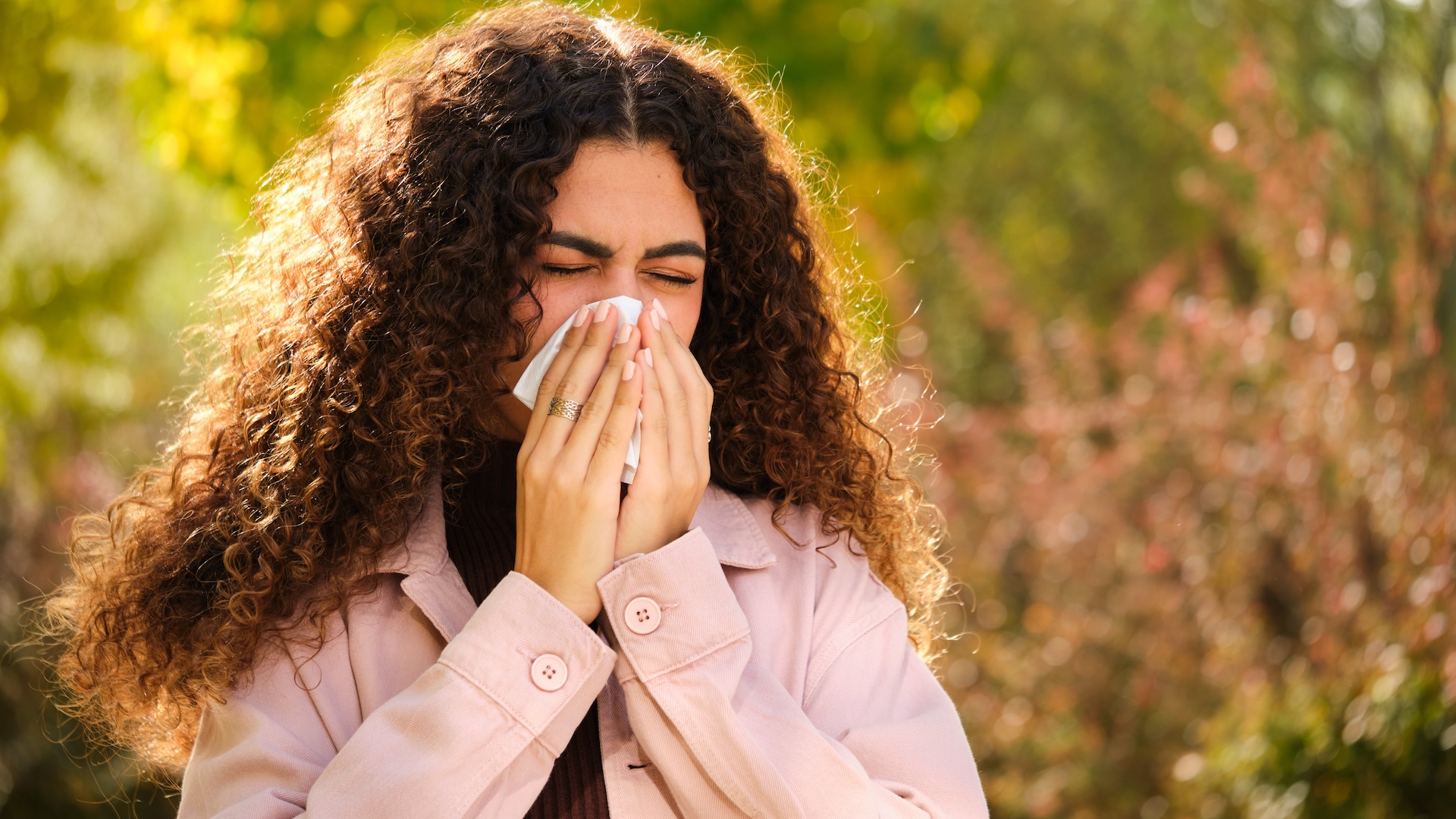
"Literally, when there's food on the baby's skin, the food is coming in through the damaged skin barrier, and the child is getting sensitized to that food through the skin," Kottyan told Live Science.
Environmental factors
Although allergic reactions have a genetic component, environmental factors — including exposure to different allergens — play a big role in how someone develops allergies.
"It doesn't track one to one," Chu told Live Science. In a recent study Chu co-authored, scientists investigated nongenetic risk factors for allergies, including the baby's method of delivery, early exposure to antibiotics, and when they were introduced to solid food.
What to read next-
 Teenager's hives turned out to be caused by rare water allergy
-
 Lifespan may be 50% heritable, study suggests
-
 The 'mono' virus raises the risk of MS and cancer in some. 22 genes hint at why.
Moreover, even people who inherit a tendency to develop allergies may not be allergic to the same things as their parents. Rather, whether the baby becomes allergic to peanuts, for example, will likely be determined by their early exposure to that allergen. There is now a FDA-approved immunotherapy treatment for children that centers on daily exposure to peanut proteins over a long period of time.
"If the immune system is exposed inconsistently, then it's not learning to tolerate what it's being exposed to, and instead it can easily end up misbehaving, leading to allergic reactions," Chu said.
The microbiome also plays a big role in the development of allergies. Scientists have found that early exposure to a wide variety of environmental microbes results in robust and healthy gut and skin microbiomes that are more tolerant of potential allergens. Without this diversity, or with a microbiome consisting of higher percentages of certain microbes, it is more likely that a person will develop conditions like eczema and food allergies.
RELATED MYSTERIES—Why do seasonal allergies make you feel sleepy?
—Can dogs and cats be allergic to humans?
—Can people be allergic to exercise?
A similar theory suggests that the eradication of many common parasites, and the more sterile environment many of us now live in, may have played a role in the uptick in allergy cases in the United States. With no parasites and fewer viruses and bad bacteria to go after, our immune systems may be developing too many allergy-fighting cells instead of the bacteria and virus-fighting ones.
Researchers like Chu and Kottyan are continuing to pinpoint the risk factors that can cause someone to develop allergies and test new preventive measures to help children grow into allergy-free adults. For now, Kottyan said, the best steps parents can take to prevent allergies in their children is to expose them to common allergens early and often and to take good care of their children's skin, especially in areas that are prone to dryness and eczema.
"Allergy genetics are not deterministic; they aren't going to say you absolutely are going to get a disease," Kottyan told Live Science. "It's not a life sentence."
DisclaimerThis article is for informational purposes only and is not meant to offer medical or dietary advice.
TOPICS Life's Little Mysteries Katherine Irving
Katherine Irving is a freelance science journalist specializing in wildlife and the geosciences. After graduating from Macalester College, where she wrote screenplays, excavated dinosaur bones and vaccinated wolves, Katherine dove straight into internships with Science Magazine and The Scientist. She now contributes to the Science Magazine podcast and loves reporting about the beautiful intricacies of our planet.
View MoreYou must confirm your public display name before commenting
Please logout and then login again, you will then be prompted to enter your display name.
Logout Read more
Health
Inherited diseases don't work like we thought they did
Allergies
Top 5 tips for surviving hay fever season
Viruses, Infections & Disease
'Nose-in-a-dish' reveals why the common cold hits some people hard, while others recover easily
Health
Teenager's hives turned out to be caused by rare water allergy
Aging
Lifespan may be 50% heritable, study suggests
Viruses, Infections & Disease
The 'mono' virus raises the risk of MS and cancer in some. 22 genes hint at why.
Latest in Genetics
 Genetics
'Some of them have accuracy that's close to zero': Experts unpack the promise and pitfalls of genetic tests aimed at consumers
Genetics
'Some of them have accuracy that's close to zero': Experts unpack the promise and pitfalls of genetic tests aimed at consumers
 Genetics
Emerging embryo-selection technologies are currently 'little more than snake oil.' But someday, they could widen social inequities.
Genetics
Emerging embryo-selection technologies are currently 'little more than snake oil.' But someday, they could widen social inequities.
 Genetics
'It doesn't lie. So who are you?': What happens when DNA tests show a woman is not the mother of the child she gave birth to?
Genetics
'It doesn't lie. So who are you?': What happens when DNA tests show a woman is not the mother of the child she gave birth to?
 Genetics
New tech allows parents to 'score' IVF embryos for desirable traits — and it's in desperate need of regulation
Genetics
New tech allows parents to 'score' IVF embryos for desirable traits — and it's in desperate need of regulation
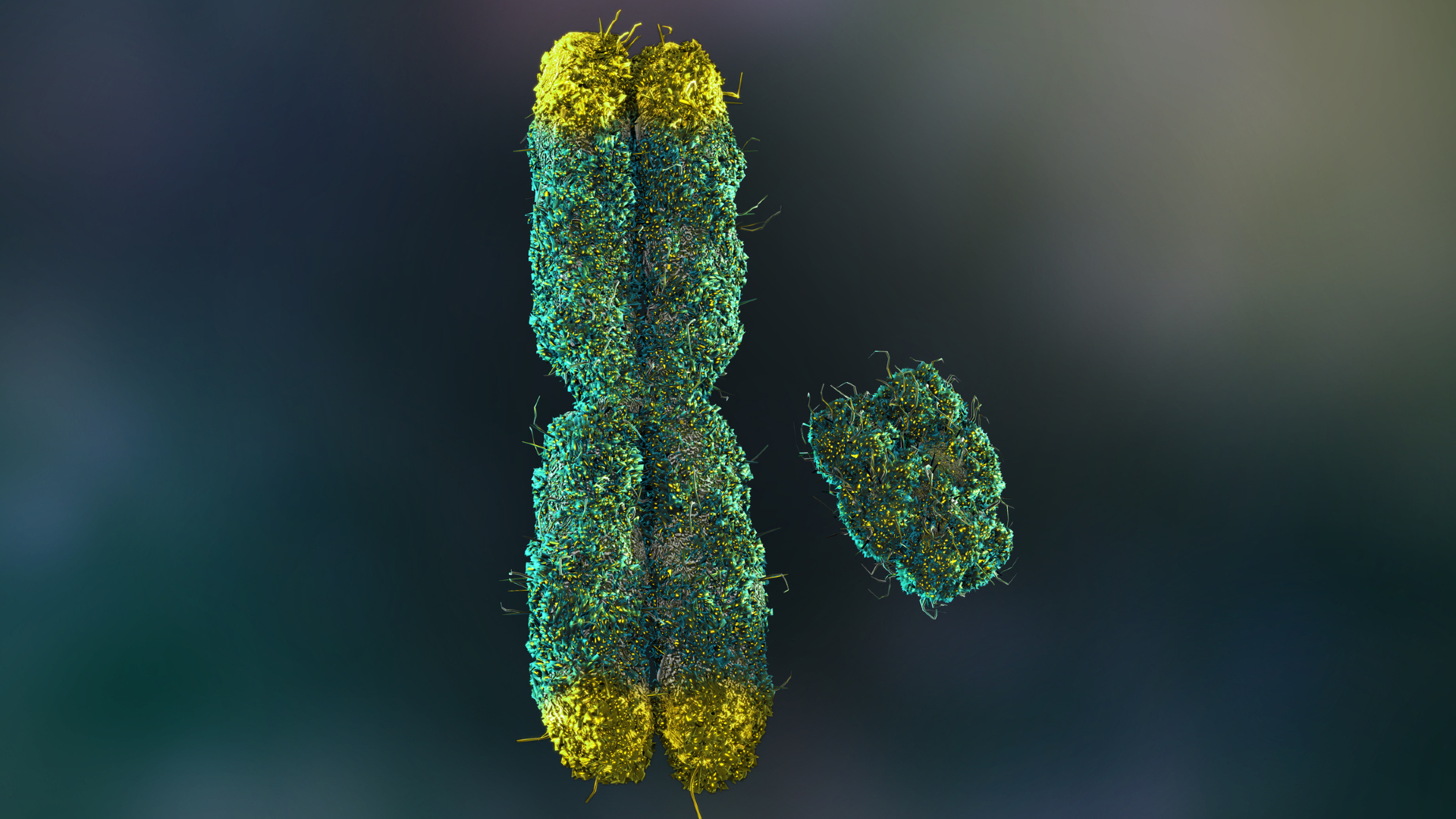 Genetics
Many men lose their Y chromosomes as they age. It may shorten their lives.
Genetics
Many men lose their Y chromosomes as they age. It may shorten their lives.
 Genetics
A doctor discovered the gene mutation behind his family's mysterious missing-teeth condition
Latest in Features
Genetics
A doctor discovered the gene mutation behind his family's mysterious missing-teeth condition
Latest in Features
 Space
Hubble images taken 25 years apart show big changes in the iconic Crab Nebula — Space photo of the week
Space
Hubble images taken 25 years apart show big changes in the iconic Crab Nebula — Space photo of the week
 Rivers & Oceans
Lençóis Maranhenses: Brazil's dune-filled expanse that sits at the intersection of 3 biomes
Rivers & Oceans
Lençóis Maranhenses: Brazil's dune-filled expanse that sits at the intersection of 3 biomes
 Planet Earth
DNA shed by every living thing is lurking in the environment — and it could tell us how Earth is changing in real time
Planet Earth
DNA shed by every living thing is lurking in the environment — and it could tell us how Earth is changing in real time
 Archaeology
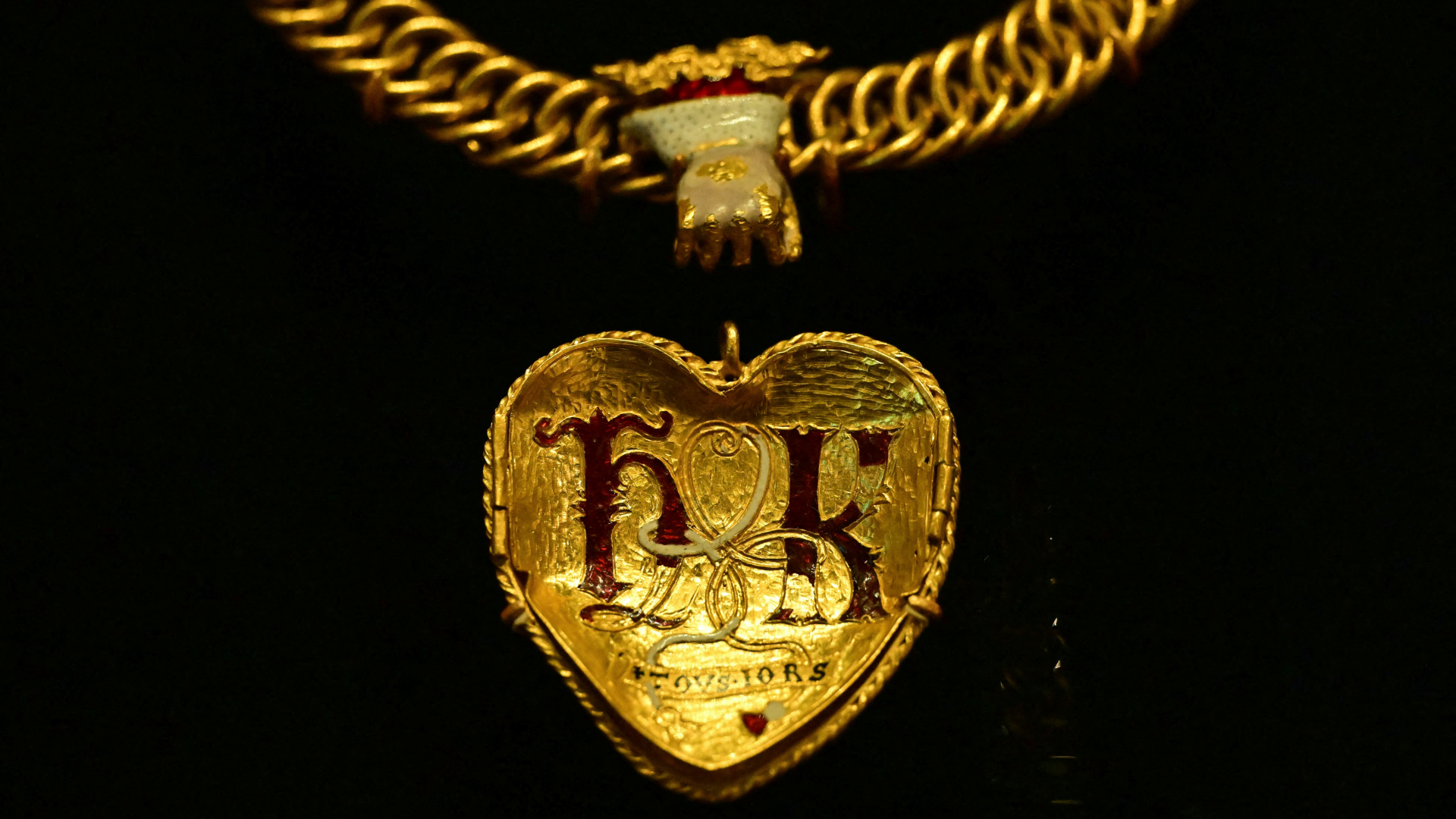
Tudor Heart: A Renaissance gold necklace featuring a French-English pun on the love between Henry VIII and his first wife, Katherine of Aragon
Archaeology
Tudor Heart: A Renaissance gold necklace featuring a French-English pun on the love between Henry VIII and his first wife, Katherine of Aragon
 Geology
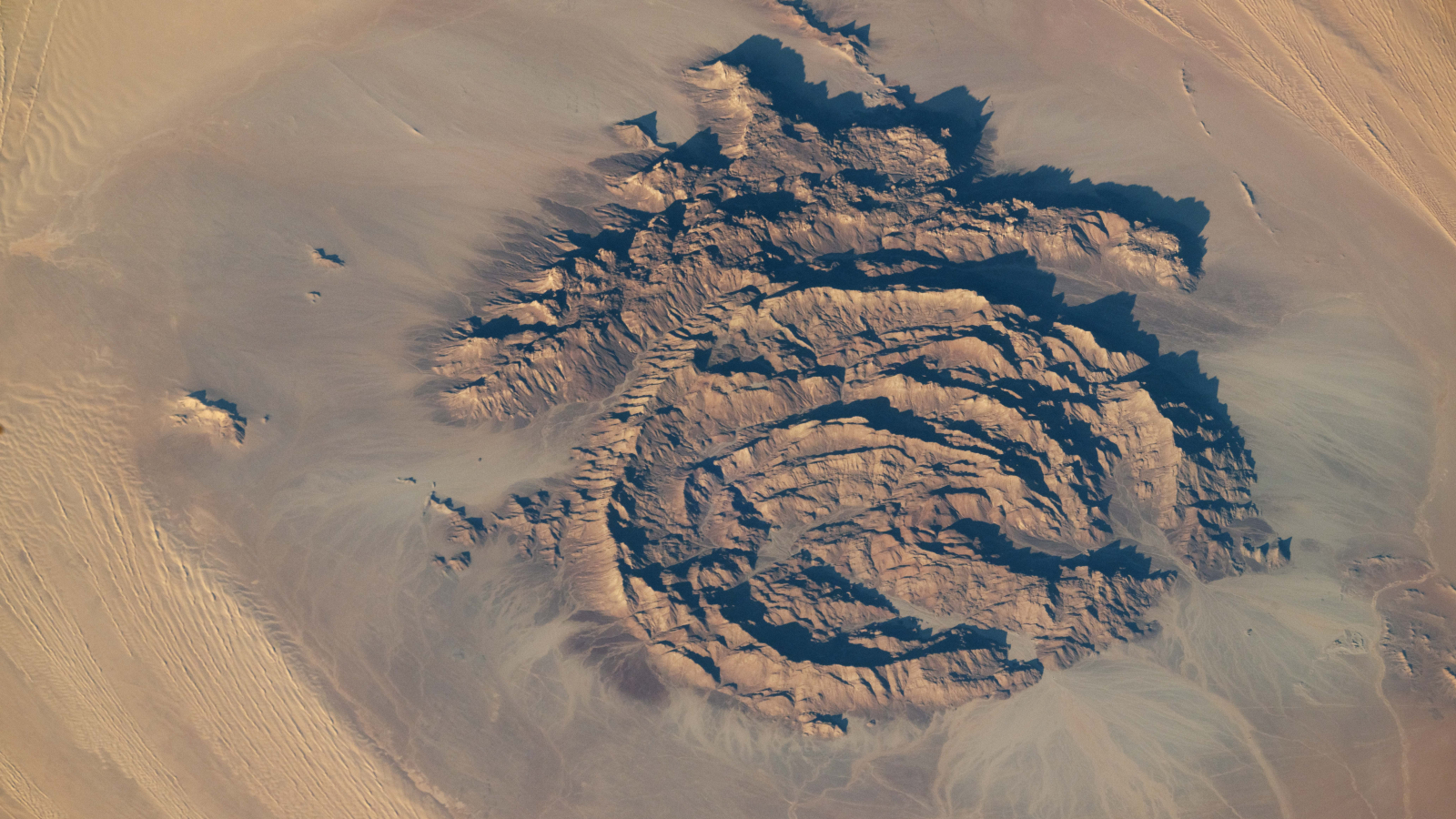
Concentric rocky rings adorned with ancient artwork wear a magma 'hat' in the Sahara
Geology
Concentric rocky rings adorned with ancient artwork wear a magma 'hat' in the Sahara
 Planet Earth
What would happen to Earth if the sun suddenly vanished?
LATEST ARTICLES
Planet Earth
What would happen to Earth if the sun suddenly vanished?
LATEST ARTICLES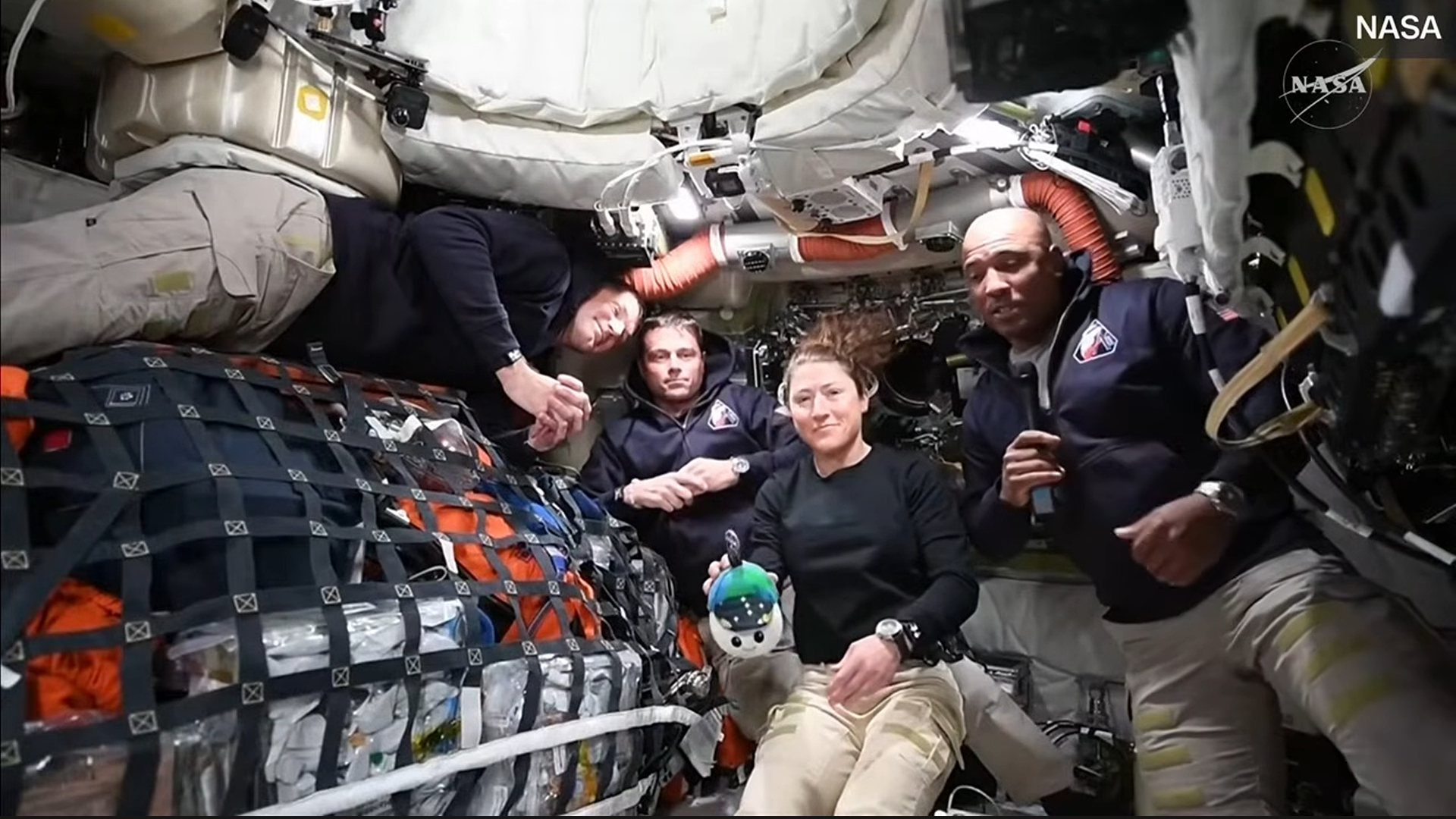 1'Trust us; you look amazing': Artemis II crewmembers share first message from space
- 2Homo habilis is the earliest named human. But is it even human?
- 3Scientists mapped all the nerves of the clitoris for the first time
- 4Rare 'sungrazer' comet MAPS could appear brighter than ever on Saturday: What to know
- 5IBM quantum processor achieves highest fidelity calculations for the longest period of time on record