- Space
- Space Exploration
A veteran space reporter describes the full-body experience of watching NASA's historic Artemis II lift off
When you purchase through links on our site, we may earn an affiliate commission. Here’s how it works.
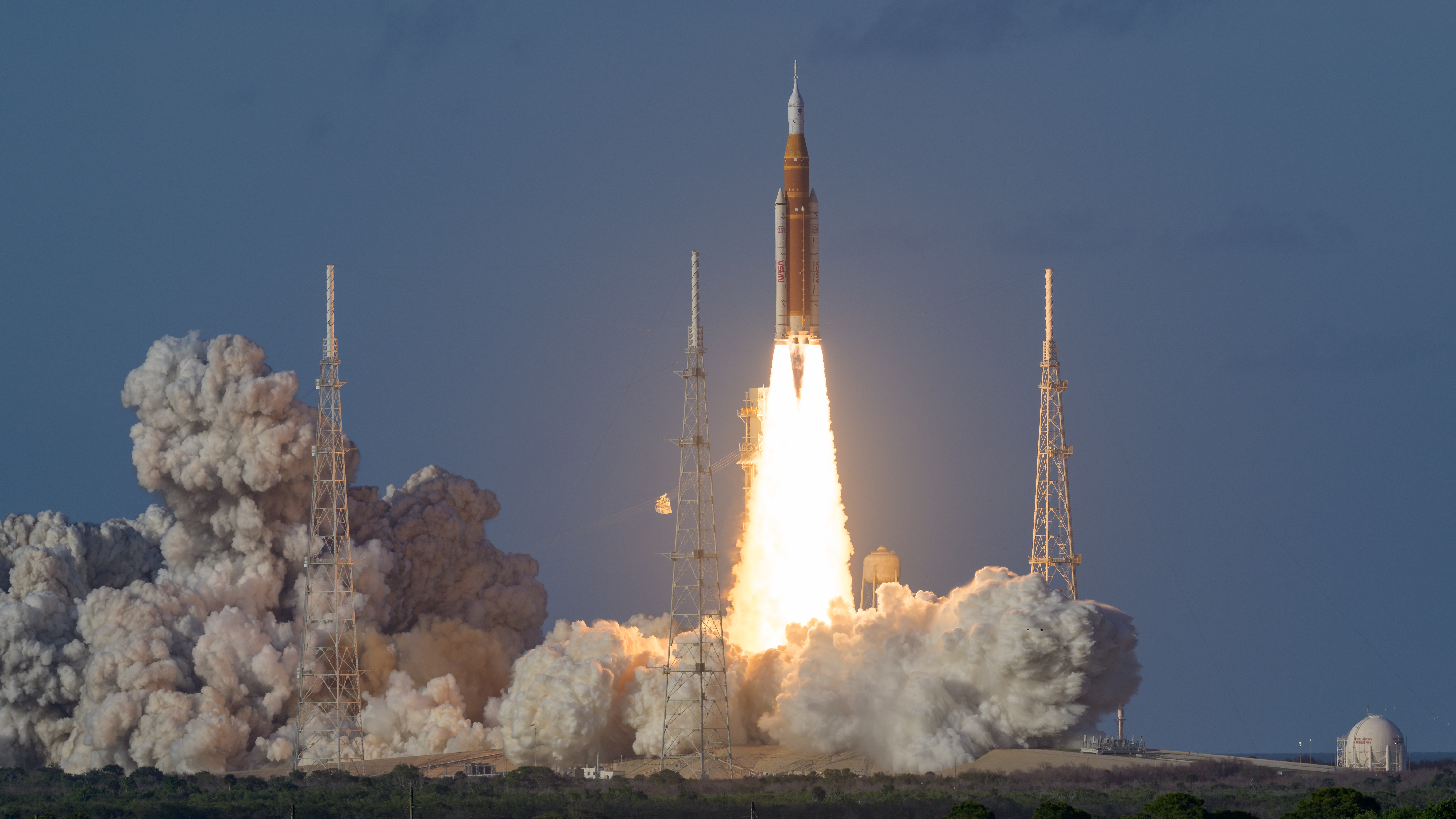
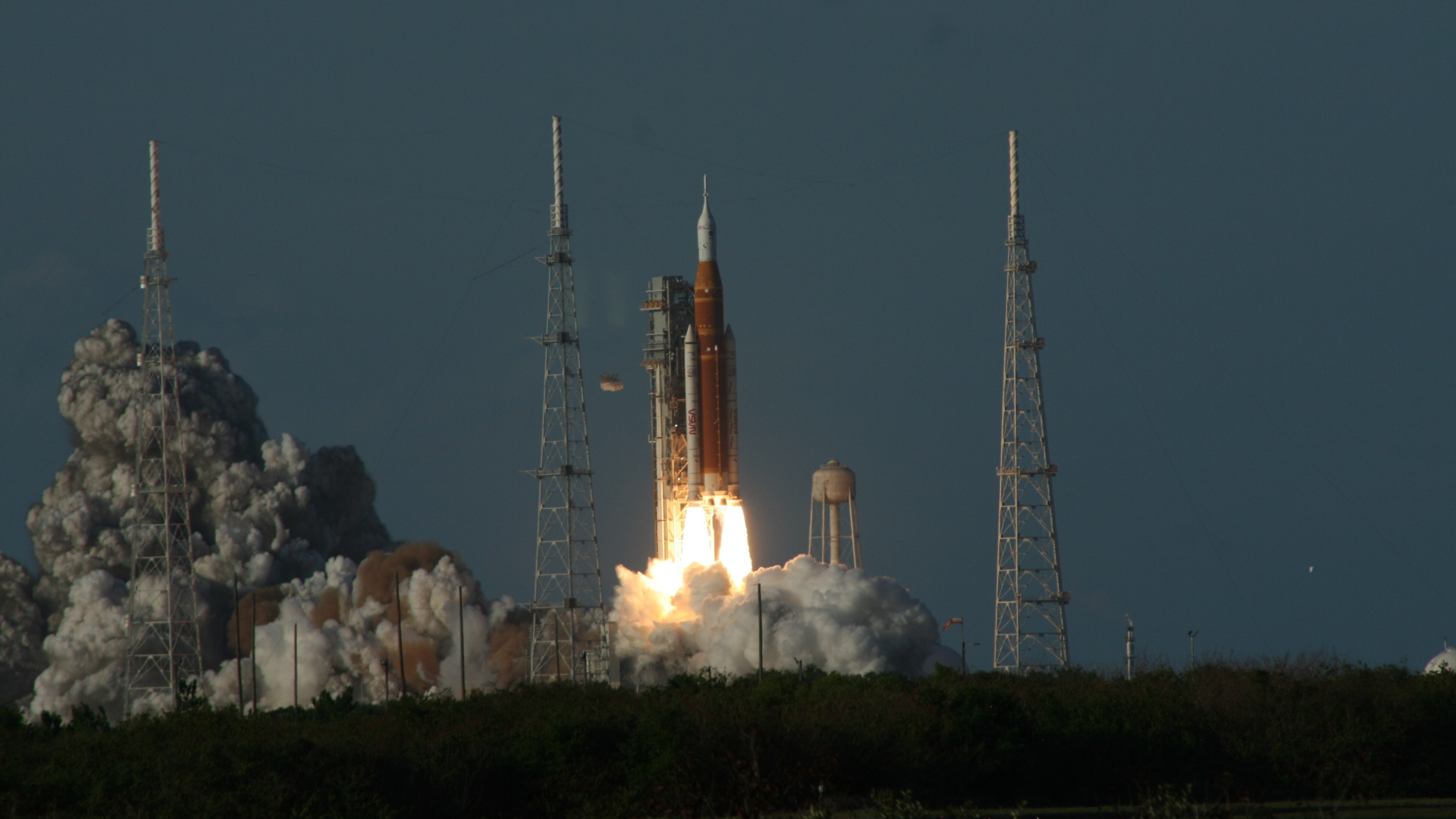 NASA's SLS rocket takes off for the moon with four brave humans aboard.
(Image credit: Roger Guillemette)
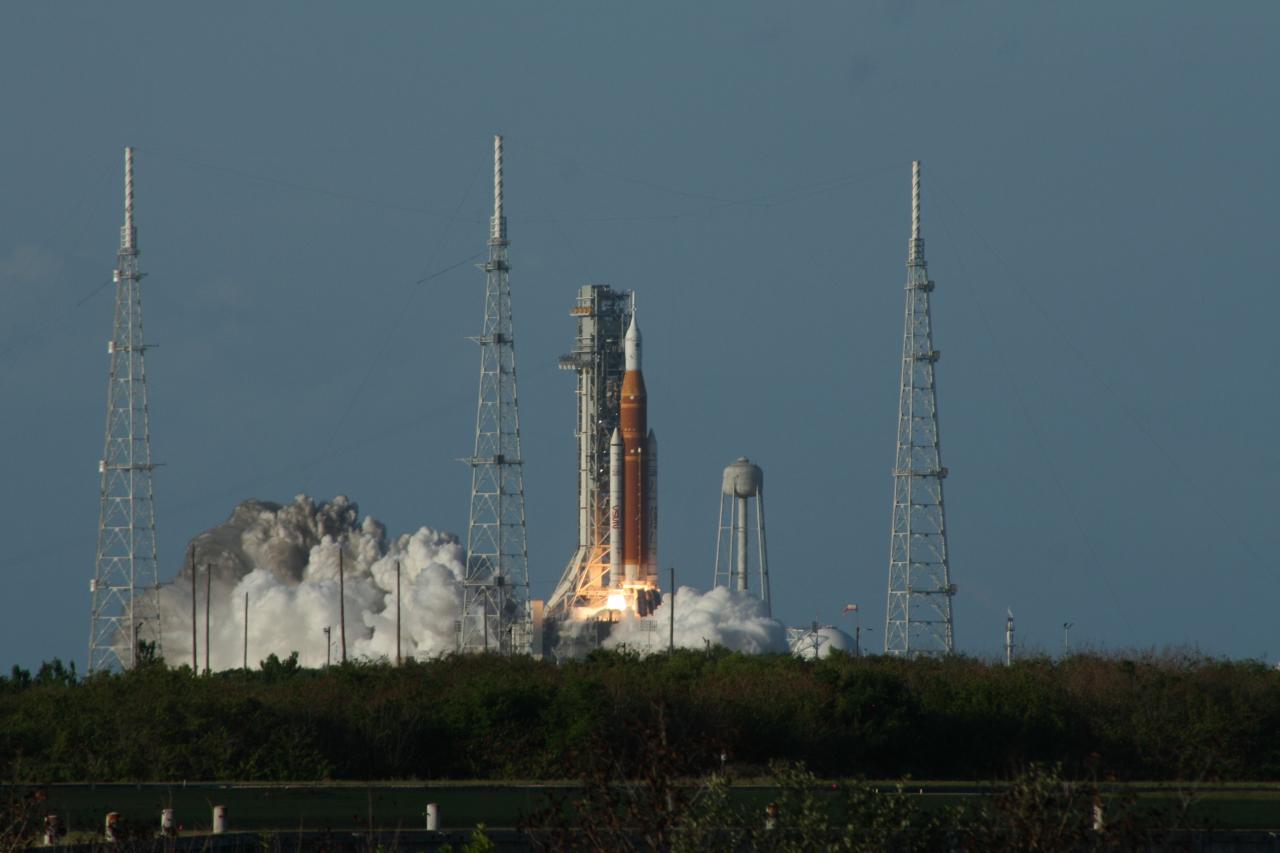
NASA's SLS rocket takes off for the moon with four brave humans aboard.
(Image credit: Roger Guillemette)
- Copy link
- X
Get the world’s most fascinating discoveries delivered straight to your inbox.
Become a Member in Seconds
Unlock instant access to exclusive member features.
Contact me with news and offers from other Future brands Receive email from us on behalf of our trusted partners or sponsors By submitting your information you agree to the Terms & Conditions and Privacy Policy and are aged 16 or over.You are now subscribed
Your newsletter sign-up was successful
Want to add more newsletters?

Delivered Daily
Daily Newsletter
Sign up for the latest discoveries, groundbreaking research and fascinating breakthroughs that impact you and the wider world direct to your inbox.
Signup +
Once a week
Life's Little Mysteries
Feed your curiosity with an exclusive mystery every week, solved with science and delivered direct to your inbox before it's seen anywhere else.
Signup +
Once a week
How It Works
Sign up to our free science & technology newsletter for your weekly fix of fascinating articles, quick quizzes, amazing images, and more
Signup +
Delivered daily
Space.com Newsletter
Breaking space news, the latest updates on rocket launches, skywatching events and more!
Signup +
Once a month
Watch This Space
Sign up to our monthly entertainment newsletter to keep up with all our coverage of the latest sci-fi and space movies, tv shows, games and books.
Signup +
Once a week
Night Sky This Week
Discover this week's must-see night sky events, moon phases, and stunning astrophotos. Sign up for our skywatching newsletter and explore the universe with us!
Signup +Join the club
Get full access to premium articles, exclusive features and a growing list of member rewards.
Explore An account already exists for this email address, please log in. Subscribe to our newsletterFreelance space writer Roger Guillemette has witnessed close to 100 rocket launches since 1975. On Wednesday (April 1), he was on the ground at NASA's Kennedy Space Center, reporting live on the Artemis II moon launch for Live Science. Here's what he saw at the historic liftoff:
There was palpable excitement at the Kennedy Space Center (KSC) press site for the Artemis II launch, unlike anything I've experienced in my many years of reporting on human spaceflight from this iconic location.
Journalists from all over the world — both grizzled veterans and wide-eyed newcomers — were positively giddy about witnessing astronauts returning to the moon after so many decades.
You may like-
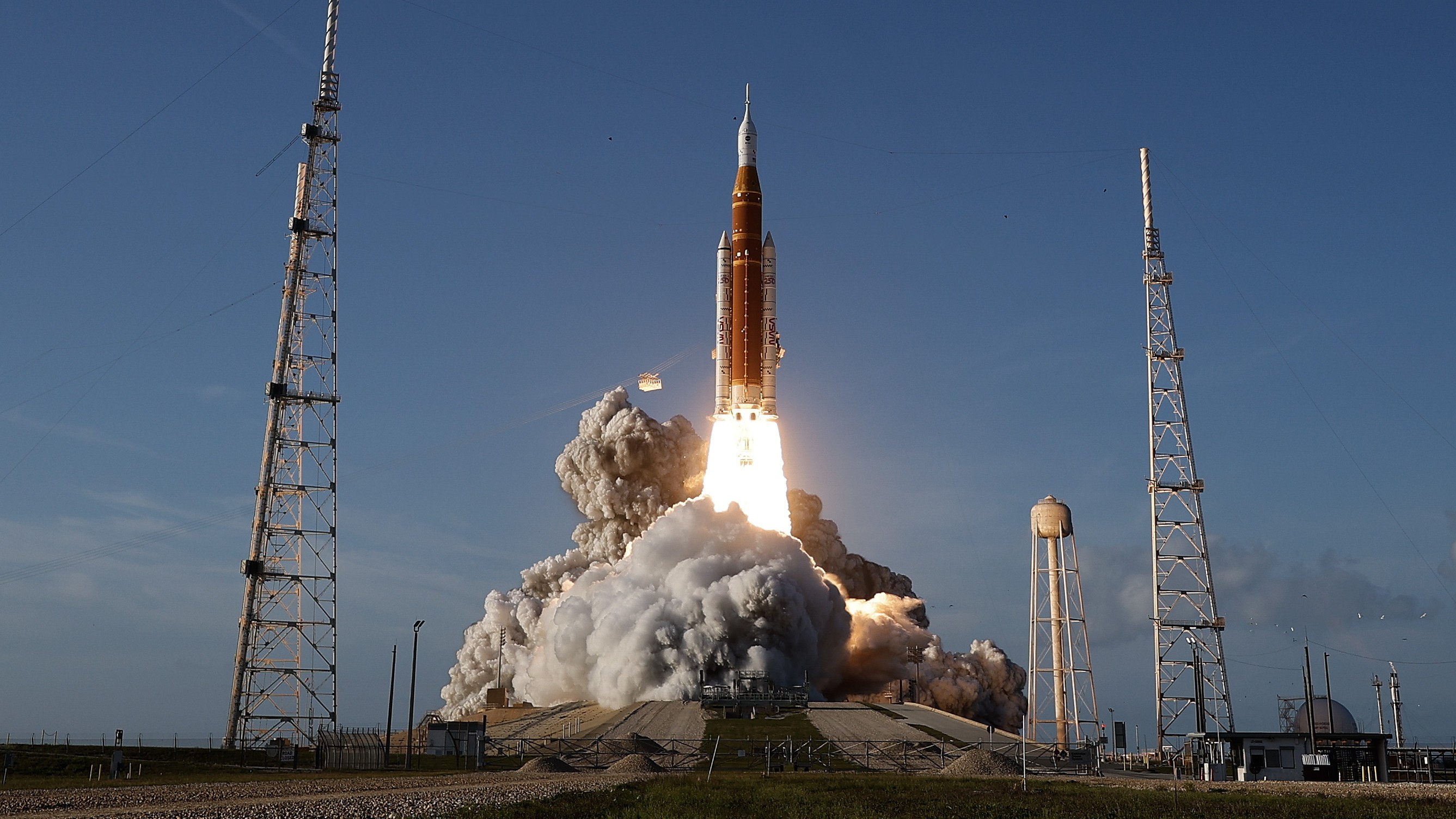 In photos: Artemis II's historic launch for the moon
-
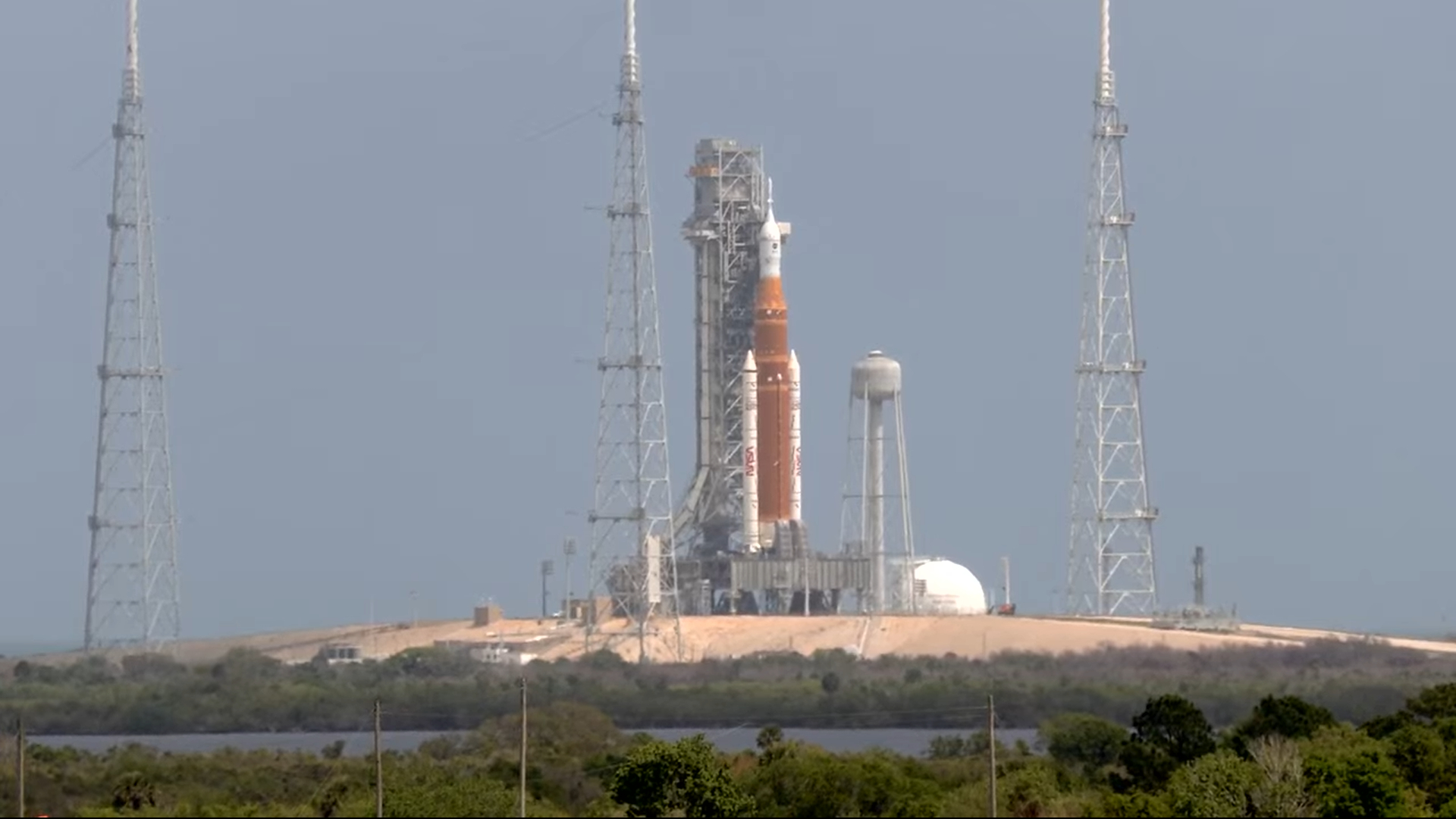 NASA's historic Artemis II mission gets green light for flight as countdown begins
-
 Artemis II blasts off: Humans are on their way back to the moon
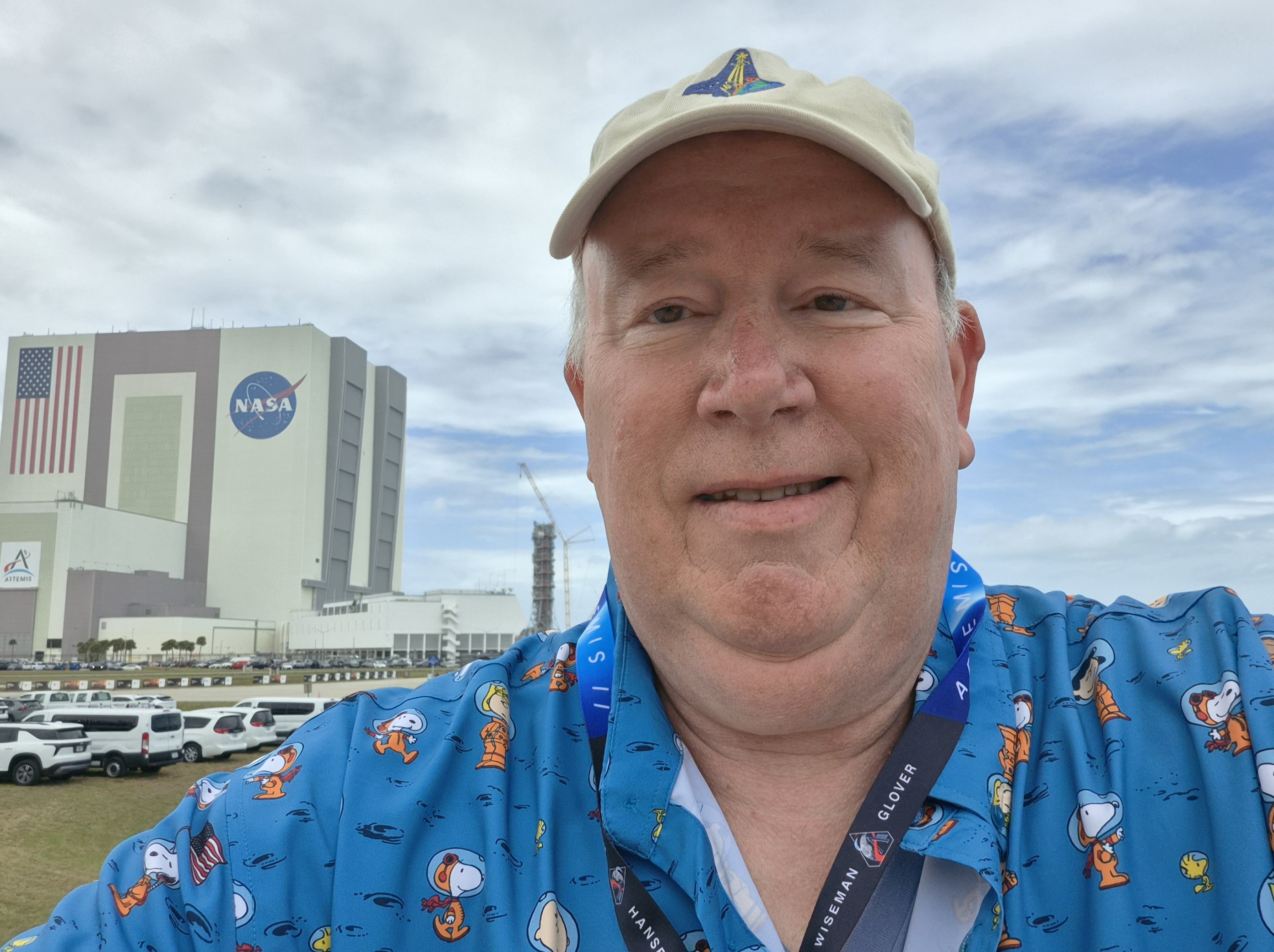
Bright television lights glowed atop the news organization trailers along "media row" as the major networks assembled their A-teams to cover the landmark event. Morning and evening national newscasts originated from KSC, with the Vehicle Assembly Building's huge American flag and NASA "meatball" logo (first unveiled in 1959) serving as a dramatic backdrop. What was old suddenly felt new again.
Those of us on the older end of the age spectrum have fuzzy, fading memories of the Apollo era. For me, the historic Apollo 11 lunar landing mission in July 1969 filled the week of my 10th birthday; a few years later, in December 1972, a buddy and I "camped out" in his finished basement, watching color (!) television until after midnight to see Apollo 17 light up the heavens over Florida's Space Coast on what would be the final crewed voyage to the moon for 50 years and counting.
You don't simply watch the mighty rocket rise — you feel it, shaking the ground beneath you, its powerful, staccato thumping reverberating through your chest.
After those heady years of the "moon race," the closest experience to Artemis II for me was the first flight of the space shuttle Columbia, STS-1, in April 1981. As a college senior, I stood just a few hundred yards from the spot where I watched Artemis II, witnessing a brand-new, never-flown space plane soar skyward into the dawn. I remember watching Columbia leap off the launchpad while I softly whispered, "Go, go," with tears welling in my eyes. I found myself unconsciously doing the same for Artemis II (now with a few added colorful epithets).
Artemis II's launch was impossibly bright to witness in person. Still images or video simply do not capture the sheer brilliance and intensity of the Space Launch System's ignition and liftoff. Seeing the brilliant white-orange plume concentrate beneath the rocket was like looking at the sun itself, and it appeared much more dazzling than any space shuttle launch I ever witnessed. You don't simply watch the mighty rocket rise — you feel it, shaking the ground beneath you, its powerful, staccato thumping reverberating through your chest.
Sign up for the Live Science daily newsletter nowContact me with news and offers from other Future brandsReceive email from us on behalf of our trusted partners or sponsorsBy submitting your information you agree to the Terms & Conditions and Privacy Policy and are aged 16 or over.RELATED STORIES- Astronauts can face 'nearly lethal doses' of solar radiation — so why launch Artemis II during the sun's peak of activity? Space scientist Patricia Reiff explains.
- Artemis II: NASA is preparing for a return to the moon, but why is it going back?
- Artemis II timeline: 12 key steps that will take NASA astronauts to the moon and back
More than five decades after Apollo 17 astronauts Gene Cernan and Harrison "Jack" Schmitt reluctantly departed the spectacular rolling hills and massive boulders of the lunar valley known as Taurus-Littrow, the United States (with its international partners) is once again taking the bold steps to continue exploring the strange new world it abandoned generations ago.
The goal has always been in sight. On a clear winter night, it rides high in the heavens, bringing light to barren, snow-covered landscapes. On a cool autumn evening, it hangs impossibly large on the eastern horizon, casting a warm orange glow on farmers and stargazers alike — each witness sharing the feeling that they can almost reach up and touch it.
Almost.
The goal has never been out of sight. It beckons us all to stop and renew an old acquaintance: our neighbor, the moon.
Think you know about the moon? Test your smarts with our moon quiz!
TOPICS Artemis 2 Roger GuillemetteLive Science contributor
Roger is a Live Science contributor, and has been a Space.com correspondent since 2001, covering human spaceflight and military/intelligence space programs. He has witnessed close to 100 piloted spaceflight launches - from the July 1975 Saturn 1B launch of the Apollo-Soyuz Test Project to the final launch of Shuttle Atlantis on STS-135 in July 2011. His live coverage of the Space Shuttle Columbia disaster was cited as a key factor in Space.com receiving the 2003 Online Journalism Award for Breaking News. Prior to joining Space.com, Roger was Editor/Producer and space reporter for Florida Today’s pioneering 'Space Online' website. A Rhode Island native, Roger is a graduate of Roger Williams University, now semi-retired to the Lowcountry of South Carolina.
View MoreYou must confirm your public display name before commenting
Please logout and then login again, you will then be prompted to enter your display name.
Logout Read more
Space Exploration
NASA's historic Artemis II mission gets green light for flight as countdown begins
Space Exploration
Artemis II blasts off: Humans are on their way back to the moon
 Space Exploration
Watch NASA roll its historic Artemis II moon rocket to the launch pad this weekend
Space Exploration
Watch NASA roll its historic Artemis II moon rocket to the launch pad this weekend
 Space Exploration
How to watch NASA's historic Artemis II launch for the moon
Space Exploration
How to watch NASA's historic Artemis II launch for the moon
 Space Exploration
'Trust us; you look amazing': Artemis II crewmembers share first message from space
Space Exploration
'Trust us; you look amazing': Artemis II crewmembers share first message from space
 Space Exploration
'We are getting very, very close': NASA makes final Artemis II preparations as expectation grows for Wednesday launch
Latest in Space Exploration
Space Exploration
'Trust us; you look amazing': Artemis II crewmembers share first message from space
Space Exploration
'We are getting very, very close': NASA makes final Artemis II preparations as expectation grows for Wednesday launch
Latest in Space Exploration
Space Exploration
'Trust us; you look amazing': Artemis II crewmembers share first message from space
 Space Exploration
Artemis II officially leaves Earth's orbit on the way to the moon
Space Exploration
In photos: Artemis II's historic launch for the moon
Space Exploration
Artemis II officially leaves Earth's orbit on the way to the moon
Space Exploration
In photos: Artemis II's historic launch for the moon
 Space Exploration
Chinese satellite with robotic 'octopus arm' passes key refueling test in orbit — making longer-lived space assets more likely
Space Exploration
Artemis II blasts off: Humans are on their way back to the moon
Space Exploration
How to watch NASA's historic Artemis II launch for the moon
Latest in Opinion
Space Exploration
Chinese satellite with robotic 'octopus arm' passes key refueling test in orbit — making longer-lived space assets more likely
Space Exploration
Artemis II blasts off: Humans are on their way back to the moon
Space Exploration
How to watch NASA's historic Artemis II launch for the moon
Latest in Opinion
 Artificial Intelligence
AI systems are enabling mass surveillance in the US, and there is no national law that 'meaningfully limits' the use of this data
Artificial Intelligence
AI systems are enabling mass surveillance in the US, and there is no national law that 'meaningfully limits' the use of this data
 Fossil Fuels
Our fossil fuel economy is a house of cards and Trump's war in Iran is about to topple it. The need for a clean energy transition has never been clearer.
Fossil Fuels
Our fossil fuel economy is a house of cards and Trump's war in Iran is about to topple it. The need for a clean energy transition has never been clearer.
 Rivers & Oceans
Colorado River negotiations have stalled among 7 states and water is scarce. What happens next?
Rivers & Oceans
Colorado River negotiations have stalled among 7 states and water is scarce. What happens next?
 Reproductive Health
Endometriosis messes with the immune system and causes 'ripple effects across the body'
Reproductive Health
Endometriosis messes with the immune system and causes 'ripple effects across the body'
 HIV
I was at ground zero for the AIDS epidemic. RFK's cuts could fuel a new pandemic, just when elimination seemed within reach.
HIV
I was at ground zero for the AIDS epidemic. RFK's cuts could fuel a new pandemic, just when elimination seemed within reach.
 Archaeology
Why do some people still believe that aliens shaped ancient civilizations?
LATEST ARTICLES
Archaeology
Why do some people still believe that aliens shaped ancient civilizations?
LATEST ARTICLES 1'They could spend 4 or 5 hours per day underwater': How humans adapted to the most challenging environments
- 2We went to Finland to hear about the new 'sand battery' that will turn stored renewable energy back into power for the electrical grid
- 3The hungriest black holes in the universe are running out of food, survey of 8,000 cosmic monsters reveals
- 4Beadnet dress: A 4,500-year-old ancient Egyptian funeral 'gown' that was in vogue during the Old Kingdom
- 5'This generation's moment': How the Artemis missions will reframe humanity's relationship with the moon