- Animals
- Extinct species
A site in southwestern China holds a wide array of strange life-forms that emerged prior to the Cambrian explosion, and it pushes back the origin of complex life by millions of years.
When you purchase through links on our site, we may earn an affiliate commission. Here’s how it works.
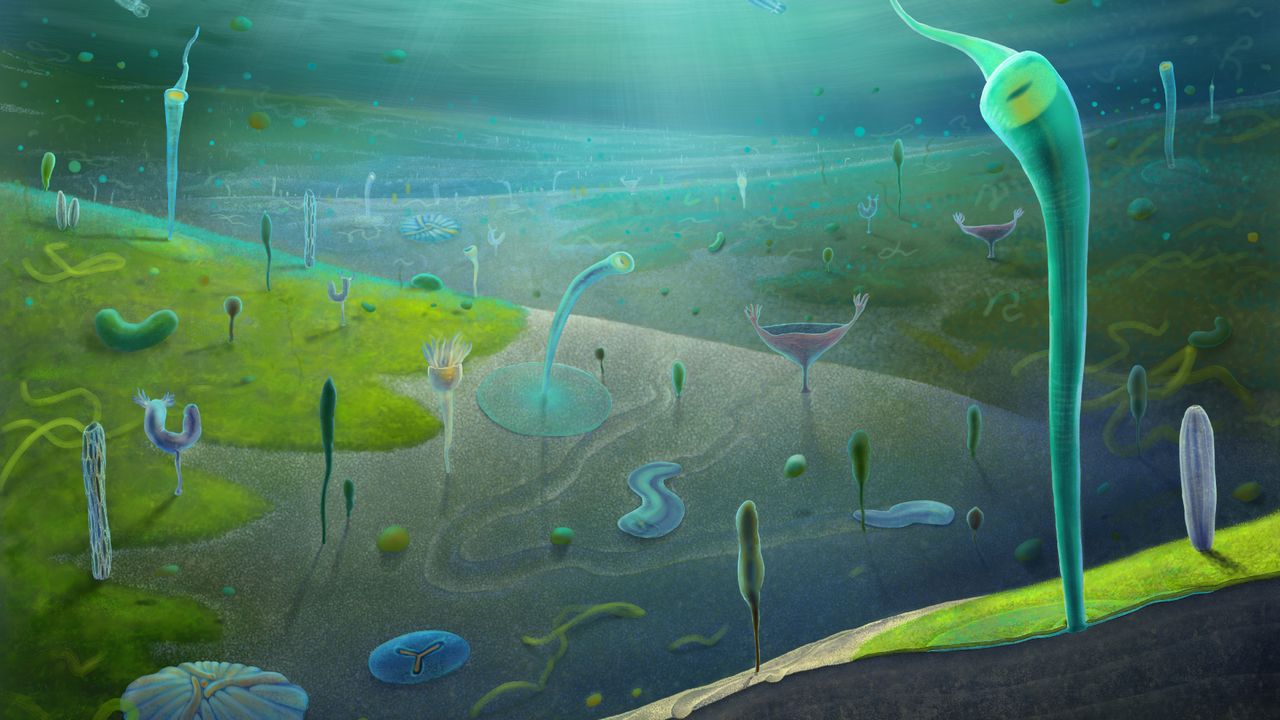
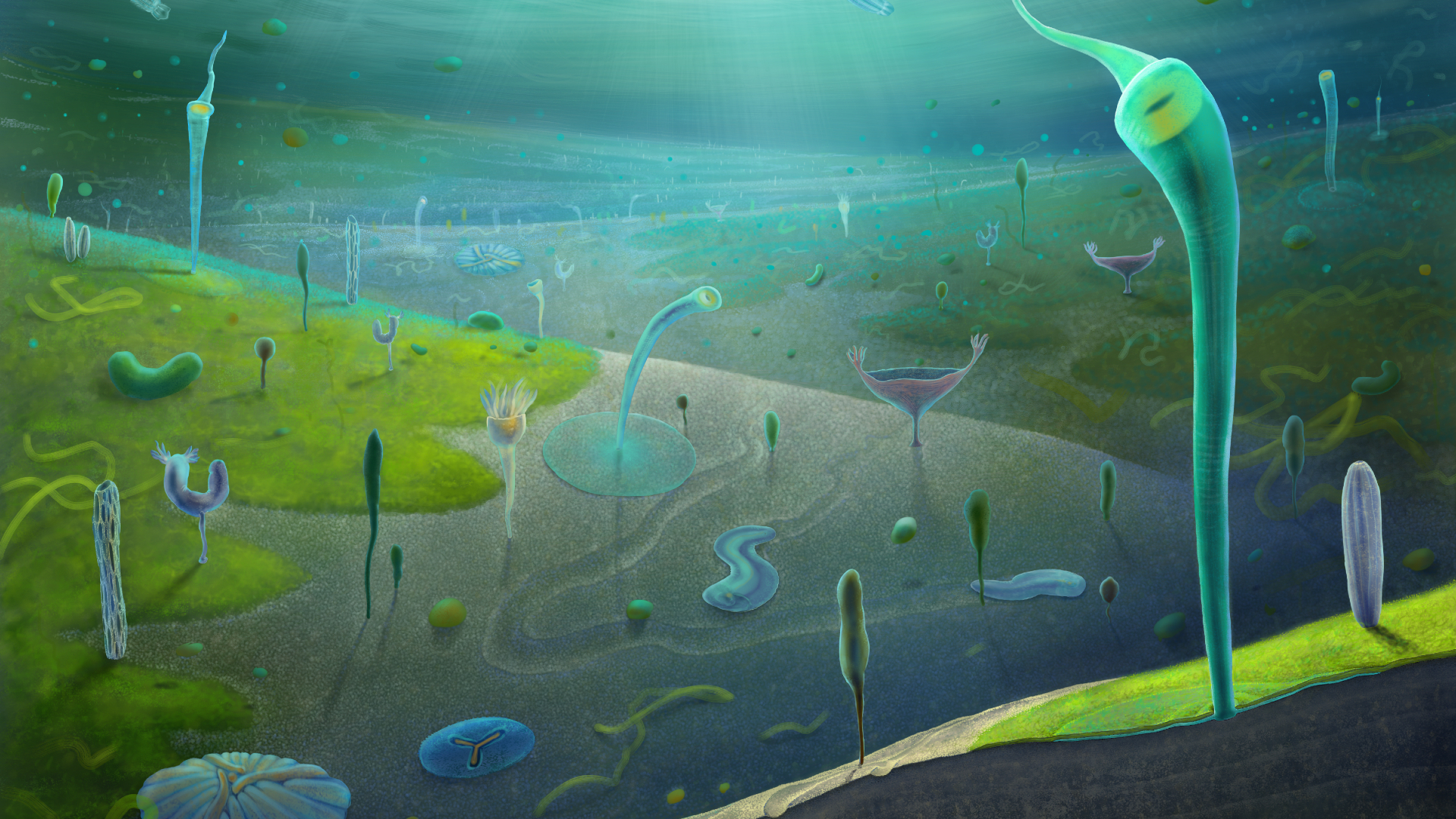 An artist's reconstruction of Jiangchuan biota (~554-539 million years ago).
(Image credit: Xiaodong Wang)
An artist's reconstruction of Jiangchuan biota (~554-539 million years ago).
(Image credit: Xiaodong Wang)
- Copy link
- X
Get the world’s most fascinating discoveries delivered straight to your inbox.
Become a Member in Seconds
Unlock instant access to exclusive member features.
Contact me with news and offers from other Future brands Receive email from us on behalf of our trusted partners or sponsors By submitting your information you agree to the Terms & Conditions and Privacy Policy and are aged 16 or over.You are now subscribed
Your newsletter sign-up was successful
Want to add more newsletters?

Delivered Daily
Daily Newsletter
Sign up for the latest discoveries, groundbreaking research and fascinating breakthroughs that impact you and the wider world direct to your inbox.
Signup +
Once a week
Life's Little Mysteries
Feed your curiosity with an exclusive mystery every week, solved with science and delivered direct to your inbox before it's seen anywhere else.
Signup +
Once a week
How It Works
Sign up to our free science & technology newsletter for your weekly fix of fascinating articles, quick quizzes, amazing images, and more
Signup +
Delivered daily
Space.com Newsletter
Breaking space news, the latest updates on rocket launches, skywatching events and more!
Signup +
Once a month
Watch This Space
Sign up to our monthly entertainment newsletter to keep up with all our coverage of the latest sci-fi and space movies, tv shows, games and books.
Signup +
Once a week
Night Sky This Week
Discover this week's must-see night sky events, moon phases, and stunning astrophotos. Sign up for our skywatching newsletter and explore the universe with us!
Signup +Join the club
Get full access to premium articles, exclusive features and a growing list of member rewards.
Explore An account already exists for this email address, please log in. Subscribe to our newsletterA newly discovered trove of fossils in southwestern China is shifting the timeline of when complex animals evolved.
The diversity and complexity of animal life is thought to have increased rapidly beginning around 539 million years ago, in an evolutionary burst known as the Cambrian explosion. But the new fossil site suggests that some of that complexity was already present several million years before the Cambrian explosion, during the end of the Ediacaran period (roughly 635 million to 539 million years ago).
You may like-
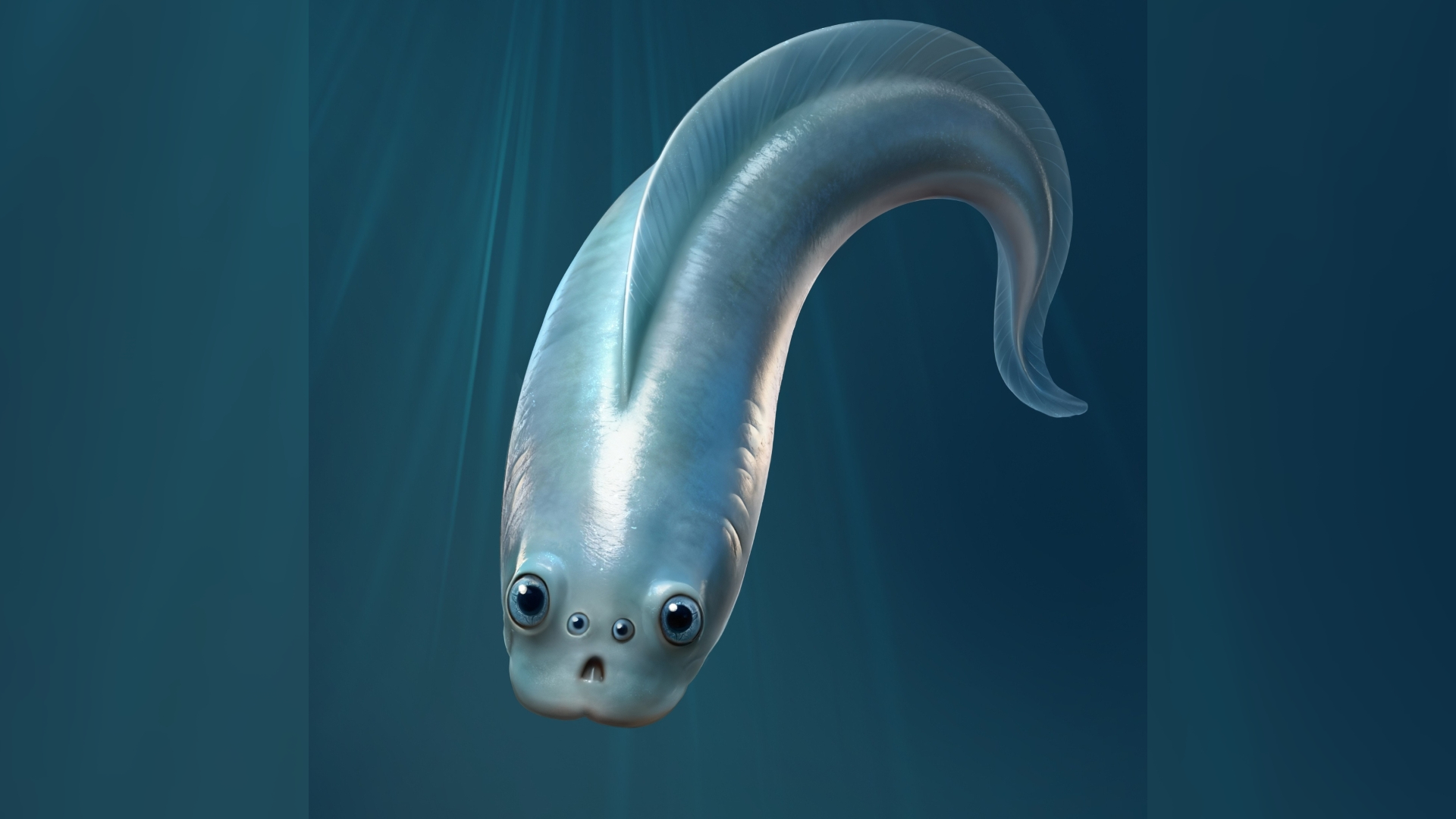 Our adorable, noodle-like ancestor had 4 eyes, half-a-billion-year-old fossils reveal
-
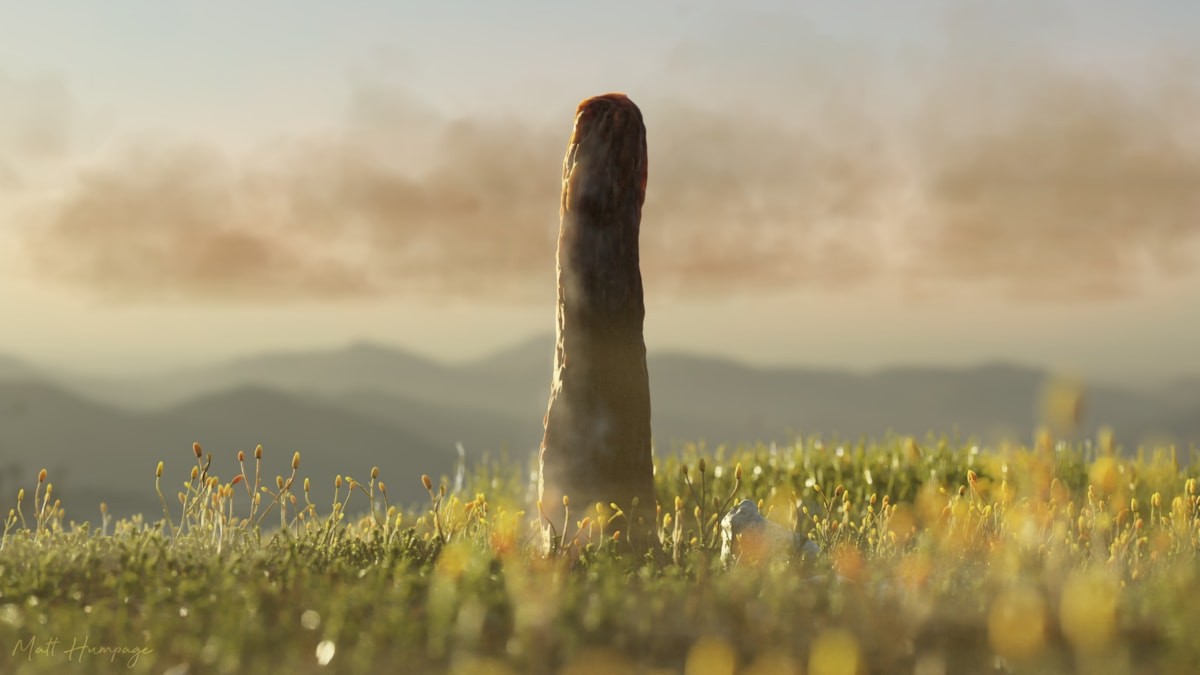 'They are life, but not as we now know it': 26-foot organism that lived 420 million years ago is completely unknown branch of animal kingdom
-
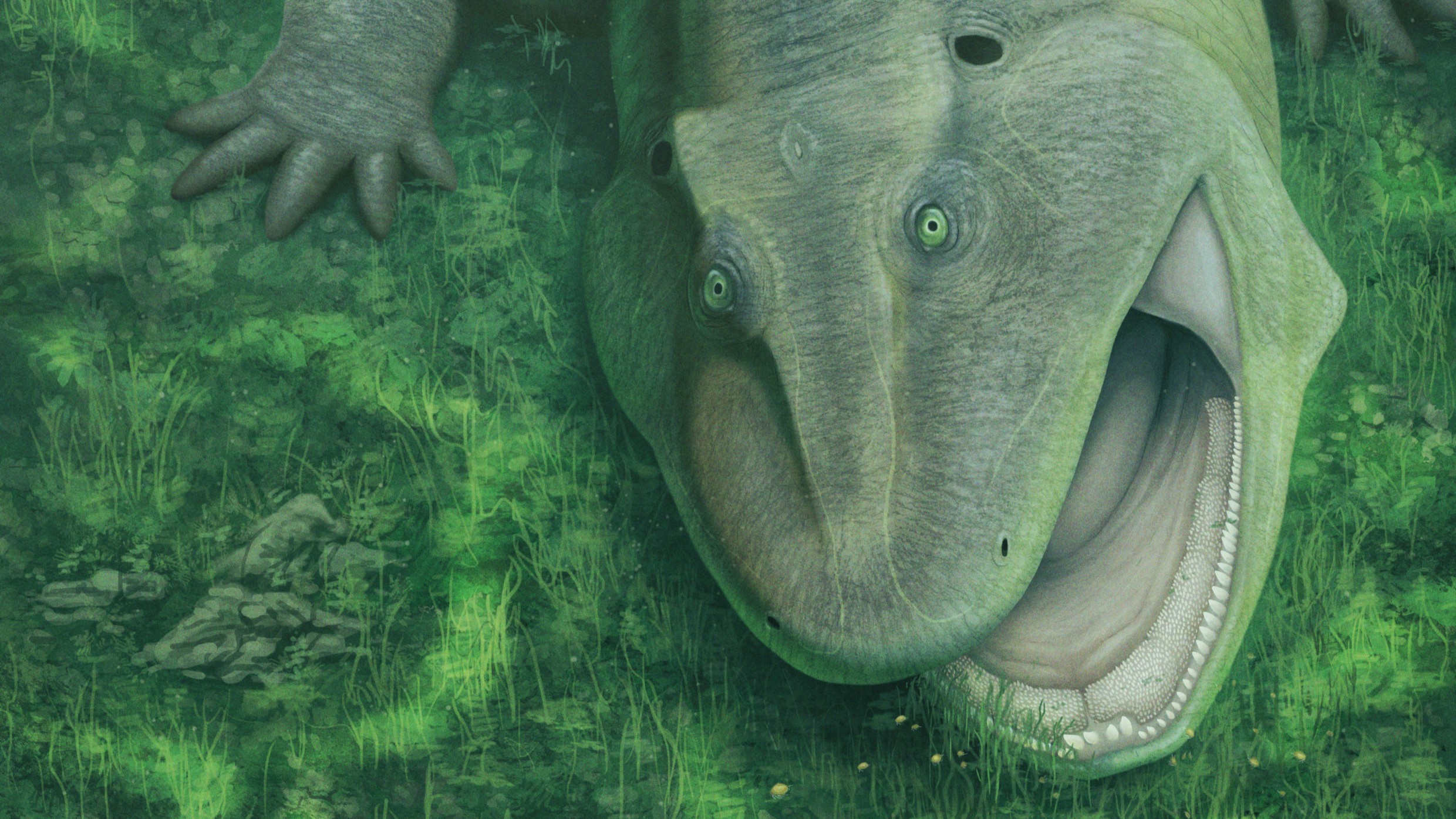 Prehistoric water-dwelling weirdo with sideways teeth and a twisted jaw was already a 'living fossil' 275 million years ago
"One specimen looks a lot like the sand worm from Dune," study co-author Frankie Dunn, a researcher who studies Ediacaran organisms at the Oxford University Museum of Natural History, said in a statement.
Some simple multicellular creatures, such as sponges, first appeared during the Ediacaran period. But most modern animal phyla showed up during the subsequent 13 million- to 25 million-year-long Cambrian explosion, including chordates, the phylum that includes humans and other vertebrates.
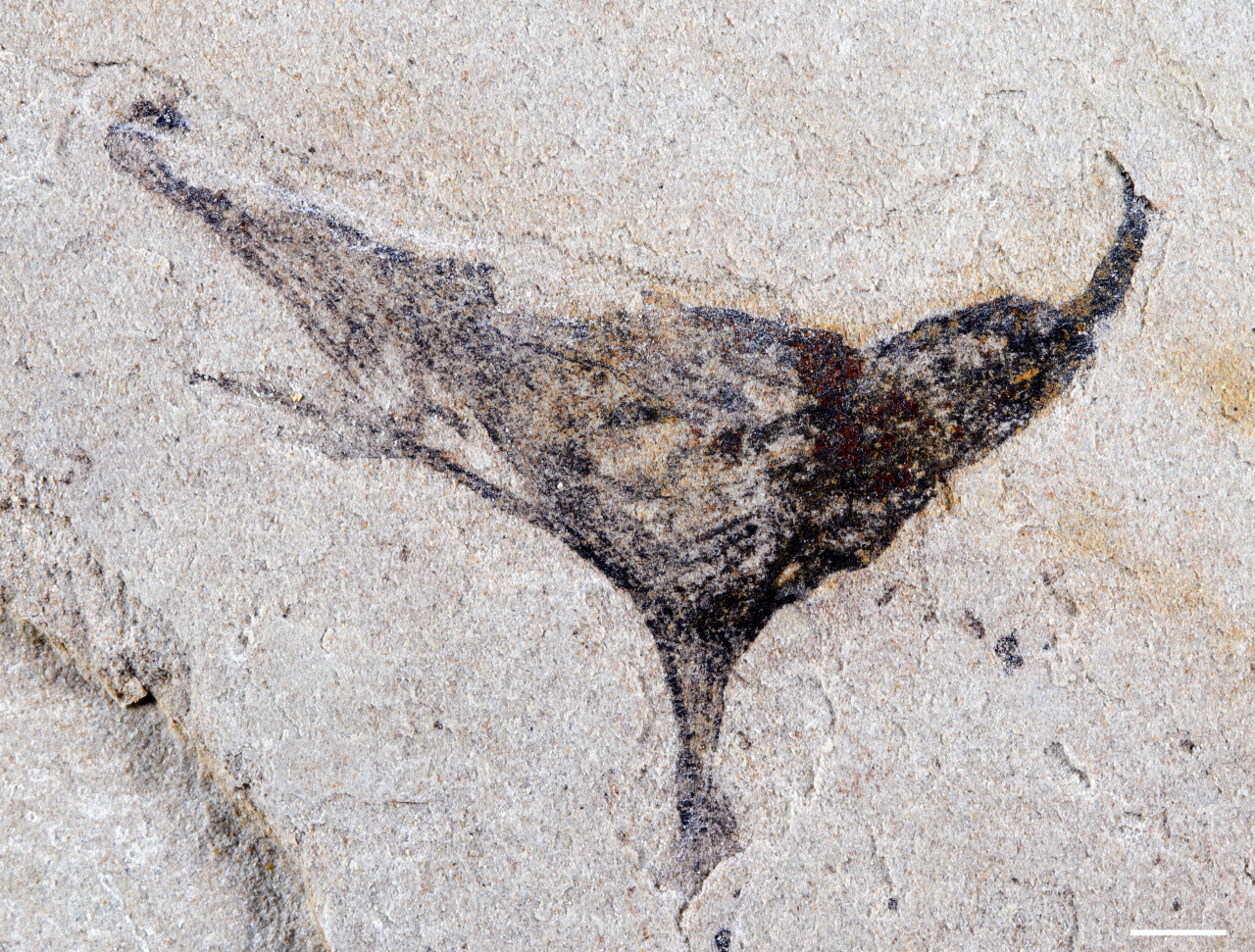
The new fossil discovery suggests that some of that complexity had already arisen by the late Ediacaran. Uncovered as part of the Jiangchuan Biota collection of fossils in southwestern China, the collection contains more than 700 specimens of fossilized animals and algae dating to between 554 million and 539 million years ago. Researchers reported the findings Thursday (April 2) in the journal Science.
"When we first saw these specimens, it was clear that this was something totally unique and unexpected," study co-author Luke Parry, a paleobiologist at the University of Oxford, said in the statement.
Sign up for the Live Science daily newsletter nowContact me with news and offers from other Future brandsReceive email from us on behalf of our trusted partners or sponsorsBy submitting your information you agree to the Terms & Conditions and Privacy Policy and are aged 16 or over.RELATED STORIES- Half-billion-year-old fossil of strange Cambrian creature gives evolutionary clues about vertebrates
- Half-a-billion-year-old 3-eyed sea creature dubbed 'Mosura' breathed through big gills on its butt
- Our adorable, noodle-like ancestor had 4 eyes, half-a-billion-year-old fossils reveal
The fossils from this site are mostly flat imprints of the organism on the surrounding rock, known as carbonaceous films. Unlike the three-dimensional imprints left by durable body parts, such as bones and shells, carbonaceous films capture some details of the organism's soft tissues, such as its gut and mouthparts.
This less-common method of preservation might help to explain why scientists haven't found evidence of these more complex animals in the Cambrian until now.
"Our results indicate that the apparent absence of these complex animal groups from other Ediacaran sites may reflect differences in preservation rather than true biological absence," study co-author Ross Anderson, a researcher who studies the evolution of complex life at the Oxford University Museum of Natural History, said in the statement. "Carbonaceous compressions like those at Jiangchuan are rare in rocks of this age, meaning that similar communities may simply not have been preserved elsewhere."
Article SourcesGaorong Li et al. ,The dawn of the Phanerozoic: A transitional fauna from the late Ediacaran of Southwest China. Science392,63-68(2026). DOI:10.1126/science.adu2291
 Skyler WareSocial Links NavigationLive Science Contributor
Skyler Ware is a freelance science journalist covering chemistry, biology, paleontology and Earth science. She was a 2023 AAAS Mass Media Science and Engineering Fellow at Science News. Her work has also appeared in Science News Explores, ZME Science and Chembites, among others. Skyler has a Ph.D. in chemistry from Caltech.
View MoreYou must confirm your public display name before commenting
Please logout and then login again, you will then be prompted to enter your display name.
Logout Read more
Animals
'They are life, but not as we now know it': 26-foot organism that lived 420 million years ago is completely unknown branch of animal kingdom
Extinct species
Prehistoric water-dwelling weirdo with sideways teeth and a twisted jaw was already a 'living fossil' 275 million years ago
 Human Evolution
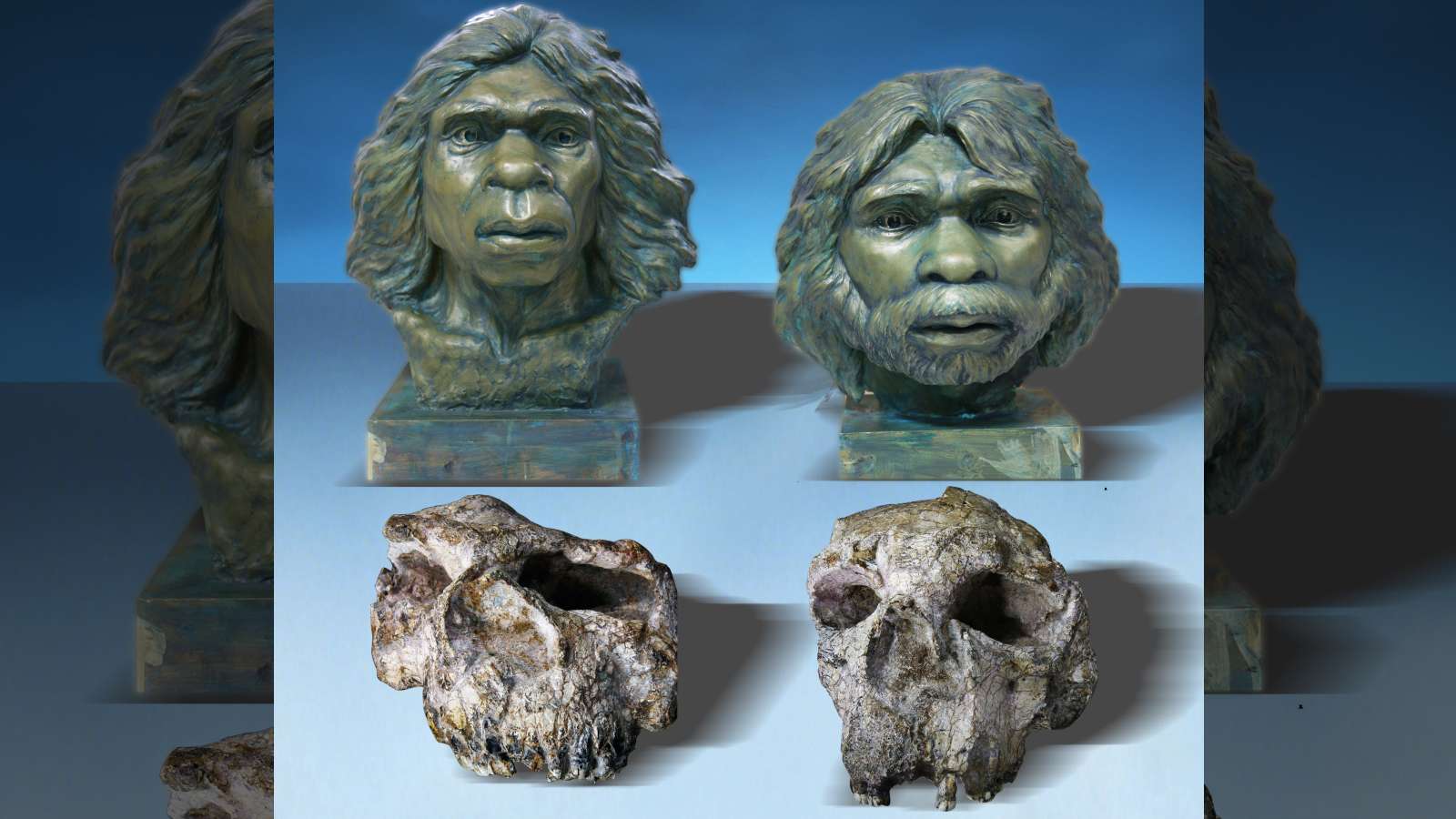
'Absolute surprise': Homo erectus skulls found in China are almost 1.8 million years old — the oldest evidence of the ancient human relatives in East Asia
Human Evolution
'Absolute surprise': Homo erectus skulls found in China are almost 1.8 million years old — the oldest evidence of the ancient human relatives in East Asia
 Planet Earth
Ancient 'Asgard' microbe may have used oxygen long before it was plentiful on Earth, offering new clue to origins of complex life
Planet Earth
Ancient 'Asgard' microbe may have used oxygen long before it was plentiful on Earth, offering new clue to origins of complex life
 Geology
Scientist accidentally stumbles across bizarre ancient ‘wrinkle structures’ in Morocco that shouldn't be there
Geology
Scientist accidentally stumbles across bizarre ancient ‘wrinkle structures’ in Morocco that shouldn't be there
 Extinct species
'It blew my mind': Long-lost ice-age ecosystem, including fossils of lion-size armadillo and giant ground sloth, discovered in Texas 'water cave'
Latest in Extinct species
Extinct species
'It blew my mind': Long-lost ice-age ecosystem, including fossils of lion-size armadillo and giant ground sloth, discovered in Texas 'water cave'
Extinct species
Prehistoric water-dwelling weirdo with sideways teeth and a twisted jaw was already a 'living fossil' 275 million years ago
Extinct species
'It blew my mind': Long-lost ice-age ecosystem, including fossils of lion-size armadillo and giant ground sloth, discovered in Texas 'water cave'
Latest in Extinct species
Extinct species
'It blew my mind': Long-lost ice-age ecosystem, including fossils of lion-size armadillo and giant ground sloth, discovered in Texas 'water cave'
Extinct species
Prehistoric water-dwelling weirdo with sideways teeth and a twisted jaw was already a 'living fossil' 275 million years ago
 Dinosaurs
95 million-year-old Spinosaurus had a scimitar-shaped head crest and waded through the Sahara's rivers like a 'hell heron'
Extinct species
Our adorable, noodle-like ancestor had 4 eyes, half-a-billion-year-old fossils reveal
Dinosaurs
95 million-year-old Spinosaurus had a scimitar-shaped head crest and waded through the Sahara's rivers like a 'hell heron'
Extinct species
Our adorable, noodle-like ancestor had 4 eyes, half-a-billion-year-old fossils reveal
 Dinosaurs
Archaeopteryx, one of the world's first proto birds, has a set of weird, never-before-seen features, new study reveals
Dinosaurs
Archaeopteryx, one of the world's first proto birds, has a set of weird, never-before-seen features, new study reveals
 Extinct species
Rock climbers in Italy accidentally discovered evidence of an 80 million-year-old sea turtle stampede
Latest in News
Extinct species
Rock climbers in Italy accidentally discovered evidence of an 80 million-year-old sea turtle stampede
Latest in News
 Space Exploration
'Trust us; you look amazing': Artemis II crewmembers share first message from space
Space Exploration
'Trust us; you look amazing': Artemis II crewmembers share first message from space
 Space
Science news this week: Artemis II lifts off, diabetes cured in mice, and smog in China shapes Arctic storms
Space
Science news this week: Artemis II lifts off, diabetes cured in mice, and smog in China shapes Arctic storms
 Health
Diabetes rates are lower in high-altitude environments — and scientists may have discovered why
Health
Diabetes rates are lower in high-altitude environments — and scientists may have discovered why
 Anatomy
Scientists mapped all the nerves of the clitoris for the first time
Anatomy
Scientists mapped all the nerves of the clitoris for the first time
 Black Holes
The hungriest black holes in the universe are running out of food, survey of 8,000 cosmic monsters reveals
Black Holes
The hungriest black holes in the universe are running out of food, survey of 8,000 cosmic monsters reveals
 Space Exploration
Artemis II officially leaves Earth's orbit on the way to the moon
LATEST ARTICLES
Space Exploration
Artemis II officially leaves Earth's orbit on the way to the moon
LATEST ARTICLES 1'They could spend 4 or 5 hours per day underwater': How humans adapted to the most challenging environments
- 2We went to Finland to hear about the new 'sand battery' that will turn stored renewable energy back into power for the electrical grid
- 3The hungriest black holes in the universe are running out of food, survey of 8,000 cosmic monsters reveals
- 4Beadnet dress: A 4,500-year-old ancient Egyptian funeral 'gown' that was in vogue during the Old Kingdom
- 5'This generation's moment': How the Artemis missions will reframe humanity's relationship with the moon