
- Technology
- Computing
- Quantum Computing
A newly developed encryption framework aims to protect video data from future quantum attacks, all while running on today's conventional hardware.
When you purchase through links on our site, we may earn an affiliate commission. Here’s how it works.
 Experts have said that quantum computing may pose a serious threat to modern encryption methods.
(Image credit: nuchao via Getty Images)
Experts have said that quantum computing may pose a serious threat to modern encryption methods.
(Image credit: nuchao via Getty Images)
- Copy link
- X
Get the world’s most fascinating discoveries delivered straight to your inbox.
Become a Member in Seconds
Unlock instant access to exclusive member features.
Contact me with news and offers from other Future brands Receive email from us on behalf of our trusted partners or sponsors By submitting your information you agree to the Terms & Conditions and Privacy Policy and are aged 16 or over.You are now subscribed
Your newsletter sign-up was successful
Want to add more newsletters?

Delivered Daily
Daily Newsletter
Sign up for the latest discoveries, groundbreaking research and fascinating breakthroughs that impact you and the wider world direct to your inbox.
Signup +
Once a week
Life's Little Mysteries
Feed your curiosity with an exclusive mystery every week, solved with science and delivered direct to your inbox before it's seen anywhere else.
Signup +
Once a week
How It Works
Sign up to our free science & technology newsletter for your weekly fix of fascinating articles, quick quizzes, amazing images, and more
Signup +
Delivered daily
Space.com Newsletter
Breaking space news, the latest updates on rocket launches, skywatching events and more!
Signup +
Once a month
Watch This Space
Sign up to our monthly entertainment newsletter to keep up with all our coverage of the latest sci-fi and space movies, tv shows, games and books.
Signup +
Once a week
Night Sky This Week
Discover this week's must-see night sky events, moon phases, and stunning astrophotos. Sign up for our skywatching newsletter and explore the universe with us!
Signup +Join the club
Get full access to premium articles, exclusive features and a growing list of member rewards.
Explore An account already exists for this email address, please log in. Subscribe to our newsletterComputer scientists say they've developed a new encryption method designed to defend sensitive data from one of the biggest looming threats in cybersecurity: quantum computers powerful enough to crack today's cryptographic systems.
In a study published Feb. 2025 in the journal IEEE Transactions on Consumer Electronics (but publicized in a statement March 2, 2026), the researchers proposed a hybrid encryption framework specifically designed to protect video data — everything from surveillance footage to video calls — from both current hackers and future quantum-powered attacks.
You may like-
 Quantum computers need just 10,000 qubits — not the millions we assumed — to break the world's most secure encryption algorithms
-
 IBM quantum processor achieves highest fidelity calculations for the longest period of time on record
-
 Scientists use 'negative light' to send secret messages hidden inside heat
"Think of a regular computer hack as someone trying to pick a traditional door lock — it could take days, even years, to try every combination," S.S. Iyengar, a professor and director of the Digital Forensic Center of Excellence at Florida International University, said in the statement. "But a quantum computer hack is like having a key that could try multiple combinations simultaneously. This is what makes quantum threats so powerful."
Quantum-proof encryption, frame by frame
To tackle that problem, the researchers focused on how video is encrypted and transmitted over the internet. Their system combines conventional security techniques with elements designed to remain resilient even if quantum computing advances. Instead of encrypting video as a single large file, the method generates pseudorandom keys that scramble individual frames before transmission.
In practical terms, the video data is encrypted using cryptographic keys that only authorized users can decode. Even if attackers intercept the transmission, the underlying information remains unreadable without the correct key.
What makes the technique different from conventional approaches is its focus on the video's structure. Video files often contain patterns — repeated structures created by compression algorithms or frame similarities — that attackers can sometimes exploit during cryptanalysis, the practice of finding weaknesses in cryptographic algorithms. The new framework tries to eliminate those patterns by increasing the randomness, or "entropy," of encrypted video frames.
Sign up for the Live Science daily newsletter nowContact me with news and offers from other Future brandsReceive email from us on behalf of our trusted partners or sponsorsBy submitting your information you agree to the Terms & Conditions and Privacy Policy and are aged 16 or over.According to the study, this statistical randomness is a key factor in how encryption strength is measured. In their simulations, the researchers measured factors such as how random the scrambled data appeared and how closely neighboring data points resembled each other. The more random the output, and the fewer detectable patterns it contained, the harder it would be for attackers to analyze.
Based on those tests, the team said the system outperformed similar video encryption methods by about 10% to 15% in their simulations. The gains came mainly from stripping away patterns that attackers sometimes use as clues when analyzing encrypted files.
Another important aspect of the design is that it runs on today's conventional computers. While the system is designed with future quantum computing threats in mind, it doesn't require specialized quantum hardware. That means it could theoretically be integrated into existing infrastructure that's currently used for video conferencing, cloud storage or surveillance systems.
What to read next-
 Scientists smash record for superposition, bringing quantum world tantalizingly close to reality
-
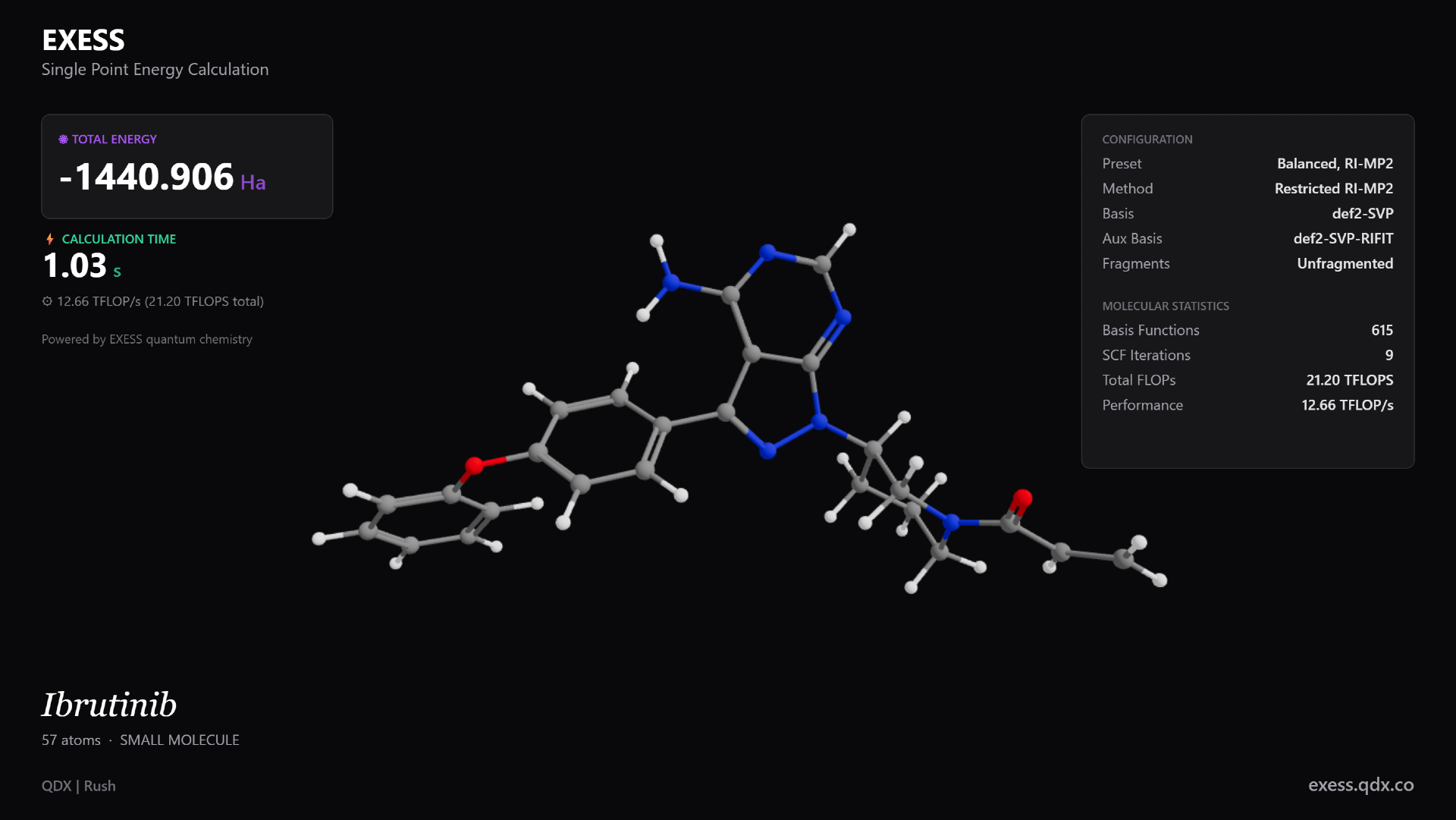 Ultrafast quantum chemistry engine could speed up the development of new medicines and materials
-
 Tapping into new 'probabilistic computing' paradigm can make AI chips use much less power, scientists say
Safeguarding against Q-Day
This new technique is only one piece of a much larger effort to prepare for "Q-Day" — the hypothetical future moment when quantum computers achieve supremacy and become powerful enough to break widely used encryption systems. Governments and industry groups around the world are already working to replace vulnerable cryptographic standards with quantum-resistant alternatives.
RELATED STORIES- Quantum computing will make cryptography obsolete. But computer scientists are working to make them unhackable.
- Chinese scientists claim they broke RSA encryption with a quantum computer — but there's a catch
- Scientists use AI to encrypt secret messages that are invisible to cybersecurity systems
The push to prepare for quantum-era security is already underway. The U.S. National Institute of Standards and Technology has spent years evaluating new forms of encryption designed to survive attacks from future quantum machines, for instance. The agency is currently standardizing several of those algorithms so they can eventually replace the public-key systems used across the internet today.
The new research doesn't replace those emerging standards. Rather, it represents a complementary layer of protection tailored specifically to video data. As video communication becomes more central to business, government and everyday life — and as synthetic media and deepfakes become easier to create — it is increasingly important to ensure that video streams remain authentic and secure, experts say.
The researchers are working to scale the system beyond small test files to full-length video streams and real-time communication platforms. If successful, the technology or a similar system could eventually be used to protect everything from corporate meetings to surveillance networks against both present-day hackers and future quantum computers.
Article SourcesY. Hariprasad, S. S. Iyengar and N. K. Chaudhary, "Securing the Future: Advanced Encryption for Quantum-Safe Video Transmission," in IEEE Transactions on Consumer Electronics, vol. 71, no. 1, pp. 140-153, Feb. 2025, doi: 10.1109/TCE.2024.3473542.
Think you know the computing world? Test your knowledge with our computing quiz!
 Carly Page
Carly Page is a technology journalist and copywriter with more than a decade of experience covering cybersecurity, emerging tech, and digital policy. She previously served as the senior cybersecurity reporter at TechCrunch.
Now a freelancer, she writes news, analysis, interviews, and long-form features for publications including Forbes, IT Pro, LeadDev, Resilience Media, The Register, TechCrunch, TechFinitive, TechRadar, TES, The Telegraph, TIME, Uswitch, WIRED, and others. Carly also produces copywriting and editorial work for technology companies and events.
View MoreYou must confirm your public display name before commenting
Please logout and then login again, you will then be prompted to enter your display name.
Logout Read more
Quantum Computing
Quantum computers need just 10,000 qubits — not the millions we assumed — to break the world's most secure encryption algorithms
Quantum Computing
IBM quantum processor achieves highest fidelity calculations for the longest period of time on record
Physics & Mathematics
Scientists use 'negative light' to send secret messages hidden inside heat
Quantum Computing
Ultrafast quantum chemistry engine could speed up the development of new medicines and materials
Quantum Physics
Scientists smash record for superposition, bringing quantum world tantalizingly close to reality
Computing
Tapping into new 'probabilistic computing' paradigm can make AI chips use much less power, scientists say
Latest in Quantum Computing
Quantum Computing
Quantum computers need just 10,000 qubits — not the millions we assumed — to break the world's most secure encryption algorithms
Quantum Computing
IBM quantum processor achieves highest fidelity calculations for the longest period of time on record
Quantum Computing
Ultrafast quantum chemistry engine could speed up the development of new medicines and materials
 Quantum Computing
Scientists build 'most accurate' quantum computing chip ever thanks to new silicon-based computing architecture
Quantum Computing
Scientists build 'most accurate' quantum computing chip ever thanks to new silicon-based computing architecture
 Quantum Computing
Record-breaking feat means information lasts 15 times longer in new kind of quantum processor than those used by Google and IBM
Quantum Computing
Record-breaking feat means information lasts 15 times longer in new kind of quantum processor than those used by Google and IBM
 Quantum Computing
Breakthrough 3D wiring architecture enables 10,000-qubit quantum processors
Latest in News
Quantum Computing
Breakthrough 3D wiring architecture enables 10,000-qubit quantum processors
Latest in News
 Space Exploration
There’s an issue with the Artemis II heat shield, but NASA isn't worried. Here's why.
Space Exploration
There’s an issue with the Artemis II heat shield, but NASA isn't worried. Here's why.
 Reproductive Health
'No one knows what they are': Researchers discover new type of cell that's seen only during pregnancy
Reproductive Health
'No one knows what they are': Researchers discover new type of cell that's seen only during pregnancy
 The Americas
16th-century silver coin discovered near Strait of Magellan marks the spot of a doomed Spanish colony
The Americas
16th-century silver coin discovered near Strait of Magellan marks the spot of a doomed Spanish colony
 Climate change
Western states face above-normal wildfire threats this summer. New maps reveal which areas are most at risk.
Climate change
Western states face above-normal wildfire threats this summer. New maps reveal which areas are most at risk.
 Immune System
Keratin may act as a 'brake' for skin inflammation, pointing to potential treatments
Immune System
Keratin may act as a 'brake' for skin inflammation, pointing to potential treatments
 Comets
How to see Comet PanSTARRS as it brightens in the night sky this week
LATEST ARTICLES
Comets
How to see Comet PanSTARRS as it brightens in the night sky this week
LATEST ARTICLES- 1Western states face above-normal wildfire threats this summer. New maps reveal which areas are most at risk.
- 2Science history: Doctor hypothesizes that 'transmissible proteins' can cause disease, contradicting a 'central dogma' of molecular biology — April 9, 1982
- 3'No one knows what they are': Researchers discover new type of cell that's seen only during pregnancy
- 416th-century silver coin discovered near Strait of Magellan marks the spot of a doomed Spanish colony
- 5Keratin may act as a 'brake' for skin inflammation, pointing to potential treatments