- Physics & Mathematics
A new physics paper proposes modifications to Einstein’s theory of relativity that could solve one of the biggest issues about our understanding of the Big Bang.
When you purchase through links on our site, we may earn an affiliate commission. Here’s how it works.
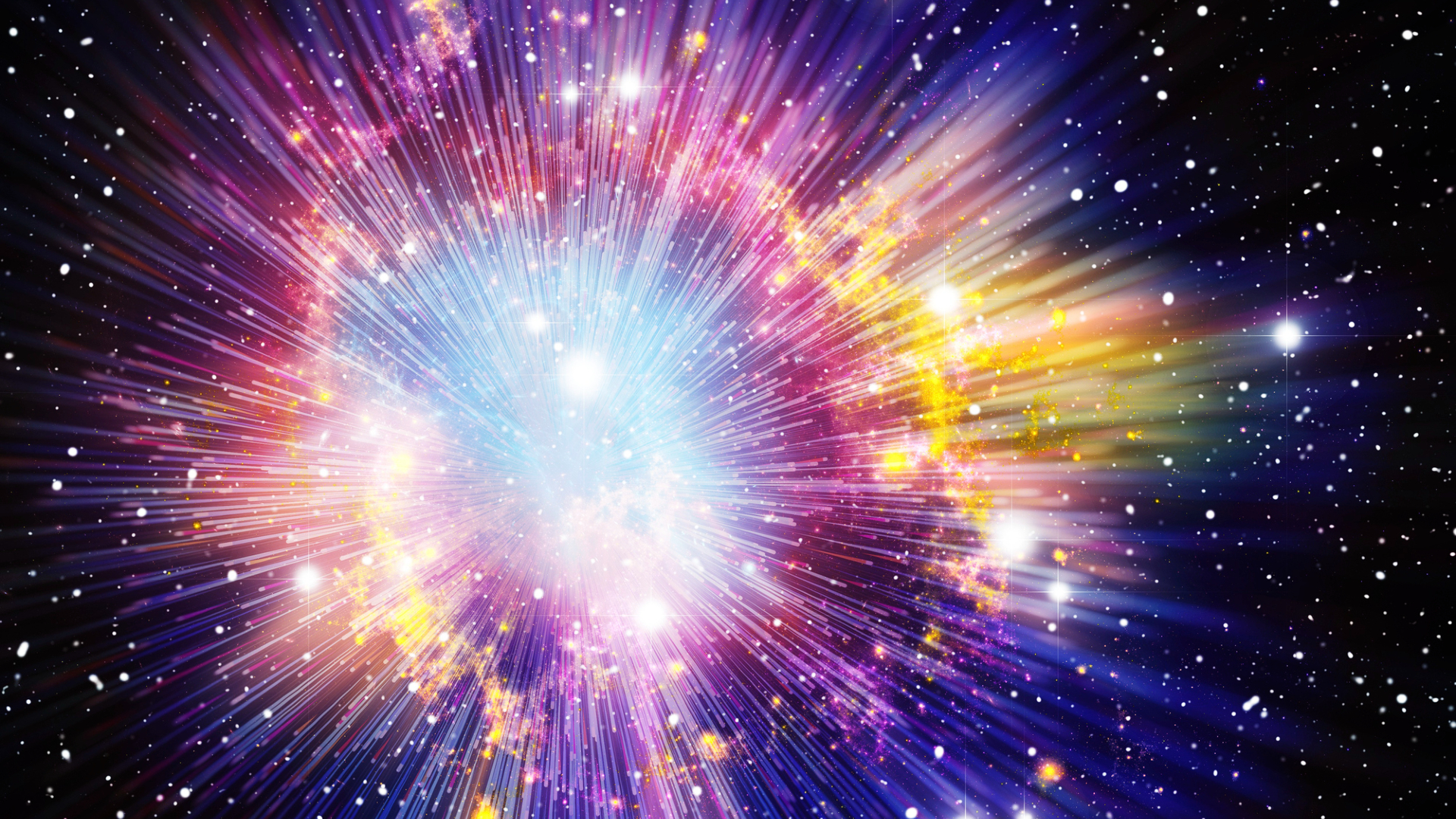 An illustration of the earliest moments of the universe. Proposed changes to Einstein’s relativity suggest that the universe did not start from a singularity, potentially solving one of the biggest outstanding questions about the Big Bang.
(Image credit: ALFRED PASIEKA/SCIENCE PHOTO LIBRARY via Getty Images)
An illustration of the earliest moments of the universe. Proposed changes to Einstein’s relativity suggest that the universe did not start from a singularity, potentially solving one of the biggest outstanding questions about the Big Bang.
(Image credit: ALFRED PASIEKA/SCIENCE PHOTO LIBRARY via Getty Images)
- Copy link
- X
Get the world’s most fascinating discoveries delivered straight to your inbox.
Become a Member in Seconds
Unlock instant access to exclusive member features.
Contact me with news and offers from other Future brands Receive email from us on behalf of our trusted partners or sponsors By submitting your information you agree to the Terms & Conditions and Privacy Policy and are aged 16 or over.You are now subscribed
Your newsletter sign-up was successful
Want to add more newsletters?

Delivered Daily
Daily Newsletter
Sign up for the latest discoveries, groundbreaking research and fascinating breakthroughs that impact you and the wider world direct to your inbox.
Signup +
Once a week
Life's Little Mysteries
Feed your curiosity with an exclusive mystery every week, solved with science and delivered direct to your inbox before it's seen anywhere else.
Signup +
Once a week
How It Works
Sign up to our free science & technology newsletter for your weekly fix of fascinating articles, quick quizzes, amazing images, and more
Signup +
Delivered daily
Space.com Newsletter
Breaking space news, the latest updates on rocket launches, skywatching events and more!
Signup +
Once a month
Watch This Space
Sign up to our monthly entertainment newsletter to keep up with all our coverage of the latest sci-fi and space movies, tv shows, games and books.
Signup +
Once a week
Night Sky This Week
Discover this week's must-see night sky events, moon phases, and stunning astrophotos. Sign up for our skywatching newsletter and explore the universe with us!
Signup +Join the club
Get full access to premium articles, exclusive features and a growing list of member rewards.
Explore An account already exists for this email address, please log in. Subscribe to our newsletterThe Big Bang is often described as the moment everything began — a point of infinite density where the laws of physics broke down. But what if that picture is incomplete?
A new study proposes a different account of the universe's birth: Instead of an abrupt beginning from a singularity, as predicted by Einstein's theory of general relativity, the early cosmos may have passed through a more controlled high-energy phase governed by a modified theory of gravity known as QQG.
You may like-
 'Collective hum' of black holes could settle the debate over new physics
-
 Our leading theory of dark matter may be wrong, huge new gravity study hints
-
 Record-breaking gravitational wave puts Einstein's relativity to its toughest test yet — and proves him right again
Why Einstein's theory may not be enough
Einstein's theory of general relativity has been extraordinarily successful in describing gravity on large scales. It explains the motion of planets, the behavior of black holes, and the expansion of the universe. However, it struggles to explain the ultra-small world of quantum mechanics and is widely believed to contain some fundamental inconsistencies.
"The main problem is that Einstein's general relativity predicts its own failure under extreme conditions, most famously at the Big Bang singularity," Afshordi said.
At that point, densities and space-time curvature become infinite — a clear indication that the theory is incomplete. Physicists have long sought a deeper framework that can describe gravity under such conditions.
Sign up for the Live Science daily newsletter nowContact me with news and offers from other Future brandsReceive email from us on behalf of our trusted partners or sponsorsBy submitting your information you agree to the Terms & Conditions and Privacy Policy and are aged 16 or over."What makes [quadratic quantum gravity] interesting is that it may provide a mathematically consistent way to describe gravity at very short distances and very high energies, where ordinary general relativity is expected to break down," Afshordi said. "In that sense, it offers a possible conservative route toward a quantum theory of gravity, while still remaining close to Einstein's theory at ordinary scales."
A universe without a singularity
In the new study, the researchers explored how QQG would reshape the earliest moments of the cosmos if it is indeed a correct completion of Einstein’s theory. Their results suggest that the universe may not have started from a singular point at all.
"Our main result is that, within quadratic gravity, the very early universe can avoid the usual Big Bang singularity and instead pass through a better-controlled high-energy phase," Afshordi said.
What to read next-
 Exotic prime numbers could be hiding inside black holes
-
 Our model of the universe is deeply flawed — unless space is actually a 'sticky' fluid
-
 Universe-shaking collision of black hole and neutron star could upend our understanding of monster cosmic mergers
Rather than emerging from an infinitely dense state, the universe would have begun in a smoother, more stable configuration with finite density and finite temperature, with its precise properties depending on the particles and fields present at extremely high energies and temperatures. This avoids one of the most troubling predictions of standard cosmology.
The theory also offers a fresh perspective on cosmic inflation, the brief period of extremely rapid expansion thought to have occurred just after the Big Bang.
"In our analysis, this framework can also generate an inflation-like period without having to introduce an extra hypothetical field by hand," Afshordi said.
In standard models, inflation is typically driven by a mysterious field known as the inflaton. That field has never been directly observed. In contrast, QQG produces inflation naturally as a consequence of gravity itself.
"In other words, some of the key ingredients we normally add separately to cosmology may arise directly from the gravitational theory itself," Afshordi added.
From exotic physics to the familiar universe
One striking feature of QQG is that it behaves very differently depending on the energy scale. At extremely high energies, it follows new quantum rules. But as the universe expands and cools, it transitions back to the familiar physics described by Einstein.
The theory suggests that gravity becomes simpler at very high energies — a property known as asymptotic freedom — before evolving into the form we observe today. Eventually, the universe enters the hot, radiation-filled phase described by standard cosmology.
This framework provides a continuous bridge between an exotic early universe and the well-tested physics of later times. The key question, however, is whether this idea can be tested.
"Yes, at least in principle," Afshordi said. "The most promising tests come from cosmology, especially from the imprint of the early universe on primordial gravitational waves and the cosmic microwave background."
RELATED STORIES- Physicists recreated the first millisecond after the Big Bang — and found it was surprisingly soupy
- Could the universe collapse into a singularity? New study explains how.
- Record-breaking gravitational wave puts Einstein's relativity to its toughest test yet — and proves him right again
These ancient signals carry information about the universe's earliest moments. According to the new theory, these signals should contain subtle differences compared with predictions from standard inflation models.
"One particularly interesting aspect of our scenario is that it can lead to distinctive predictions for the gravitational-wave signal produced in the early universe," Afshordi noted. "As observational sensitivity improves over the coming years and decades, future measurements of primordial gravitational waves could begin to distinguish this kind of model from more conventional inflationary scenarios."
Although the idea is still being explored, it offers a compelling possibility: that the Big Bang may not have been a singular beginning but rather part of a deeper, quantum description of gravity. If confirmed, this framework could reshape how scientists understand the origin of the universe — replacing a breakdown of physics with a new, more complete picture of cosmic beginnings.
Article SourcesLiu, R., Quintin, J., & Afshordi, N. (2026). Ultraviolet completion of the Big Bang in quadratic gravity. Physical Review Letters, 136(11). https://doi.org/10.1103/6gtx-j455
Think you know about Einstein's theories? Test your knowledge with our Albert Einstein quiz!
 Andrey FeldmanSocial Links NavigationLive Science Contributor
Andrey got his B.Sc. and M.Sc. degrees in elementary particle physics from Novosibirsk State University in Russia, and a Ph.D. in string theory from the Weizmann Institute of Science in Israel. He works as a science writer, specializing in physics, space, and technology. His articles have been published in AdvancedScienceNews, PhysicsWorld, Science, and other outlets.
View MoreYou must confirm your public display name before commenting
Please logout and then login again, you will then be prompted to enter your display name.
Logout Read more
Physics & Mathematics
'Collective hum' of black holes could settle the debate over new physics
Cosmology
Our leading theory of dark matter may be wrong, huge new gravity study hints
Black Holes
Exotic prime numbers could be hiding inside black holes
Cosmology
Our model of the universe is deeply flawed — unless space is actually a 'sticky' fluid
Black Holes
Universe-shaking collision of black hole and neutron star could upend our understanding of monster cosmic mergers
 Astronomy
Radio signal discovered at the center of our galaxy could put Einstein's relativity to the test
Latest in Physics & Mathematics
Astronomy
Radio signal discovered at the center of our galaxy could put Einstein's relativity to the test
Latest in Physics & Mathematics
 Particle Physics
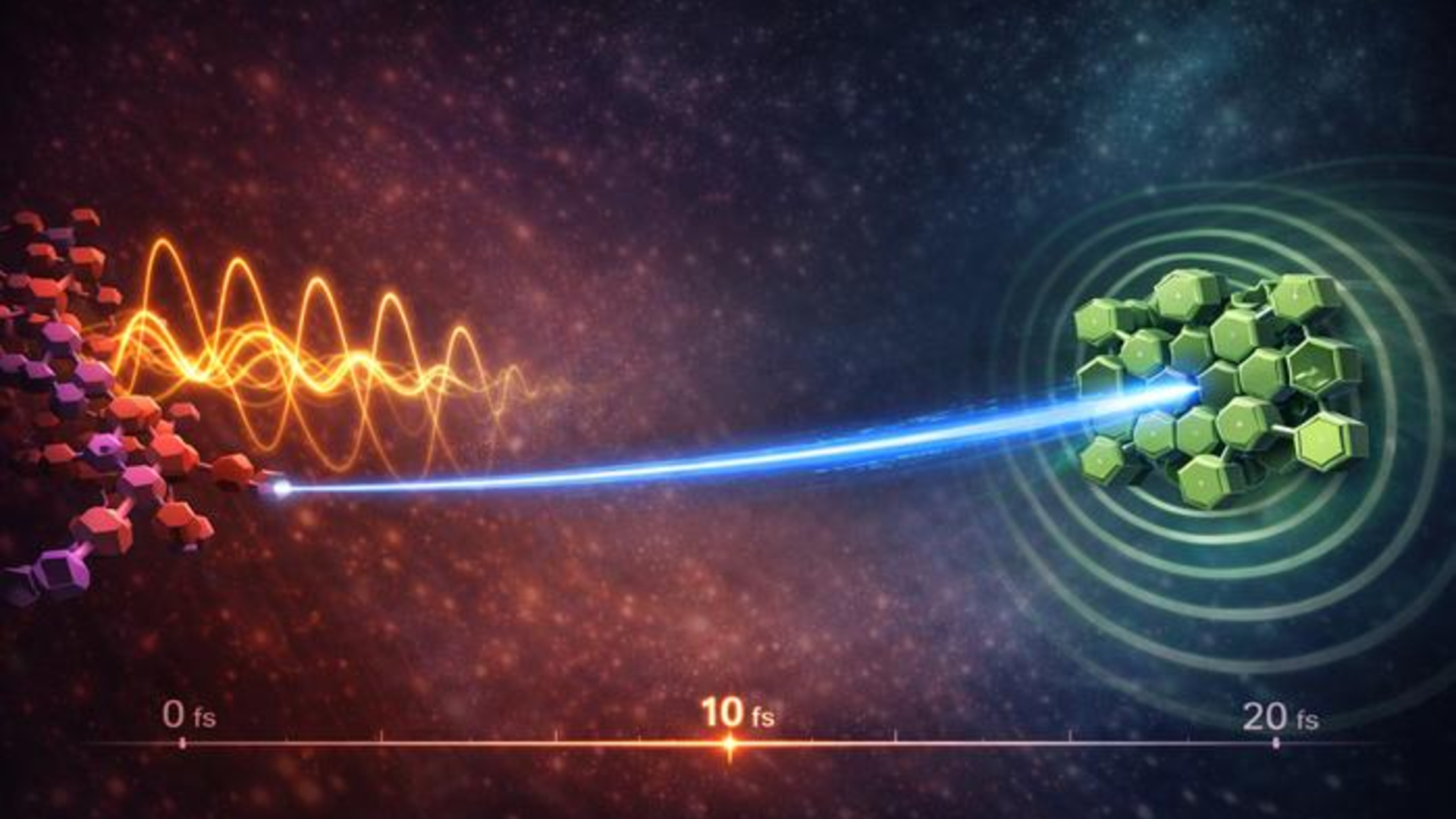
Physicists created an electron 'catapult' that moves particles at 'extraordinary' speed
Particle Physics
Physicists created an electron 'catapult' that moves particles at 'extraordinary' speed
 Physics & Mathematics
Live Science Today: 'Hexagonal' diamonds and fish scale down
Physics & Mathematics
Live Science Today: 'Hexagonal' diamonds and fish scale down
 Mathematics
Pi has been calculated to trillions of digits — is that completely irrational?
Mathematics
Pi has been calculated to trillions of digits — is that completely irrational?
 Physics & Mathematics
Chinese physicists create rare 'hexagonal diamond' that's harder than natural diamond
Physics & Mathematics
Chinese physicists create rare 'hexagonal diamond' that's harder than natural diamond
 Physics & Mathematics
Scientists use 'negative light' to send secret messages hidden inside heat
Physics & Mathematics
Scientists use 'negative light' to send secret messages hidden inside heat
 Mathematics
AI just verified a proof that earned one of math's most prestigious prizes. Math will never be the same
Latest in News
Mathematics
AI just verified a proof that earned one of math's most prestigious prizes. Math will never be the same
Latest in News
 Space Exploration
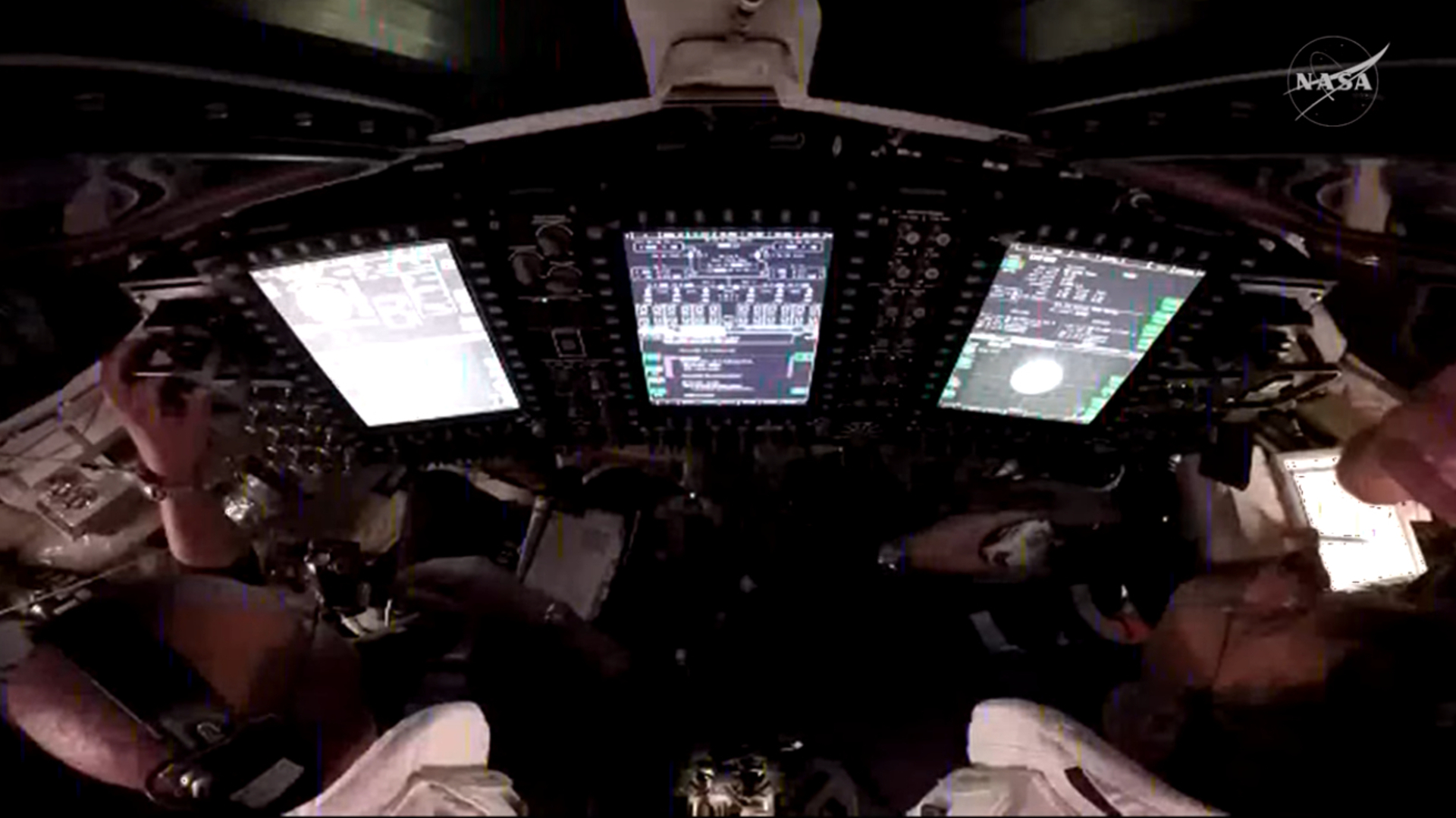
Artemis II officially leaves Earth's orbit on the way to the moon
Space Exploration
Artemis II officially leaves Earth's orbit on the way to the moon
 Space Exploration
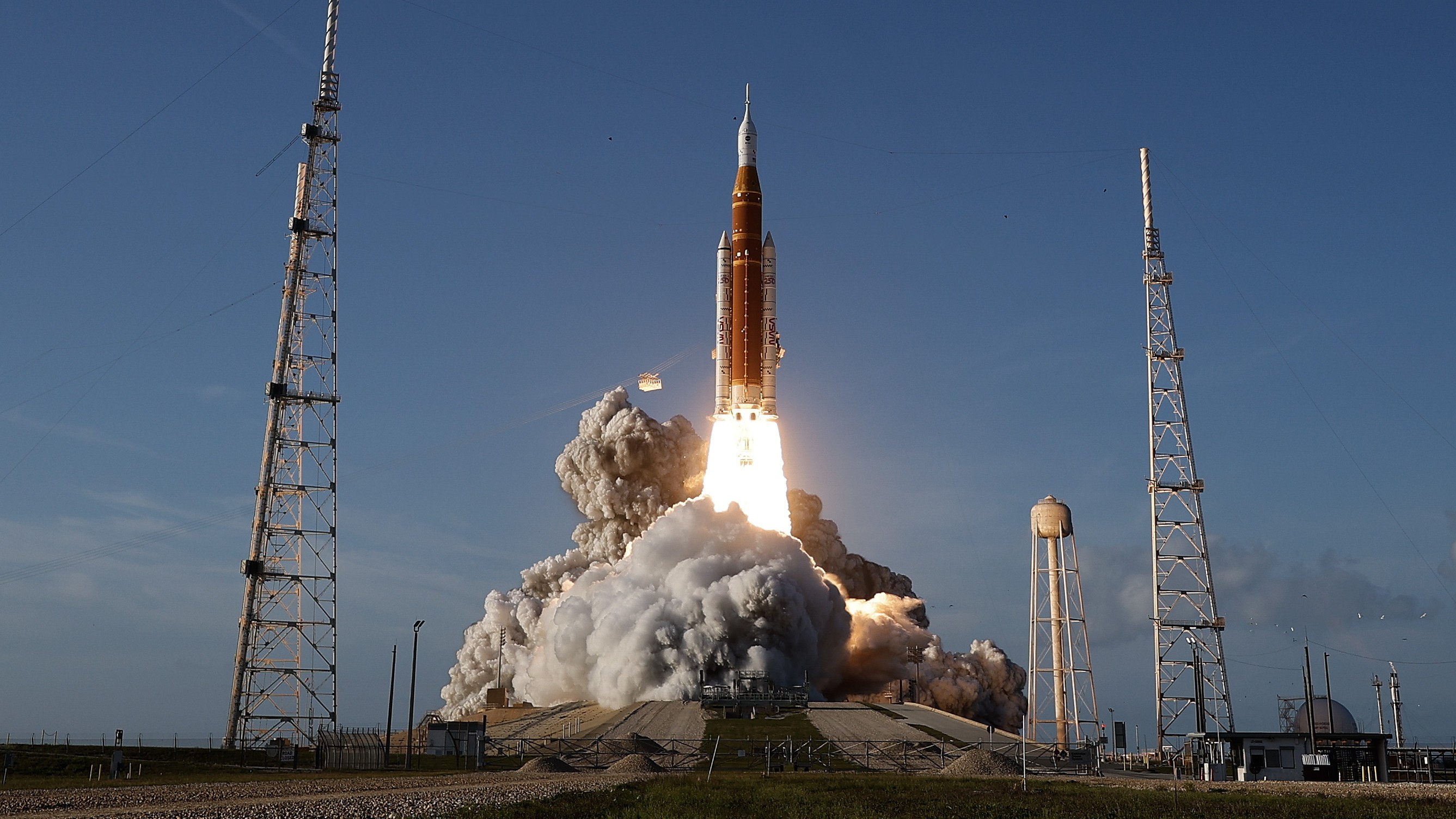
In photos: Artemis II's historic launch for the moon
Space Exploration
In photos: Artemis II's historic launch for the moon
 Chemistry
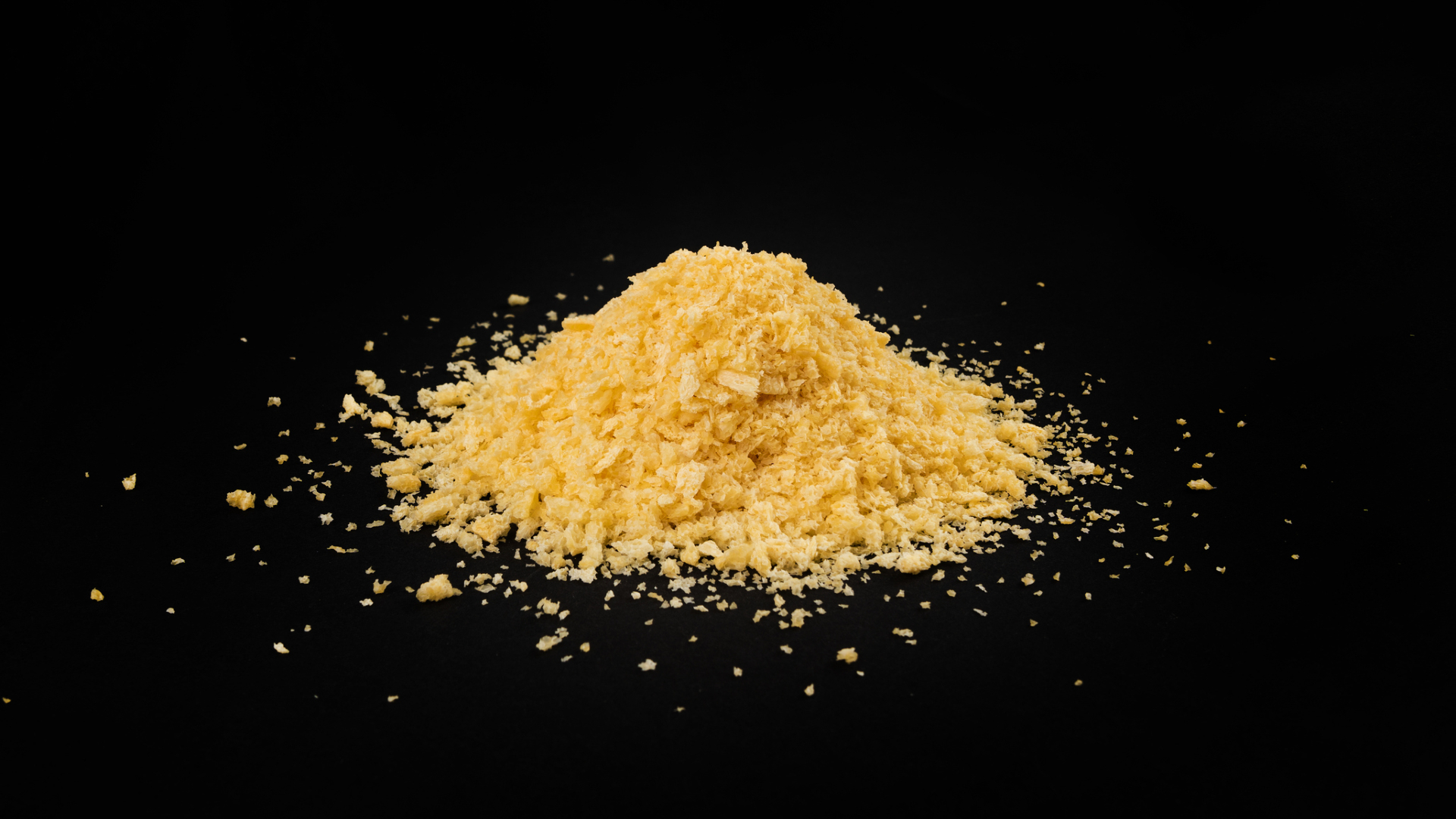
Chemists discover groundbreaking reaction that turns breadcrumbs into hydrogen
Chemistry
Chemists discover groundbreaking reaction that turns breadcrumbs into hydrogen
 Climate change
Earth's energy imbalance is much more extreme than climate models show — but scientists aren't sure why
Climate change
Earth's energy imbalance is much more extreme than climate models show — but scientists aren't sure why
 Archaeology
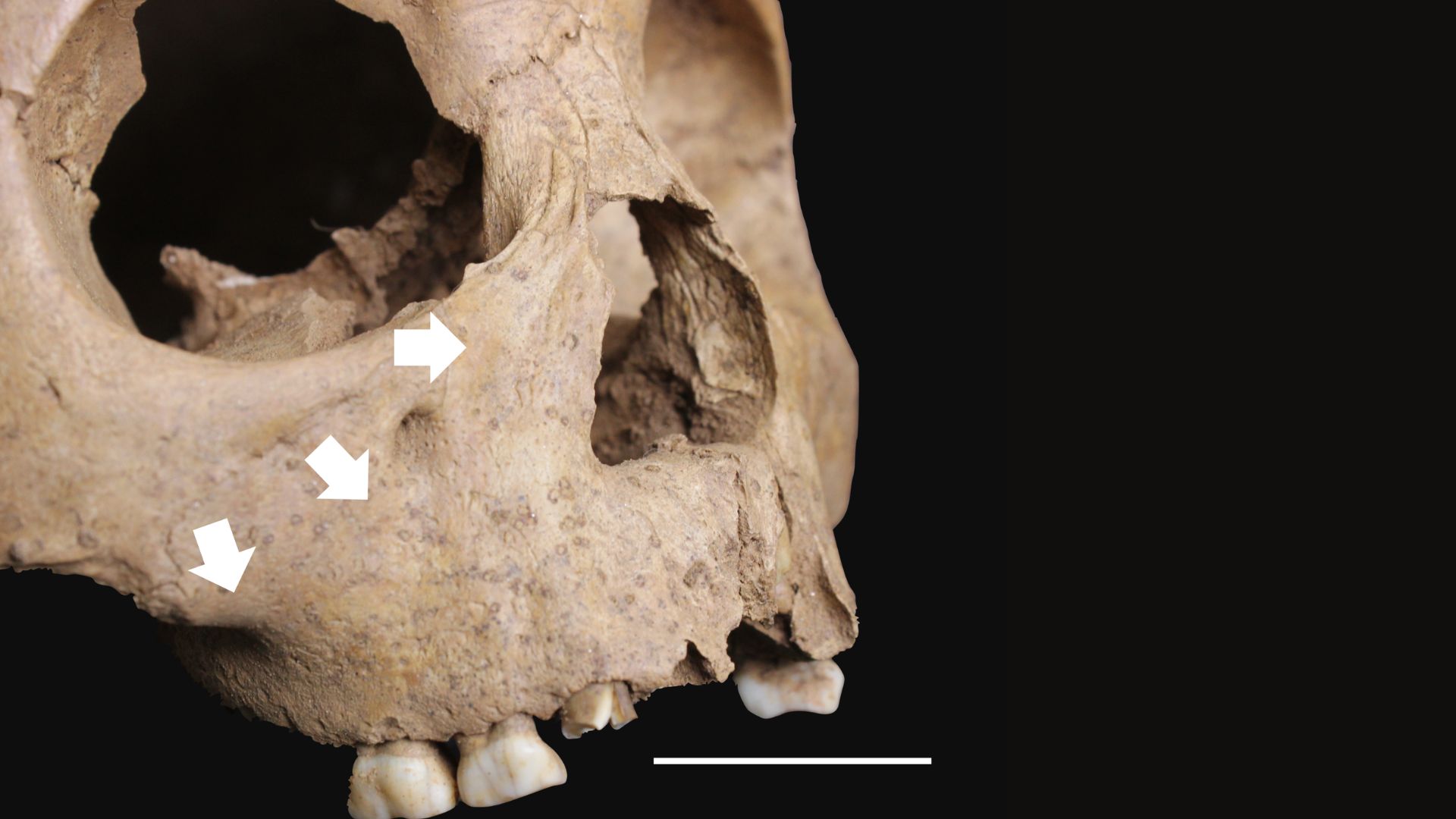
Ancient children's teeth reveal a syphilis-like disease was spreading in Vietnam 4,000 years ago
Archaeology
Ancient children's teeth reveal a syphilis-like disease was spreading in Vietnam 4,000 years ago
 Space Exploration
Chinese satellite with robotic 'octopus arm' passes key refueling test in orbit — making longer-lived space assets more likely
LATEST ARTICLES
Space Exploration
Chinese satellite with robotic 'octopus arm' passes key refueling test in orbit — making longer-lived space assets more likely
LATEST ARTICLES- 1Artemis II officially leaves Earth's orbit on the way to the moon
- 2In photos: Artemis II's historic launch for the moon
- 3Ancient children's teeth reveal a syphilis-like disease was spreading in Vietnam 4,000 years ago
- 4Chemists discover groundbreaking reaction that turns breadcrumbs into hydrogen
- 5Earth's energy imbalance is much more extreme than climate models show — but scientists aren't sure why