- Space
- Astronomy
- Asteroids
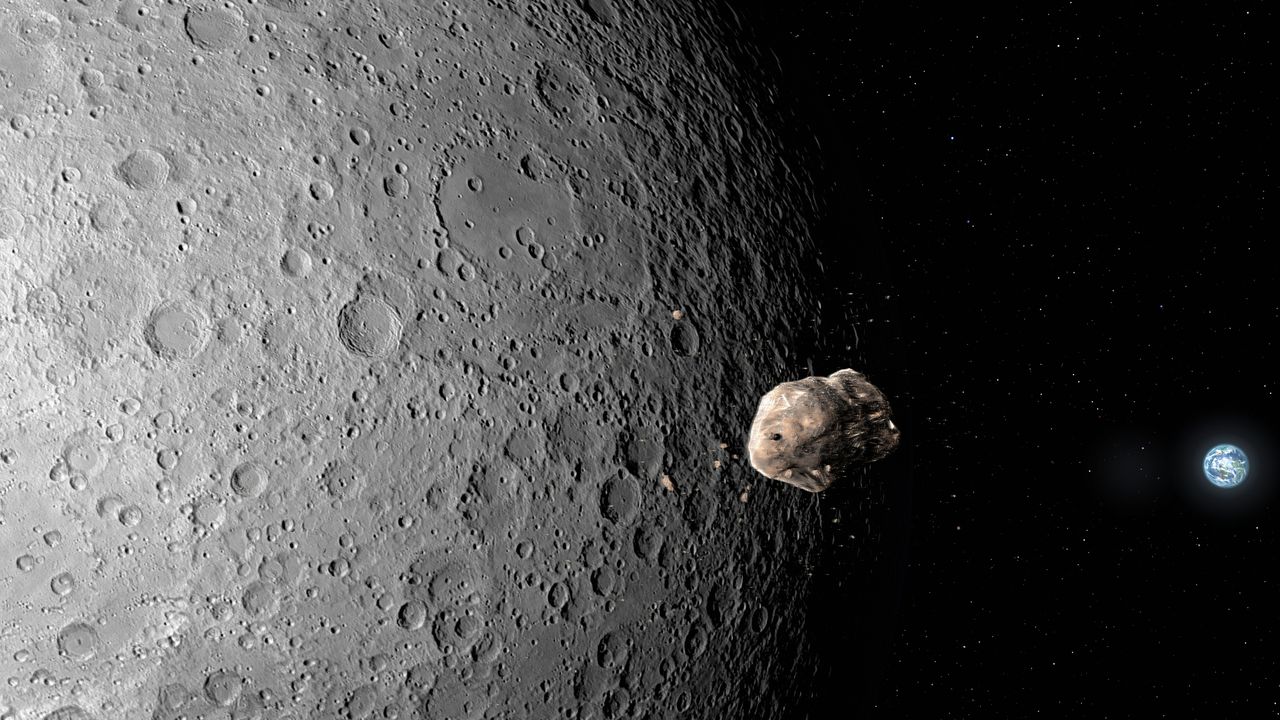
If the building-size asteroid 2024 YR4 crashes into the moon in December 2032, the impact will produce a bright flash that may be visible to the naked eye, a new study finds.
When you purchase through links on our site, we may earn an affiliate commission. Here’s how it works.
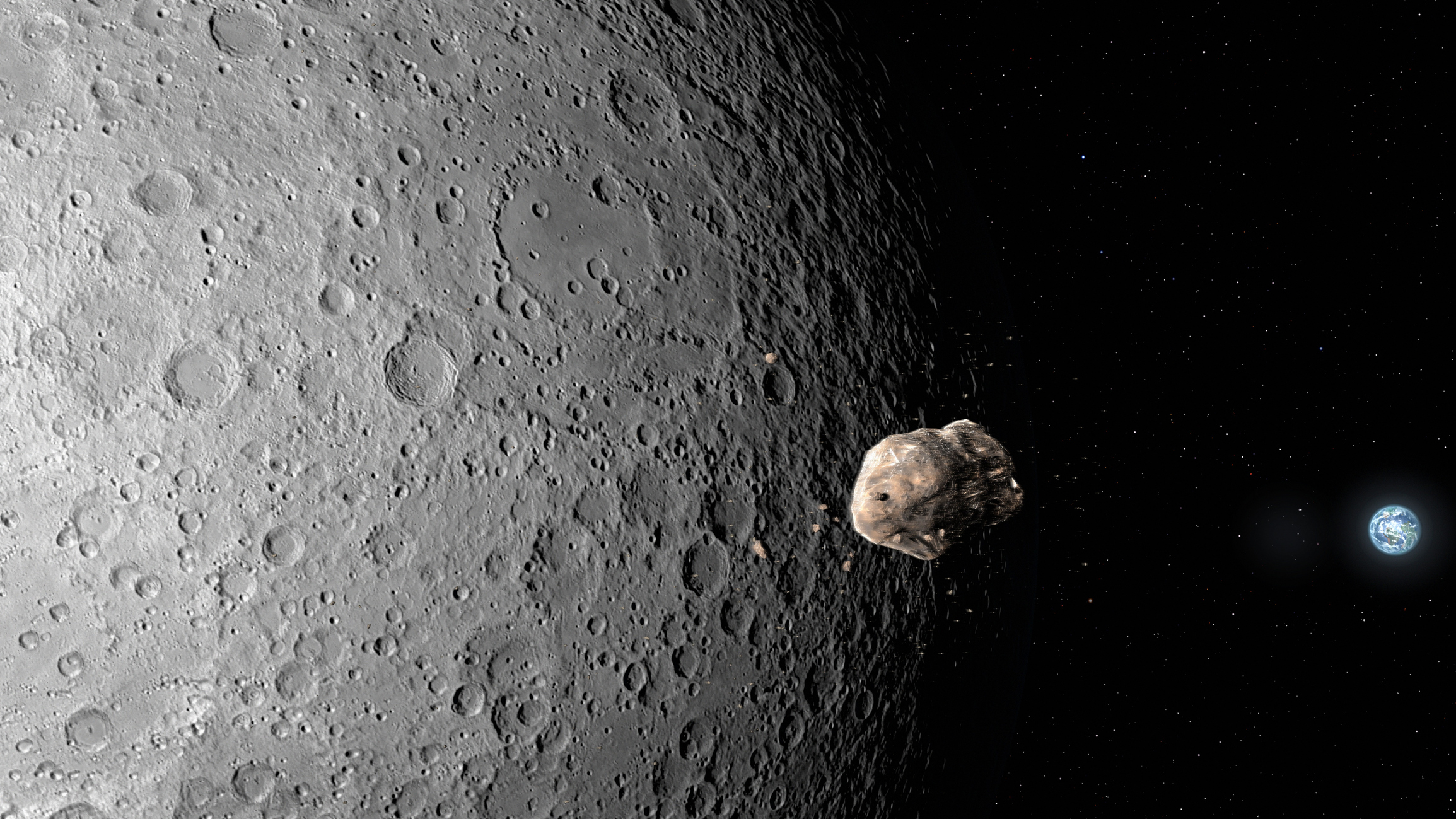 An illustration of a near-Earth asteroid. Asteroid 2024 YR4 has a 4.3% chance of striking the moon, as of February 2026. These odds are likely to remain the same until the space rock swings closer in 2028.
(Image credit: Getty Images)
An illustration of a near-Earth asteroid. Asteroid 2024 YR4 has a 4.3% chance of striking the moon, as of February 2026. These odds are likely to remain the same until the space rock swings closer in 2028.
(Image credit: Getty Images)
- Copy link
- X
Get the world’s most fascinating discoveries delivered straight to your inbox.
Become a Member in Seconds
Unlock instant access to exclusive member features.
Contact me with news and offers from other Future brands Receive email from us on behalf of our trusted partners or sponsors By submitting your information you agree to the Terms & Conditions and Privacy Policy and are aged 16 or over.You are now subscribed
Your newsletter sign-up was successful
Want to add more newsletters?

Delivered Daily
Daily Newsletter
Sign up for the latest discoveries, groundbreaking research and fascinating breakthroughs that impact you and the wider world direct to your inbox.
Signup +
Once a week
Life's Little Mysteries
Feed your curiosity with an exclusive mystery every week, solved with science and delivered direct to your inbox before it's seen anywhere else.
Signup +
Once a week
How It Works
Sign up to our free science & technology newsletter for your weekly fix of fascinating articles, quick quizzes, amazing images, and more
Signup +
Delivered daily
Space.com Newsletter
Breaking space news, the latest updates on rocket launches, skywatching events and more!
Signup +
Once a month
Watch This Space
Sign up to our monthly entertainment newsletter to keep up with all our coverage of the latest sci-fi and space movies, tv shows, games and books.
Signup +
Once a week
Night Sky This Week
Discover this week's must-see night sky events, moon phases, and stunning astrophotos. Sign up for our skywatching newsletter and explore the universe with us!
Signup +Join the club
Get full access to premium articles, exclusive features and a growing list of member rewards.
Explore An account already exists for this email address, please log in. Subscribe to our newsletterThe building-size asteroid 2024 YR4 has a small chance of striking the moon in 2032 — and a new study predicts it could also put on a spectacular show for skywatchers by creating thousands of impact flashes as well as extreme meteor storms.
The space rock — which is about 200 feet (60 meters) wide, or about as big as a 15-story building — was discovered on Dec. 27, 2024. It briefly gained notoriety in February 2025, when astronomers calculated that it had the highest-ever probability of colliding with Earth of asteroids that size or larger. Although this likelihood reached as high as 3.1%, more detailed estimates of the asteroid's trajectory negated any chances that the rock would collide with Earth during its near pass on Dec. 22, 2032.
You may like-
 'Potentially hazardous' asteroid 2024 YR4 was Earth's first real-life planetary defense test
-
 Astronomers may have already spotted the 'Great Comet of 2026' — and it could soon be visible to the naked eye
-
 Vera C. Rubin Observatory discovers enormous, record-breaking asteroid in first 7 nights of observations
The possibility of this impact intrigued Yifei Jiao, a postdoctoral researcher at the University of California, Santa Cruz. He and his colleagues realized that this was "a rare 'natural experiment': a forecastable small-body impact whose signatures could be scientifically rich and operationally relevant," he told Live Science by email. As a result, the researchers wanted to assess all plausible outcomes, he said.
10,000 collisions
To do this, the scientists created computer models of the solar system that included the asteroid, all of the planets, Earth's moon and the sun — and simulated 2024 YR4's path as it whizzed through the inner solar system.
By tweaking the space rock's trajectory, the team created 10,000 such simulations, with which they charted the likeliest collision areas on the moon. Drawing on a different set of finer-scale simulations, the researchers also simulated the actual impact process over a 500-second time interval. The team modeled the range of possible scenarios for the impact debris, tracking the paths of the objects that escaped the moon's gravity.
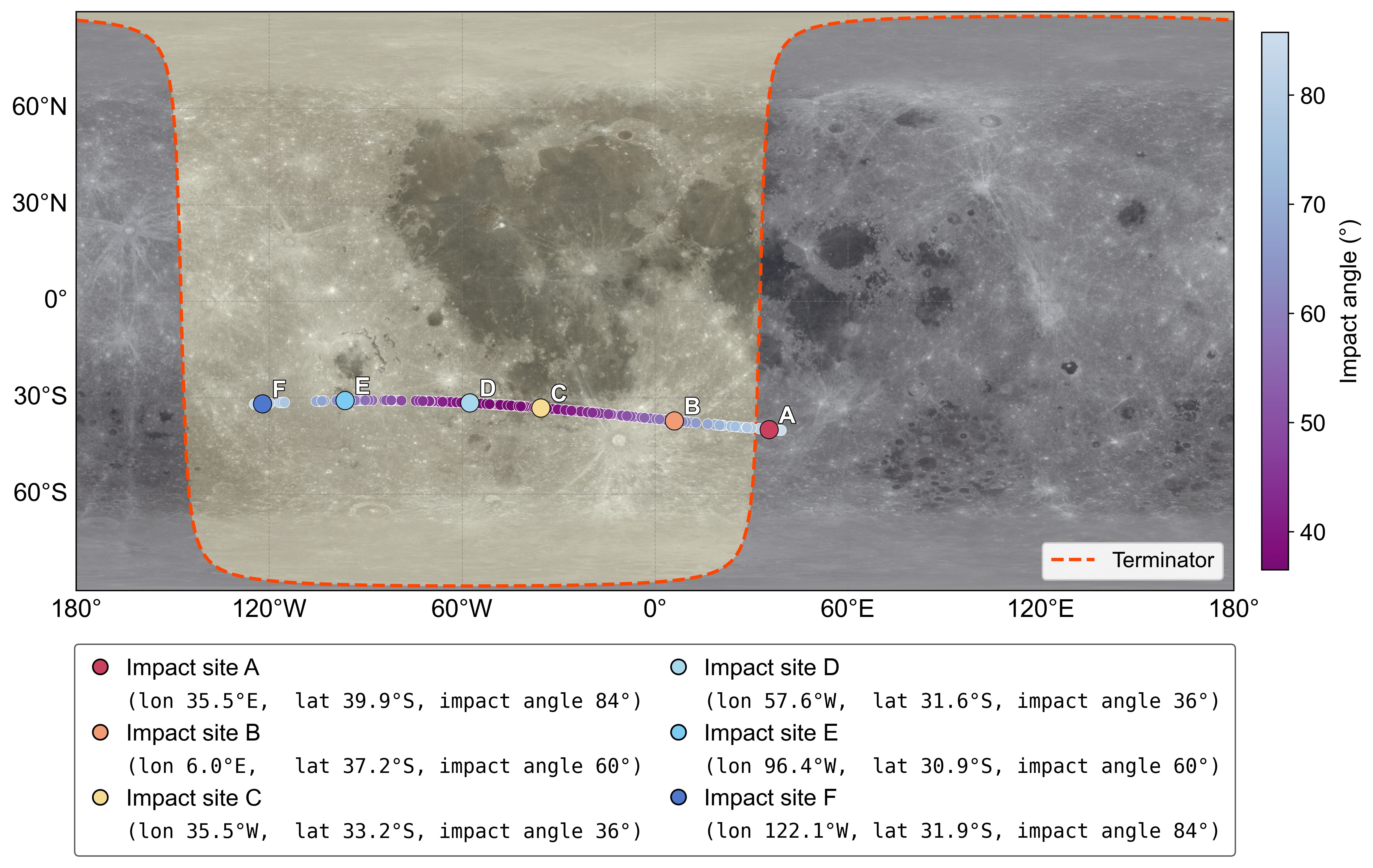
The results of their simulations, which are available on the arXiv preprint server and haven't been peer-reviewed yet, suggest that the asteroid will likely impact the moon somewhere along a roughly 1,900-mile-long (3,000 kilometers) stretch. The predicted impact corridor lies just north of the moon's Tycho crater. That would be along the moon's lower half if you were observing from Earth's Northern Hemisphere (and the opposite from the Southern Hemisphere), according to The Planetary Society.
Sign up for the Live Science daily newsletter nowContact me with news and offers from other Future brandsReceive email from us on behalf of our trusted partners or sponsorsBy submitting your information you agree to the Terms & Conditions and Privacy Policy and are aged 16 or over.
A blast bright as Venus
More spectacularly, the impact would produce a starlike flash between magnitudes -2.5 and -3 — about as bright as Venus in the night sky. The flash would last between 200 and 300 seconds (three to five minutes), although it would definitely be visible for at least 10 seconds "when the flash is bright enough above background conditions to be reliably noticed," first author Yifan He, a researcher at Tsinghua University in China, told Live Science in an email.
If the collision were to occur, the predicted impact time would be 10:19 a.m. EST (15:19 UTC) — so the flash would be visible in parts of the world where the moon had risen. This would make East Asia, Oceania, Hawaii and western North America great places for viewing it.
But there's a catch: On the predicted day of impact, 70% of the moon will be illuminated. The impact flash would be visible to naked-eye observers only if the asteroid were to strike in the moon's unlit region. He and Yixuan Wu, a researcher at Tsinghua University and the study's second author, estimate that the chance of that happening — if asteroid 2024 YR4 collides with the moon — is merely 2.85%.
related stories—We could nuke 'city killer' asteroid 2024 YR4 before it hits the moon — if we act fast, new study warns
—'Potentially hazardous' asteroid 2024 YR4 was Earth's first real-life planetary defense test
—'City killer' asteroid 2024 YR4 could shower Earth with 'bullet-like' meteors if it hits the moon in 2032
Still, regardless of the impact location, the flash would be detectable by amateur telescopes. Other spectacles would be likely — an impact would lift many lunar rocks that would then rain back onto the moon's surface, causing potentially several thousand flashes. However, the flashes from these secondary impacts would not be as bright as the main one, and will probably be more difficult to see without any instruments.
Additionally, the study predicts that the impact would fling up to 220 million pounds (100 million kilograms) of lunar rocks toward Earth. These would create what Wu calls “super meteor storms”, extreme meteor showers that would be prominent between two and 100 days after the impact. 2024 YR4's lunar impact is still fairly uncertain, but Wu is excited about the future. “If this scenario plays out, it will be a milestone for planetary science, turning the Earth-Moon system into a grand stage for validating our understanding of asteroid impacts,” she told Live Science in an email.
IN CONTEXT IN CONTEXTBrandon SpecktorSpace and Physics editor
While Earth is safe from 2024 YR4, studying the asteroid offers some of the best planetary defense practice we've had. When the asteroid was first discovered and deemed a potential risk, telescopes around the world turned to watch it, with even the James Webb Space Telescope dipping into its limited discretionary time to observe it.
These quick and thorough observations narrowed down the size and trajectory of the asteroid, and confirmed it would not hit Earth. We may not always be so lucky — but the more practice we have at tracking near-Earth asteroids, the more prepared we will be if a true threat from space emerges.
Article SourcesHe, Y., Wu, Y., Jiao, Y., Dai, W., Liu, X., Cheng, B., & Baoyin, H. (2026). Observation timelines for the potential lunar impact of asteroid 2024 YR4. arXiv (Cornell University). https://doi.org/10.48550/arxiv.2601.10666
 Deepa JainLive Science contributor
Deepa Jain is a freelance science writer from Bengaluru, India. Her educational background consists of a master's degree in biology from the Indian Institute of Science, Bengaluru, and an almost-completed bachelor's degree in archaeology from the University of Leicester, UK. She enjoys writing about astronomy, the natural world and archaeology.
View MoreYou must confirm your public display name before commenting
Please logout and then login again, you will then be prompted to enter your display name.
Logout Read more Astronomers may have already spotted the 'Great Comet of 2026' — and it could soon be visible to the naked eye
 Vera C. Rubin Observatory discovers enormous, record-breaking asteroid in first 7 nights of observations
 'Unprecedented' protoplanet collision spotted in 'Eye of Sauron' star system just 25 light-years from Earth
 This bright star will soon die in a nuclear explosion — and could be visible in Earth's daytime skies
 Quadrantid meteor shower peaks this week: How to see the first 'shooting' stars of the year
 Orbiting satellites could start crashing into one another in less than 3 days, theoretical new 'CRASH Clock' reveals
Latest in Asteroids
Orbiting satellites could start crashing into one another in less than 3 days, theoretical new 'CRASH Clock' reveals
Latest in Asteroids
 'Potentially hazardous' asteroid 2024 YR4 was Earth's first real-life planetary defense test
 Astronomers discover skyscraper-size asteroid hidden in sun's glare
 $100,000 quadrillion asteroid Psyche may be the product of metal volcanoes, study hints
 Sneaky asteroid zooms past Antarctica closer than a satellite — and astronomers didn't catch it until hours after
 Our solar system's asteroid belt is slowly disappearing
 Science history: DART, humanity’s first-ever asteroid deflection mission, punches a space rock in the face — Sept. 26, 2022
Latest in News
Science history: DART, humanity’s first-ever asteroid deflection mission, punches a space rock in the face — Sept. 26, 2022
Latest in News
 Men develop cardiovascular disease 7 years before women
Asteroid 2024 YR4's collision with the moon could create a flash visible from Earth
Men develop cardiovascular disease 7 years before women
Asteroid 2024 YR4's collision with the moon could create a flash visible from Earth
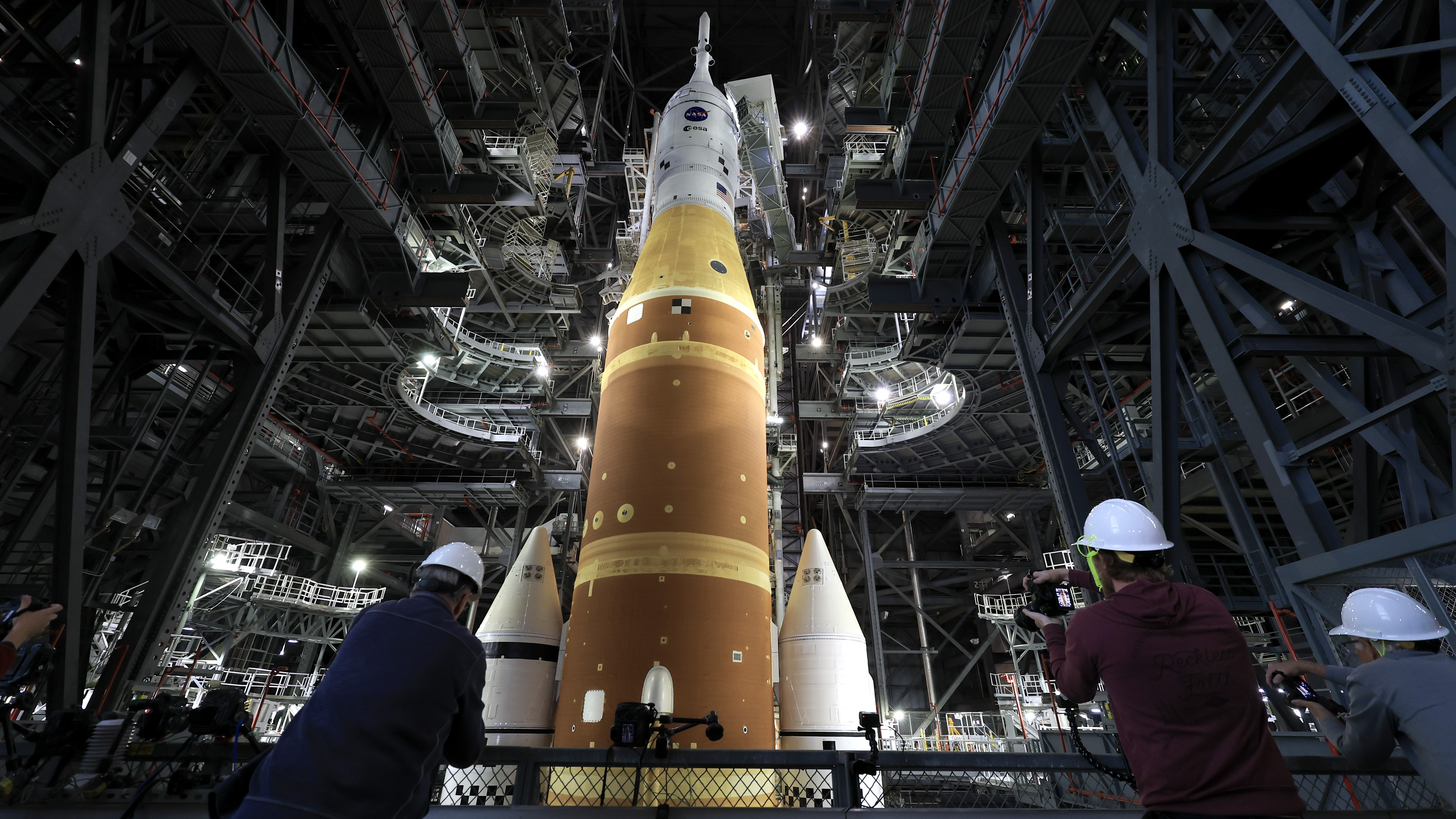 Hydrogen leak derails Artemis II wet rehearsal, pushing launch date back by weeks
 'System in flux': Scientists reveal what happened when wolves and cougars returned to Yellowstone
 In the search for bees, Mozambique honey hunters and birds share a language with distinct, regional dialects
 'Landmark' elephant bone finding in Spain may be from time of Hannibal's war against Rome
LATEST ARTICLES
'Landmark' elephant bone finding in Spain may be from time of Hannibal's war against Rome
LATEST ARTICLES- 1Men develop cardiovascular disease 7 years before women, study suggests. But why?
- 2Hydrogen leak derails Artemis II wet rehearsal, pushing launch date back by weeks
- 3'Landmark' elephant bone finding in Spain may be from time of Hannibal's war against Rome
- 4Mokoqi Star Projector Night Light review
- 5'System in flux': Scientists reveal what happened when wolves and cougars returned to Yellowstone